“Healthcare is changing fast, and in 2026, an ai powered learning platform is no longer a nice-to-have. It is becoming essential for healthcare organizations that need to train staff quickly, maintain compliance, reduce risk, and improve patient outcomes. From large hospital systems to specialized clinics, AI is reshaping how medical teams learn, adapt, and perform. The result is a smarter, more responsive approach to workforce development that helps organizations stay competitive while delivering safer, higher-quality care.” – Stephen Handisides
Introduction
The rapid evolution of healthcare learning is being driven by workforce shortages, constant regulatory updates, and rising patient expectations. In this environment, traditional training models often move too slowly. That is why 2026 marks a turning point for AI in healthcare education.
An AI-powered learning platform uses technologies like machine learning, natural language processing, and predictive analytics to personalize education, automate administrative tasks, and continuously optimize outcomes. Unlike static systems, it learns from user behavior and performance data to deliver more relevant training at the right time.
Foundations of AI in Healthcare Learning
At the core of these platforms are several powerful technologies:
- Machine learning identifies patterns in learner behavior and performance
- Natural language processing helps analyze content, assessments, and communication
- Predictive analytics anticipates skill gaps, compliance risks, and training needs
Traditional learning models usually rely on one-size-fits-all modules. By contrast, ai powered lms solutions adjust content dynamically, making learning more efficient and effective for different roles across the healthcare ecosystem. This benefits administrators, educators, HR teams, compliance officers, and clinic owners alike.
Way #1: Personalized Learning at Scale
One of the biggest advantages of an AI-powered platform is its ability to tailor education for each learner.
Adaptive learning paths can guide nurses, physicians, technicians, and support staff through role-specific content based on experience level, specialty, and prior performance. Real-time skill gap analysis helps identify what each person needs to improve, while customized content delivery ensures that learners are not wasting time on irrelevant modules.
This personalized approach increases clinical competency and learner confidence. It also helps medical educators manage complex training demands without manually customizing every curriculum.
Way #2: Accelerated Training and Onboarding
Healthcare organizations cannot afford long ramp-up periods, especially in high-turnover or high-demand environments. AI helps streamline onboarding by organizing training in a way that is targeted, sequenced, and measurable.
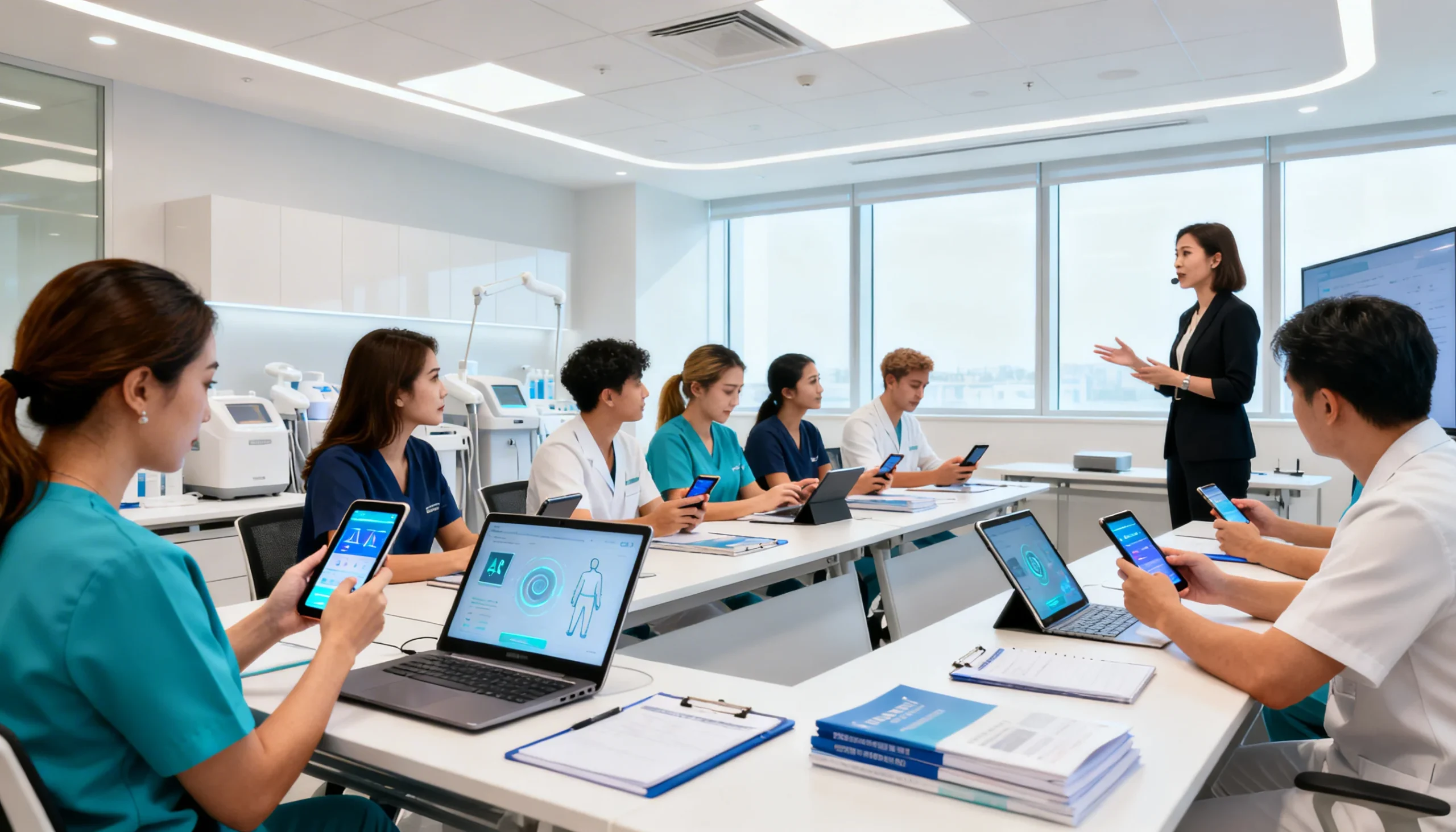
New hires can move through role-based pathways that prioritize immediate responsibilities and required certifications. Simulation-based learning and virtual labs further accelerate readiness by allowing staff to practice in safe, realistic environments.
By reducing time-to-competency, ai powered learning management systems help organizations deploy talent faster while maintaining training quality. This is especially valuable for hospitals, telehealth providers, and medical aesthetics clinics that need rapid onboarding across distributed teams.
Way #3: Improved Patient Outcomes Through Better Education
Better training leads to better care. That is one of the strongest arguments for AI in healthcare learning.
AI-driven platforms can connect training data with clinical performance metrics, helping organizations understand how education impacts patient outcomes. If certain errors or care inconsistencies are appearing, the system can recommend targeted learning interventions.
This approach reduces medical errors by reinforcing high-risk topics, supports faster adoption of evidence-based practices, and helps staff stay current in a constantly evolving field. In real-world settings, these improvements can translate into better safety scores, stronger patient satisfaction, and more confident clinical decision-making.
Way #4: Data-Driven Decision Making in Learning
AI does more than deliver content. It gives healthcare leaders actionable intelligence.
Learning analytics and performance tracking allow administrators to see which teams are progressing, where knowledge gaps are forming, and which training programs are driving the strongest outcomes. Predictive insights can also flag high-risk areas before they become operational problems.
For healthcare institutions, this supports smarter workforce planning, stronger compliance oversight, and more strategic investment in upskilling. Instead of reacting to training issues after they affect performance, leaders can make proactive decisions with real data.
Way #5: Democratization of Healthcare Education
AI is making advanced learning more accessible across the healthcare sector.
Remote teams and underserved regions can now access high-quality, personalized training without the same geographic or staffing limitations that once slowed development. AI can also reduce training costs by automating repetitive administration, optimizing course delivery, and supporting multilingual learning experiences.
This matters on a global level as well. By bridging skill gaps and expanding access to specialized knowledge, AI helps healthcare organizations build stronger teams in more places. That makes education more inclusive, scalable, and impactful.
Integration with Healthcare Systems
For an AI platform to succeed in healthcare, it must fit into existing workflows. Compatibility with Electronic Health Records, hospital management systems, and HR software is increasingly important.
While interoperability can still be a challenge, modern platforms are improving through API-based integrations, centralized reporting, and better data standardization. The goal is simple: connect learning with operational systems so training becomes part of daily performance, not a disconnected task.
Role of AI in Compliance and Certification
Compliance is one of the most practical use cases for AI in healthcare education. Automated compliance training ensures the right people complete the right modules at the right time.
AI can also track certification status in real time, send alerts before expirations, and adapt learning based on regulatory changes. For compliance and risk officers, this reduces administrative burden and supports a more reliable audit trail. For organizations, it lowers exposure and helps maintain quality standards.
Challenges and Limitations
Despite the benefits, implementation is not always seamless. Common barriers include resistance to change, initial deployment costs, and dependence on data quality. Some staff may be hesitant to trust AI-driven recommendations, while some organizations may struggle with legacy infrastructure.
The key is thoughtful rollout, strong stakeholder buy-in, and clear communication around benefits, security, and outcomes.
Future Trends Beyond 2026
Looking ahead, AI in healthcare learning will likely become even more immersive and autonomous. AR and VR will enhance simulation-based training. AI-driven mentorship tools will provide real-time coaching. Autonomous learning systems may eventually adjust pathways continuously with little manual intervention.
These innovations will further close the gap between training and practice.
Comparing Leading AI Learning Platforms
When evaluating providers, healthcare organizations should focus on:
- Personalization capabilities
- Compliance automation
- Analytics and predictive insights
- Integration flexibility
- Scalability across roles and locations
- ROI and impact on time-to-competency
The right platform should not just digitize training. It should actively improve workforce performance.
Impact on Healthcare Workforce Development
AI supports upskilling, reskilling, and career progression at a time when healthcare systems are under pressure to do more with less. It can help address workforce shortages by accelerating readiness and enabling continuous development across career stages.
This is especially valuable for organizations that want to retain talent, strengthen leadership pipelines, and build more resilient teams.
Real-World Use Cases
Across hospitals and clinical settings, AI is supporting nurse onboarding, specialty training, and compliance tracking. Medical schools and universities are using it to personalize curriculum delivery. Telehealth and remote care providers benefit from scalable digital education that reaches distributed teams quickly and consistently.
Why V-Unite is the Solution for Your AI Healthcare Learning Needs
V-Unite stands out by combining intelligent automation, personalized training, and scalable compliance support in one modern platform. For healthcare organizations facing workforce complexity in 2026, V-Unite offers more than traditional LMS functionality. It helps reduce administrative workload, speed up competency, and support better patient care through smarter learning.
For administrators, educators, HR leaders, and specialized clinic owners, V-Unite is a strategic investment in both operational efficiency and workforce excellence.
The #1 AI Powered Learning Platform for Medspas, Beauty and Wellness Groups
Enterprise medspa, beauty, and wellness groups face growing complexity as they scale including inconsistent training, uneven service quality, compliance risk, brand dilution, and slower employee ramp times across locations.
V-Unite provides a centralized, scalable platform designed to standardize training, upskill employees, and accelerate performance across every clinic, spa, and wellness location.
Book your exclusive demo today. Experience effortless growth.