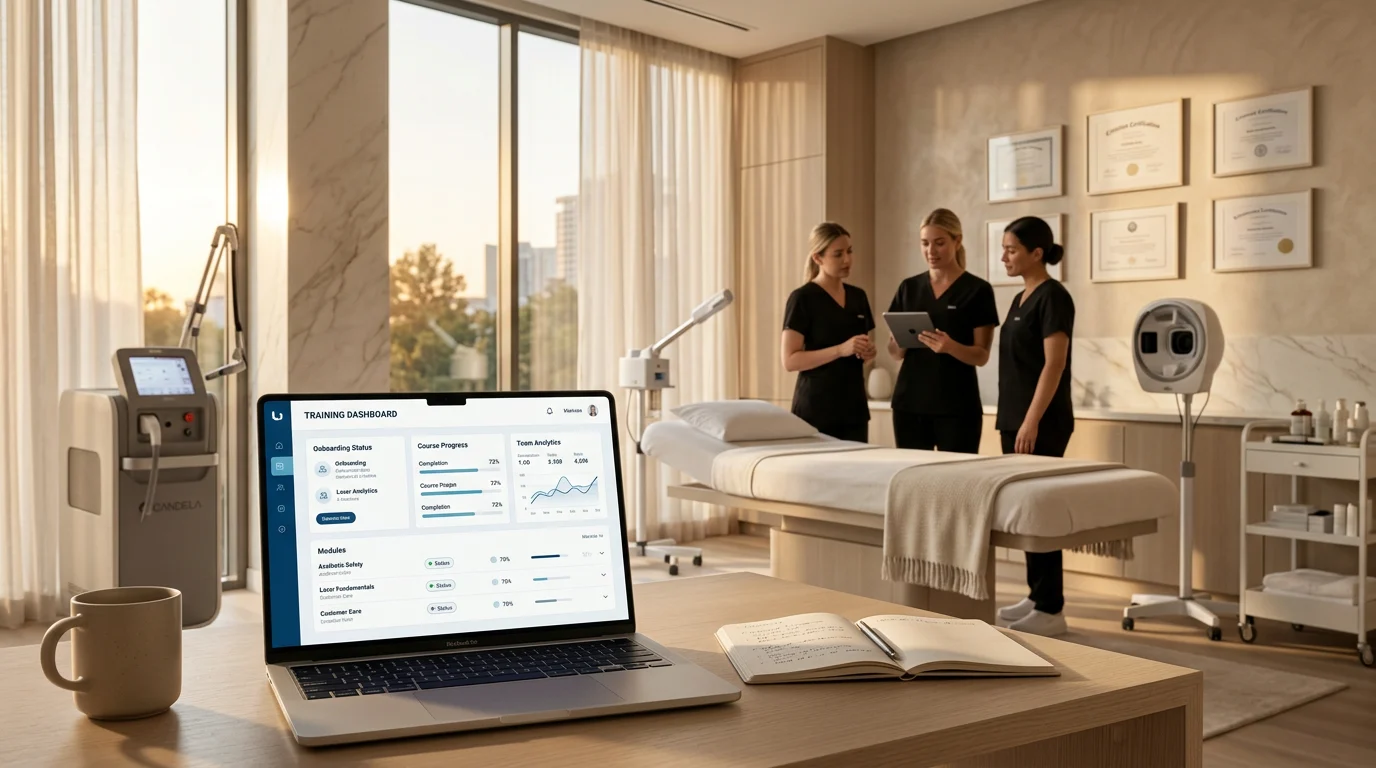
“Healthcare training is entering a new era, and lms content is now at the center of that transformation. In 2026, hospitals, clinics, and academic medical centers are under pressure to train faster, reduce errors, improve compliance, and retain talent in a workforce shaped by burnout, digital disruption, and rising patient expectations. That is why modern healthcare organizations are rethinking how they deliver education, replacing fragmented instruction with scalable, structured, and measurable learning experiences.” – Stephen Handisides
Introduction: The Evolution of Healthcare Training in 2026
The shift toward digital-first learning in healthcare is no longer optional. Training programs must now support large, distributed teams while keeping pace with evolving regulations, new care models, and emerging technologies like AI-assisted documentation, telehealth, and predictive analytics. Traditional classroom-only instruction cannot keep up with that demand.
This is where LMS platforms become mission-critical. A strong LMS helps organizations standardize onboarding, personalize learning paths, automate compliance reporting, and offer continuous development across roles and locations. For L&D managers, it solves scale. For healthcare administrators and CEOs, it improves operational consistency. For compliance teams, it reduces risk. For HR leaders, it supports upskilling as a retention strategy.
Structured courses are especially valuable because they close skill gaps with clarity. Instead of one-off workshops, staff get defined learning journeys tied to competencies, patient outcomes, and career growth.
Defining the Ideal Healthcare LMS Course
Not every course belongs in a high-performing healthcare training program. The most effective LMS courses in 2026 share a few core characteristics: they are role-specific, measurable, engaging, and easy to access in the flow of work.
High-impact courses should also align with regulatory and accreditation requirements. That means built-in assessments, completion tracking, audit readiness, and documentation that supports organizational accountability.
Personalization is another must-have. Today’s workforce includes nurses, physicians, administrative staff, allied health professionals, and residents, all with different training needs. A modern learning content management system can help create adaptive paths so learners receive relevant modules based on role, experience level, and performance data.
Finally, the best courses integrate with clinical workflows and systems. Whether tied to EHR usage, safety protocols, or patient communication standards, training should reinforce what employees do every day.
The 5 Must-Have LMS Courses for 2026
The following five courses are essential because they align with healthcare’s biggest priorities in 2026: workforce readiness, compliance, patient experience, digital transformation, and leadership resilience. Together, they address both immediate operational needs and long-term talent development.
Course #1: Clinical Skills Mastery and Competency Training
Continuous clinical skill development remains the backbone of healthcare education. Staff must stay current not only on procedures and protocols, but also on new technologies, evolving standards of care, and interdisciplinary expectations.
This course should include core modules such as patient assessment, infection prevention, medication safety, documentation accuracy, and role-specific procedures. For clinical teams, simulation-based learning and virtual labs are becoming especially valuable. They provide safe environments to practice high-stakes decision-making without risking patient harm.
The real advantage of housing this course in a learning content management system software platform is visibility. Leaders can track skill progression, identify competency gaps early, and connect training outcomes to performance metrics.
Course #2: Healthcare Compliance and Regulatory Training
Compliance training is no longer a static annual requirement. In 2026, healthcare organizations must respond to constant changes in privacy laws, cybersecurity requirements, accreditation standards, and reporting obligations.
A must-have compliance course should cover HIPAA, data privacy, patient confidentiality, workplace safety, informed consent, documentation standards, and incident reporting. It should also address broader risk management practices that protect both patients and organizations from legal exposure.
The LMS advantage here is automation. Assignments can be distributed by department or role, deadlines can be enforced, and reporting can be generated instantly for audits. For compliance and risk officers, that level of control is not just convenient, it is essential.
Course #3: Patient Communication and Experience Training
As healthcare becomes more consumer-driven, patient communication directly impacts trust, outcomes, and satisfaction scores. Strong clinical knowledge alone is not enough if staff struggle to explain care clearly, listen actively, or handle emotionally charged conversations.
This course should focus on empathy, active listening, de-escalation, cultural sensitivity, and communication during difficult scenarios such as delayed treatment, diagnosis discussions, or discharge planning. Interactive role-play scenarios and short video-based lessons can make this training more practical and memorable.
For healthcare administrators focused on HCAHPS and patient retention, this course delivers value quickly. Better communication improves the patient experience while also reducing complaints and misunderstandings.
Course #4: Digital Health and Health IT Systems Training
Digital transformation is reshaping every part of care delivery. Telehealth, EHR optimization, AI-assisted workflows, clinical decision support, and cybersecurity are all now central to healthcare operations.
This course should train staff on EHR best practices, telehealth etiquette, secure digital communication, cyber hygiene, and the responsible use of AI and automation tools in clinical environments. In 2026, digital literacy is not a niche skill. It is a baseline competency.
This is also where well-designed lms content becomes a strategic asset. Short, modular lessons can support just-in-time learning, helping staff adapt quickly as systems change or new tools are rolled out across the organization.
Course #5: Leadership and Team Collaboration in Healthcare
Healthcare organizations need more than strong individual contributors. They need resilient leaders and highly collaborative teams that can operate under pressure.
A leadership and collaboration course should cover delegation, conflict resolution, interdisciplinary communication, clinical decision-making, emotional intelligence, and leadership in high-stress situations. It should be designed not only for senior leaders, but also for emerging charge nurses, team leads, and department coordinators.
This kind of training improves retention because it creates visible growth paths. Employees are more likely to stay when they see development opportunities that prepare them for advancement rather than leaving them stuck in reactive, high-stress roles.
Supporting Courses That Enhance Core Training Programs
Beyond the five core courses, healthcare organizations should also consider supporting modules on mental health and burnout prevention, cultural competency, emergency preparedness, and continuous professional development. These topics reinforce resilience, inclusion, and readiness, all of which matter in a strained labor market.
Benefits of Implementing These LMS Courses
The benefits are clear. These courses improve patient safety by reducing skill gaps and standardizing best practices. They increase staff satisfaction by giving employees structure, support, and career development. They streamline compliance through automated tracking and reporting. And they provide scalable, cost-effective training across multiple sites and roles.
In short, strong LMS programs help healthcare organizations train smarter, not just more.
Future Trends Shaping Healthcare LMS in 2026 and Beyond
Looking ahead, AI-driven personalization will continue to reshape learning. Courses will increasingly adapt based on learner behavior, role, and performance. AR and VR will expand simulation-based training. Microlearning will support fast refreshers in clinical settings. Integration with workforce management systems will also help leaders connect training data with staffing, retention, and quality outcomes.
AI-Driven Personalized Learning Experiences
AI is helping healthcare organizations deliver training that feels more relevant and efficient. Instead of assigning the same course sequence to everyone, AI can recommend modules based on role, performance gaps, certifications, and career goals. This improves engagement, reduces wasted training time, and helps employees focus on the skills that matter most.
Immersive Technologies (AR/VR) in Training
AR and VR are gaining traction as practical tools for high-stakes healthcare education. From practicing procedures to simulating emergency scenarios, immersive technologies offer safer ways to build confidence before real-world application. They are especially useful for complex, hands-on learning where repetition and realism can improve readiness.
Microlearning and Just-in-Time Training
Busy healthcare teams do not always have time for long-form learning sessions. Microlearning makes training more accessible by delivering focused lessons in short, digestible formats. Just-in-time learning takes this further by providing targeted guidance exactly when employees need it, which is ideal for refreshers, policy changes, and workflow support.
How to Choose the Right LMS for Healthcare Training
Choosing the right LMS requires more than comparing course libraries or interface design. Healthcare organizations need a platform that supports compliance, scalability, customization, and measurable outcomes. The goal is to find a system that fits both current needs and future transformation plans.
Key Features to Look For
The best healthcare LMS platforms offer role-based learning paths, strong reporting, certification tracking, mobile access, automation, and integration capabilities. Support for simulations, assessments, and personalized learning is also increasingly important. A strong platform should make administration easier while improving the learner experience.
Vendor Evaluation and Comparison
When comparing vendors, decision-makers should look beyond marketing claims and focus on practical fit. Ask how the platform handles compliance updates, user segmentation, system integrations, content creation, and support. It is also wise to review healthcare-specific use cases, implementation timelines, and customer success resources before making a final decision.
Summary
Healthcare organizations that want to stay competitive in 2026 need structured, forward-looking training strategies. The five essential LMS course areas, clinical skills, compliance, patient communication, digital health, and leadership, address both immediate workforce gaps and long-term organizational resilience.
Importance of Strategic Training in 2026
Training is no longer a background function in healthcare. It is directly tied to patient safety, employee retention, operational quality, and organizational reputation. Strategic learning programs help institutions respond faster to change while building a more capable and confident workforce.
Final Thoughts on Future-Proofing Healthcare Workforce
The healthcare organizations that invest in smarter learning today will be better prepared for tomorrow’s challenges. By choosing the right LMS and prioritizing high-impact courses, leaders can build training programs that are scalable, compliant, and deeply aligned with the future of care delivery.
Frequently Asked Questions (FAQs)
- What makes an LMS course effective for healthcare training?
- An effective healthcare LMS course is relevant, practical, and easy to apply on the job. It should reflect real clinical or operational scenarios, include measurable outcomes, and support compliance requirements. The best courses also use clear learning paths, assessments, and reinforcement tools so knowledge turns into consistent performance.
- How often should healthcare LMS courses be updated?
- Healthcare LMS courses should be reviewed regularly and updated whenever regulations, technologies, or clinical best practices change. As a general rule, compliance-heavy courses may need more frequent updates, while foundational skills courses can follow a scheduled review cycle. In fast-changing environments, annual reviews are often the minimum standard.
- Are simulation-based courses necessary for all healthcare roles?
- Not for every role, but they are highly valuable for many. Clinical teams, emergency responders, and staff involved in high-risk patient interactions benefit greatly from simulation-based learning. For administrative or non-clinical roles, scenario-based digital training may be enough to build understanding without full simulation tools.
- How can LMS platforms ensure compliance with regulations?
- LMS platforms help organizations stay compliant by standardizing required training, automating assignment deadlines, tracking completions, and maintaining audit-ready records. They also make it easier to push updated content quickly when regulations change. This reduces manual oversight and helps compliance teams monitor risk more effectively.
- What is the average ROI of LMS in healthcare training?
- ROI varies by organization size, workforce complexity, and training goals. However, many healthcare providers see value through faster onboarding, lower administrative workload, improved compliance reporting, fewer preventable errors, and stronger retention. The biggest returns often come from saving time while improving workforce readiness at scale.
- Can small clinics benefit from these LMS courses?
- Yes, absolutely. Small clinics may have fewer staff, but they still face the same pressures around compliance, patient satisfaction, digital adoption, and retention. A focused LMS strategy can help smaller teams train more consistently, reduce risk, and create professional development opportunities without needing large in-person training resources.
- How do you measure learner engagement in LMS platforms?
- Learner engagement can be measured through course completion rates, time spent in modules, quiz performance, repeat visits, progress by role, certification completion, and feedback surveys. More advanced platforms can also track behavior patterns and identify where learners drop off, helping training teams improve content design over time.
- What technologies will shape healthcare training beyond 2026?
- Several technologies are expected to shape the next phase of healthcare learning, including AI-driven personalization, predictive analytics, AR and VR simulations, workflow-embedded training, and deeper integration with workforce systems. These tools will help organizations deliver smarter, faster, and more adaptive learning experiences.
Why V-Unite the Solution for your LMS content Healthcare needs?
V-Unite is well-positioned to support healthcare organizations that need modern, scalable, and strategic lms content solutions. In a sector where compliance, workforce agility, and patient experience all matter, organizations need more than generic training libraries. They need content that is structured, engaging, and aligned with real healthcare outcomes.
A strong partner like V-Unite can help healthcare teams build learning experiences that support onboarding, upskilling, compliance readiness, and leadership development in one connected strategy. This is especially important for organizations evaluating learning content management system software that can streamline content delivery across multiple roles and locations.
As healthcare continues to evolve, the ability to manage and scale training through a smart learning content management system becomes a competitive advantage. V-Unite helps bridge that gap by supporting organizations with LMS content that is practical, future-focused, and built for the realities of healthcare training in 2026 and beyond.