
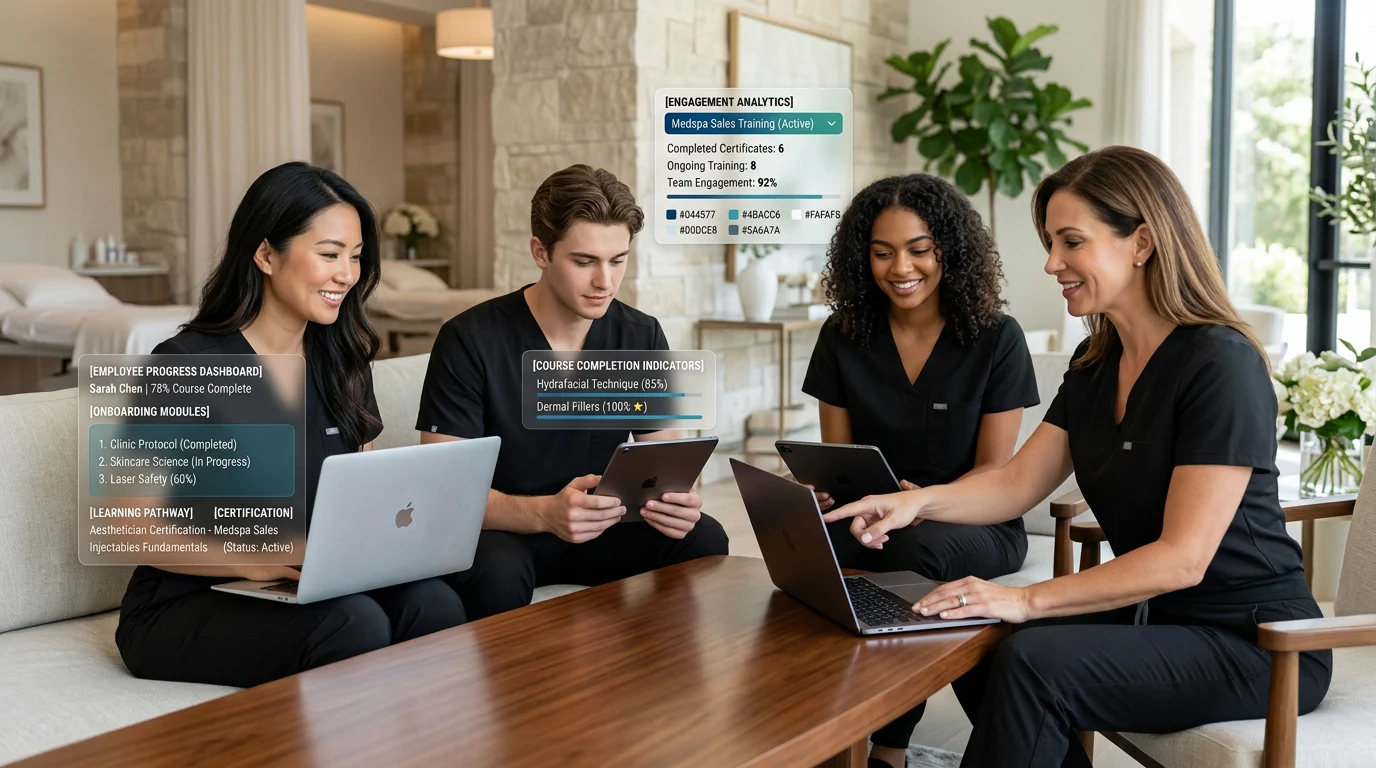
“In today’s competitive aesthetics industry, employee engagement is no longer just a human resources concern—it is a critical business strategy. Medspa owners and managers who invest in their teams often see improvements in patient satisfaction, treatment consistency, and overall profitability. By leveraging tools such as a Medspa LMS, businesses can create a more supportive work environment that helps employees stay motivated, confident, and productive even in high-pressure situations.” – Stephen Handisides
Why Employee Engagement Matters More Than Ever in Medspa Operations
The medspa industry has experienced significant growth in recent years, bringing increased demand for aesthetic treatments and wellness services. While this growth creates exciting opportunities, it also places tremendous pressure on staff members who must balance exceptional patient care with revenue-generating responsibilities.
Employee engagement directly influences how team members interact with clients, perform treatments, and contribute to the overall culture of the practice. Engaged employees are more likely to provide outstanding service, build strong patient relationships, and actively support business goals. In contrast, disengaged employees often struggle with motivation, productivity, and consistency, which can negatively impact the patient experience.
For medspa businesses, where reputation and client trust are everything, maintaining a highly engaged workforce can be a significant competitive advantage.
The Unique Challenges of Employee Engagement in High-Stress Service Environments
Unlike many traditional healthcare or retail settings, medspas operate at the intersection of clinical care, customer service, and sales. Employees are expected to deliver safe treatments, manage patient expectations, and contribute to revenue growth simultaneously.
Many professionals face demanding schedules filled with back-to-back appointments, leaving little time for recovery between clients. Additionally, they must navigate emotional conversations related to appearance, self-confidence, and treatment outcomes. These factors can create chronic workplace stress that gradually affects morale and performance if left unaddressed.
Without intentional engagement strategies, even talented and passionate employees can experience burnout, frustration, and decreased job satisfaction.
What Business Owners Can Expect from This Guide
This guide explores practical and cost-effective ways to improve employee engagement in high-stress medspa environments. You’ll learn how to identify the root causes of disengagement, recognize early warning signs of burnout, and implement strategies that support both employee well-being and business performance.
Most importantly, you’ll discover how building a more engaged workforce can lead to stronger patient retention, higher treatment quality, and increased revenue opportunities.
Understanding Employee Engagement in the Medspa Industry
What Employee Engagement Really Means
Employee engagement goes beyond whether an employee enjoys coming to work. It reflects the emotional commitment employees have toward their organization, its mission, and its success.
Engaged team members are invested in delivering excellent results because they feel connected to the business. They take ownership of their responsibilities, collaborate effectively with colleagues, and consistently seek ways to improve patient experiences.
In medspa settings, engagement often translates into better communication, stronger client relationships, and greater confidence when recommending treatments or products.
Engagement vs. Job Satisfaction
Many business leaders mistakenly assume job satisfaction and employee engagement are the same thing. While related, they are fundamentally different.
A satisfied employee may enjoy their compensation, schedule, or work environment but still lack motivation to go above and beyond. An engaged employee, on the other hand, actively contributes to business success and demonstrates a deeper level of commitment.
For medspas, creating engagement requires more than offering competitive pay. Employees need opportunities for growth, recognition, meaningful work, and a clear understanding of how their contributions impact the organization’s goals.
The Business Impact of Highly Engaged Employees
Highly engaged employees contribute significantly to both operational efficiency and financial performance. They are more likely to:
- Deliver consistent patient experiences
- Reduce costly treatment errors
- Increase patient retention
- Improve team collaboration
- Support service and retail sales initiatives
- Stay with the company longer
As a result, businesses often experience lower turnover costs, stronger client loyalty, and increased profitability. This connection between engagement and performance makes workforce development a strategic investment rather than an optional expense.
Why Medspa Teams Face Higher Stress Levels
Medspa professionals operate in an environment where expectations are consistently high. Patients expect exceptional results, personalized attention, and a luxury experience during every visit.
At the same time, employees must maintain clinical accuracy, comply with regulations, and meet productivity goals. The combination of these responsibilities can create a level of workplace stress that exceeds what many professionals experience in other service industries.
Managing Client Expectations and Emotional Demands
Aesthetic treatments often involve sensitive conversations about appearance, aging, and self-confidence. Employees must carefully manage patient expectations while maintaining empathy and professionalism.
When patients have unrealistic expectations or become dissatisfied with results, staff members frequently absorb the emotional impact of those interactions. Over time, this emotional labor can contribute to exhaustion and disengagement if adequate support systems are not in place.
Balancing Sales Targets with Patient Care
Many medspa professionals face pressure to achieve revenue goals while simultaneously delivering ethical, patient-centered care.
This balancing act can be stressful, particularly when employees feel that sales objectives conflict with their clinical responsibilities. Organizations that provide clear communication, effective coaching, and appropriate resources can help staff navigate these challenges more confidently.
Handling Long Hours and Back-to-Back Appointments
Busy schedules are common in successful medspas. While strong demand is beneficial for business growth, it can also leave employees physically and mentally drained.
Back-to-back appointments, limited breaks, and extended workdays can gradually reduce energy levels and increase the risk of burnout. Without proactive management, these conditions can negatively affect both employee engagement and patient satisfaction.
Identifying the Root Causes of Disengagement
Recognizing Early Warning Signs of Low Employee Engagement
Employee disengagement rarely happens overnight. Instead, it develops gradually through a combination of stress, frustration, and unmet needs.
Business leaders who recognize warning signs early can intervene before morale declines significantly and turnover becomes a problem.
Increased Absenteeism and Tardiness
One of the earliest indicators of disengagement is a noticeable increase in absenteeism or lateness. Employees who feel disconnected from their work often become less motivated to maintain consistent attendance.
While occasional absences are normal, recurring patterns may signal deeper issues that require attention.
Declining Service Quality
Disengaged employees may become less attentive to detail, less responsive to client concerns, and less enthusiastic during patient interactions.
In a medspa environment where customer experience is essential, even small declines in service quality can impact patient satisfaction and long-term retention.
Poor Team Collaboration
Healthy teamwork is critical in medspa operations. When engagement levels drop, communication often suffers.
Employees may become less willing to support colleagues, share information, or contribute to team initiatives. This can create friction within the workplace and reduce overall efficiency.
Common Factors That Lead to Burnout in Medspas
Understanding the causes of burnout is essential for developing effective engagement strategies. Several workplace factors consistently contribute to employee fatigue and disengagement.
Excessive Workloads
Heavy appointment schedules, staffing shortages, and growing administrative responsibilities can overwhelm employees over time.
When workloads consistently exceed reasonable limits, employees may feel unsupported and unable to perform at their best.
Lack of Recognition
Employees want to know their efforts matter. When hard work goes unnoticed, motivation can decline significantly.
Regular recognition, whether formal or informal, helps employees feel valued and reinforces positive performance behaviors.
Limited Career Growth Opportunities
Many medspa professionals are eager to expand their skills and advance their careers. When growth opportunities are limited, employees may begin looking elsewhere for professional development.
Providing ongoing learning opportunities, mentorship programs, and structured advancement pathways helps employees stay engaged and committed to long-term success.
Strengthening Leadership and Management Practices
The Critical Role of Leadership in Employee Engagement
Leadership has a direct influence on employee engagement, especially in high-stress medspa environments. Employees often look to managers for guidance, support, and reassurance during busy periods. When leaders are approachable, communicative, and supportive, teams are more likely to remain motivated and committed to their work.
Strong leadership also helps create a workplace culture where employees feel valued and respected. This sense of belonging can significantly improve morale, reduce turnover, and strengthen overall business performance. In many cases, employees do not leave organizations—they leave ineffective management. For medspa owners and clinic directors, investing in leadership development is one of the most impactful ways to improve engagement.
Training Managers to Support High-Stress Teams
Many managers are promoted because of their clinical expertise or sales performance, but leadership requires a unique set of skills. Without proper training, even well-intentioned managers may struggle to effectively support their teams.
Providing leadership training helps managers understand how to handle workplace stress, resolve conflicts, and maintain employee motivation. Structured development programs can also teach managers how to identify burnout risks before they affect performance.
Organizations that prioritize manager training often create stronger, more resilient teams capable of handling the daily pressures of medspa operations.
Coaching Instead of Micromanaging
Micromanagement can quickly undermine employee confidence and engagement. When staff members feel they are constantly being monitored or second-guessed, they may become less motivated and less likely to take initiative.
Coaching offers a more effective alternative. Rather than focusing on control, coaching emphasizes guidance, skill development, and problem-solving. Managers who coach their employees encourage ownership and accountability while helping team members improve their performance.
This approach is particularly beneficial in medspas, where professionals must make informed decisions while maintaining exceptional patient experiences.
Developing Emotional Intelligence
Emotional intelligence is one of the most valuable leadership skills in service-based businesses. It involves understanding emotions, managing reactions, and communicating effectively under pressure.
Managers with strong emotional intelligence can better recognize employee concerns, provide meaningful support, and navigate difficult conversations with professionalism. They are also more likely to foster trust and psychological safety within their teams.
When employees feel understood and respected, engagement naturally increases.
Leading by Example During Busy and Challenging Periods
Employees closely observe how leaders respond to stressful situations. During peak seasons, staffing shortages, or challenging client interactions, leadership behavior sets the tone for the entire organization.
Leaders who remain calm, solution-focused, and supportive during difficult times inspire confidence among team members. Their actions demonstrate that challenges can be managed without sacrificing professionalism or employee well-being.
Demonstrating Accountability
Accountability starts at the leadership level. Managers who accept responsibility for mistakes, follow through on commitments, and maintain transparency earn greater trust from their teams.
Employees are more likely to remain engaged when they see leaders holding themselves to the same standards expected of everyone else.
Maintaining Professionalism Under Pressure
The medspa environment can become fast-paced and emotionally demanding. Effective leaders understand the importance of maintaining composure even when faced with operational challenges.
By remaining professional during stressful situations, managers create a stable environment where employees can focus on delivering exceptional patient care rather than reacting to workplace tension.
Improving Communication Across the Organization
Establishing Effective Internal Communication Channels
Communication is one of the foundations of employee engagement. Without clear communication, misunderstandings increase, expectations become unclear, and frustration can quickly develop.
Medspa businesses should establish reliable communication systems that keep employees informed about operational updates, business goals, schedule changes, and organizational priorities. Whether through messaging platforms, management software, or regular meetings, consistency is key.
When employees have access to timely information, they feel more connected to the organization and better equipped to perform their roles effectively.
Conducting Meaningful Team Meetings
Meetings should do more than share updates—they should reinforce alignment, celebrate achievements, and address challenges proactively.
Well-structured meetings help employees understand business priorities while providing opportunities for collaboration and problem-solving. Rather than viewing meetings as interruptions, engaged teams see them as valuable opportunities to stay connected and informed.
Daily Huddles
Short daily huddles can significantly improve communication in busy medspa environments. These brief meetings allow teams to review schedules, discuss priorities, identify potential challenges, and coordinate patient care efforts.
Daily huddles also create opportunities for positive reinforcement and team motivation before the workday begins.
Weekly Performance Reviews
Regular performance discussions help employees understand their progress and identify opportunities for growth.
Weekly reviews do not need to be lengthy or overly formal. Simple conversations about goals, accomplishments, challenges, and development opportunities can strengthen employee engagement and improve accountability.
When employees receive consistent feedback, they are more likely to stay focused and motivated.
Encouraging Two-Way Communication
Effective communication is not just about leadership sharing information. Employees should also feel comfortable expressing concerns, sharing ideas, and providing feedback.
Organizations that encourage open dialogue often identify problems earlier and uncover valuable suggestions for improving operations.
Creating a culture where employees feel heard can significantly strengthen trust and engagement.
Employee Surveys
Employee surveys provide valuable insights into workplace satisfaction, engagement levels, and potential concerns.
Regular surveys allow leaders to identify recurring issues before they become major problems. More importantly, surveys demonstrate that leadership values employee input and is willing to listen.
To maximize effectiveness, organizations should share survey results and communicate any resulting action plans.
Anonymous Feedback Systems
Some employees may hesitate to voice concerns directly, particularly when discussing management practices or workplace challenges.
Anonymous feedback systems provide a safe way for employees to share honest opinions without fear of negative consequences. These systems can reveal valuable information that may otherwise remain hidden.
When leaders actively respond to anonymous feedback, employees gain confidence that their voices matter.
Supporting Employee Well-Being and Mental Health
Addressing Stress Before It Leads to Burnout
Burnout is one of the biggest threats to employee engagement in the medspa industry. Unfortunately, many organizations wait until performance declines before addressing employee stress.
A proactive approach is far more effective. Leaders should regularly assess workload demands, monitor employee well-being, and create opportunities for open conversations about stress management.
Early intervention can prevent burnout from becoming a long-term organizational problem.
Implementing Wellness Programs That Actually Work
Wellness initiatives are most effective when they address the real challenges employees face.
Rather than offering generic programs, medspa businesses should focus on practical solutions that support both physical and mental health. These initiatives may include stress management workshops, wellness stipends, professional development opportunities, or access to mental health resources.
The goal is to create programs employees genuinely find valuable rather than benefits that go unused.
Stress Management Resources
Providing employees with tools to manage workplace stress can significantly improve resilience and engagement.
Resources such as mindfulness training, mental health education, stress reduction workshops, and access to professional support services can help employees cope more effectively with the demands of their roles.
Organizations that prioritize stress management often experience lower turnover rates and stronger employee satisfaction.
Physical and Mental Wellness Benefits
Employee well-being extends beyond mental health. Physical wellness also plays a critical role in maintaining energy, focus, and job performance.
Benefits such as wellness reimbursements, fitness incentives, preventive health programs, and mental health support services can contribute to a healthier workforce. Employees who feel supported are often more engaged and productive.
Encouraging Work-Life Balance in a Fast-Paced Environment
Achieving work-life balance can be challenging in medspas where appointment schedules are often fully booked. However, balance remains essential for long-term employee engagement.
Organizations that respect personal time and encourage healthy boundaries create more sustainable work environments. Employees who have opportunities to recharge outside of work are better prepared to deliver exceptional service during business hours.
Flexible Scheduling Strategies
Flexibility can be a powerful engagement tool when implemented thoughtfully.
Options such as rotating shifts, staggered schedules, compressed workweeks, or occasional schedule adjustments can help employees better manage personal responsibilities while maintaining productivity.
Even small scheduling accommodations can improve morale and reduce workplace stress.
Managing Overtime Effectively
Occasional overtime may be necessary during busy periods, but excessive overtime can quickly contribute to burnout and disengagement.
Leaders should monitor workloads carefully, distribute responsibilities fairly, and ensure employees have adequate recovery time after demanding periods. By managing overtime strategically, medspa businesses can protect both employee well-being and service quality.
Leveraging Technology to Improve Engagement
Technology has become an essential tool for medspa businesses seeking to improve employee engagement while reducing workplace stress. When implemented strategically, digital solutions can eliminate many of the administrative frustrations that contribute to burnout and disengagement.
Employees who spend less time on repetitive administrative tasks have more opportunities to focus on patient care, professional development, and meaningful interactions with clients. For business owners and managers, technology also provides greater visibility into team performance, operational efficiency, and employee satisfaction.
Perhaps most importantly, the right technology solutions create a more organized and supportive work environment that helps employees feel empowered rather than overwhelmed.
Using Digital Tools to Reduce Administrative Burdens
Administrative overload is one of the most common sources of stress in medspa operations. Appointment confirmations, documentation requirements, inventory tracking, and patient communication can consume a significant portion of an employee’s workday.
Digital tools can automate many of these responsibilities, reducing unnecessary workload and minimizing the risk of human error. Automated reminders, electronic forms, digital patient records, and workflow management systems allow employees to focus on higher-value activities rather than routine administrative tasks.
By simplifying daily operations, medspa businesses can improve both employee satisfaction and operational efficiency.
Streamlining Scheduling and Workflow Management
Back-to-back appointments and constantly changing schedules often create stress for medspa professionals. Poor scheduling practices can lead to employee fatigue, patient delays, and decreased service quality.
Modern scheduling platforms help managers optimize appointment flow, balance workloads, and prevent overbooking. These systems provide greater visibility into staff availability and patient demand, making it easier to allocate resources effectively.
When schedules are managed efficiently, employees experience less stress and are better equipped to deliver exceptional patient experiences throughout the day.
Implementing Employee Feedback and Recognition Platforms
Recognition plays a critical role in maintaining employee engagement. However, many organizations struggle to provide consistent feedback and acknowledgment due to busy schedules and competing priorities.
Digital recognition platforms can help solve this challenge by creating structured opportunities for managers and peers to celebrate accomplishments, milestones, and positive contributions.
Similarly, employee feedback platforms encourage ongoing communication between leadership and staff. Rather than waiting for annual reviews, organizations can gather real-time insights into employee concerns and workplace satisfaction.
These tools help employees feel heard, valued, and connected to the organization’s success.
In addition, businesses that invest in a Medspa LMS can centralize learning resources, onboarding materials, and professional development programs. Combined with effective Medspa staff training, these systems help employees build confidence, improve performance, and stay engaged throughout their careers.
Measuring Employee Engagement Effectively
Improving employee engagement requires more than good intentions. Organizations must establish clear measurement systems that allow them to track progress, identify challenges, and evaluate the effectiveness of engagement initiatives.
Without measurable data, leaders may struggle to determine whether their efforts are producing meaningful results. Consistent measurement provides valuable insights that support informed decision-making and continuous improvement.
The most successful medspa businesses treat employee engagement as an ongoing business metric rather than a one-time project.
Key Metrics Every Medspa Should Track
Employee engagement can be measured through several key performance indicators that provide a comprehensive view of workforce health.
Tracking these metrics consistently allows organizations to identify trends, monitor improvements, and address potential problems before they affect operations or patient experiences.
Employee Retention Rates
Employee retention is one of the strongest indicators of engagement. High turnover often signals underlying issues such as burnout, poor management, inadequate training, or limited career development opportunities.
Monitoring retention rates helps leaders evaluate whether employees feel supported and motivated to remain with the organization long term.
When retention improves, businesses often benefit from lower recruitment costs, stronger team cohesion, and greater continuity of care for patients.
Employee Satisfaction Scores
Employee satisfaction surveys provide direct insights into how team members perceive their work environment, leadership, career opportunities, and overall experience.
Regular surveys help organizations identify areas where employees feel supported as well as areas requiring improvement. Tracking satisfaction scores over time makes it easier to evaluate the impact of engagement initiatives and workplace changes.
While satisfaction alone does not guarantee engagement, it remains an important indicator of workforce well-being.
Client Experience Metrics
Employee engagement and patient satisfaction are closely connected. Engaged employees are more likely to provide attentive service, build trust with patients, and create positive treatment experiences.
For this reason, client experience metrics such as patient reviews, retention rates, referral rates, and satisfaction scores can serve as indirect indicators of employee engagement.
When employee morale improves, positive patient outcomes often follow.
Conducting Regular Engagement Assessments
Formal engagement assessments provide a deeper understanding of employee attitudes, motivations, and workplace concerns.
These assessments may include surveys, focus groups, interviews, or performance discussions designed to uncover engagement drivers and barriers.
Rather than relying on assumptions, organizations can use assessment data to make evidence-based decisions that improve workplace culture and employee satisfaction.
Regular evaluations also demonstrate that leadership is committed to listening and responding to employee needs.
Turning Engagement Data into Actionable Improvements
Collecting data is only valuable when organizations use it to drive meaningful change.
After gathering engagement information, leaders should identify recurring themes, prioritize key challenges, and develop action plans that address employee concerns. Transparency is essential throughout this process.
Employees are more likely to participate in future surveys and feedback initiatives when they see that leadership takes action based on the information collected.
The most successful organizations create a continuous cycle of measurement, improvement, and reassessment that strengthens engagement over time.
Building a Sustainable Long-Term Engagement Strategy
Employee engagement is not a short-term initiative or a temporary response to workplace challenges. It is an ongoing commitment that should be embedded into every aspect of the business.
Organizations that view engagement as a long-term strategy are better positioned to attract top talent, retain experienced professionals, and maintain a positive workplace culture even during periods of rapid growth.
Creating sustainable engagement requires intentional leadership, consistent communication, and a willingness to adapt to changing workforce expectations.
Creating an Employee-Centric Business Model
An employee-centric business model recognizes that engaged employees are one of the organization’s most valuable assets.
Rather than focusing exclusively on financial performance, employee-centric organizations consider how decisions affect workforce well-being, professional development, and workplace satisfaction.
This approach often leads to stronger employee loyalty, improved patient experiences, and more sustainable business growth.
When employees feel supported, they are more likely to support the organization’s goals in return.
Integrating Engagement into Daily Operations
Employee engagement should not be limited to annual surveys or occasional team-building events. It should be incorporated into everyday business practices.
Leaders can achieve this by embedding recognition, communication, coaching, and development opportunities into daily workflows. Consistent engagement practices create a culture where employees feel valued throughout the year rather than only during special initiatives.
Technology can also support this effort. Tools such as Medical sales training software and structured Medspa staff training programs help reinforce learning, improve confidence, and provide employees with ongoing opportunities to develop new skills.
When engagement becomes part of daily operations, it becomes a sustainable competitive advantage.
Continuously Adapting to Workforce Needs
Workforce expectations continue to evolve, and organizations must remain flexible to maintain high levels of engagement.
What motivates employees today may not be as effective in the future. Leaders should regularly evaluate workplace policies, communication practices, development opportunities, and employee support programs to ensure they remain relevant.
Businesses that continuously adapt to employee needs are better equipped to retain talent, reduce burnout, and foster long-term engagement.
In the fast-paced medspa industry, adaptability is not simply beneficial—it is essential for sustained success.
Conclusion
Key Takeaways for Boosting Employee Engagement in High-Stress Medspa Service Businesses
Employee engagement is one of the most powerful drivers of success in the medspa industry. While aesthetic practices face unique challenges—including demanding schedules, emotional labor, patient expectations, and revenue pressures—organizations that prioritize employee engagement are better positioned to thrive in competitive markets.
Highly engaged employees deliver superior patient experiences, contribute to stronger team collaboration, reduce costly turnover, and support long-term business growth. More importantly, they help create a workplace culture where both employees and patients feel valued.
Building and maintaining engagement requires a proactive approach that combines effective leadership, open communication, employee well-being initiatives, professional development opportunities, and continuous feedback.
Prioritize People Before Processes
Operational efficiency is important, but people remain the foundation of every successful medspa business. When employees feel supported, respected, and appreciated, they are more likely to remain committed to their roles and contribute positively to organizational goals.
Businesses that focus solely on productivity metrics while neglecting employee well-being often experience higher turnover, lower morale, and reduced service quality. By prioritizing people first, medspa leaders create a stronger foundation for sustainable success.
Build a Culture of Recognition and Support
Recognition does not always require expensive rewards or elaborate programs. Consistent appreciation, constructive feedback, and genuine acknowledgment of employee contributions can significantly improve morale and engagement.
A culture of support also encourages employees to communicate openly about challenges, seek assistance when needed, and collaborate more effectively with colleagues. These practices help create a healthier and more resilient workforce.
Invest in Leadership, Well-Being, and Growth
Long-term employee engagement depends on continuous investment in people. Strong leadership development, meaningful wellness initiatives, and ongoing learning opportunities help employees remain motivated and productive.
Tools such as a Medspa LMS, structured Medspa staff training, and modern Medical sales training software can support professional growth while reducing workplace stress associated with uncertainty and skill gaps.
Ultimately, organizations that invest in their employees are investing in the future success of their business.
Frequently Asked Questions (FAQs)
How can medspa owners improve employee engagement quickly?
Medspa owners can improve engagement by focusing on communication, recognition, and employee support. Simple actions such as conducting regular check-ins, recognizing accomplishments, addressing workload concerns, and gathering employee feedback can create noticeable improvements in morale within a relatively short period.
What are the biggest causes of employee burnout in medspa businesses?
Common causes of burnout include excessive workloads, back-to-back appointments, unrealistic performance expectations, emotional fatigue from patient interactions, lack of recognition, and limited opportunities for professional growth. Addressing these issues proactively can significantly reduce burnout risks.
How does employee engagement affect client satisfaction and retention?
Engaged employees are more likely to provide attentive service, communicate effectively, and build strong relationships with patients. These positive interactions contribute to higher client satisfaction, increased loyalty, stronger referral rates, and improved patient retention.
What role does leadership play in employee engagement?
Leadership plays a central role in shaping workplace culture and employee experiences. Effective leaders provide support, communicate clearly, recognize achievements, and help employees navigate workplace challenges. Strong leadership often results in higher engagement, lower turnover, and improved team performance.
Which employee recognition strategies work best in high-stress service businesses?
The most effective recognition strategies are consistent, authentic, and timely. Public recognition, personalized appreciation, performance-based rewards, peer recognition programs, and opportunities for career advancement can all help employees feel valued and motivated.
How often should medspa businesses measure employee engagement?
Most organizations benefit from measuring employee engagement at least quarterly. However, shorter pulse surveys, feedback sessions, and regular one-on-one discussions can provide ongoing insights throughout the year and help leaders identify emerging concerns more quickly.
Can technology help improve employee engagement in medspas?
Yes. Technology can reduce administrative burdens, improve communication, streamline scheduling, and support professional development. Solutions such as employee feedback platforms, recognition systems, workflow management tools, and learning platforms can contribute significantly to a more engaged workforce.
What are the long-term benefits of maintaining a highly engaged medspa workforce?
Long-term benefits include improved employee retention, stronger workplace culture, enhanced patient satisfaction, increased productivity, reduced recruitment costs, better treatment consistency, and higher profitability. Engaged employees often become advocates for the business and contribute to sustainable growth.
How can V-Unite help boost Employee Engagement in High-Stress Medspa Service Businesses?
V-Unite helps medspa organizations create a more engaged, knowledgeable, and confident workforce through comprehensive training and development solutions. By providing a centralized Medspa LMS, businesses can streamline onboarding, deliver consistent Medspa staff training, and ensure employees have access to the resources they need to succeed.
In addition, V-Unite’s learning platform supports ongoing education, performance improvement, and skill development through advanced Medical sales training software and customized learning pathways. These tools help reduce employee uncertainty, improve confidence in patient interactions, and create clearer opportunities for career growth.
By combining professional development with operational efficiency, V-Unite empowers medspa leaders to strengthen employee engagement, improve retention, and build a high-performing team capable of delivering exceptional patient experiences.
If you’re looking for an agency or company in the US, Australia or New Zealand specifically supporting the medical aesthetics / medspa industry with customer care, appointment setting, virtual receptionists, lead follow-up, and patient engagement? Contact V-Assist!
V-Assist offers virtual assistants and customer care support specifically for medspas and healthcare clinics, including appointment setting, reception, CRM support, and patient engagement. Strong fit if you want industry-trained offshore or hybrid support.