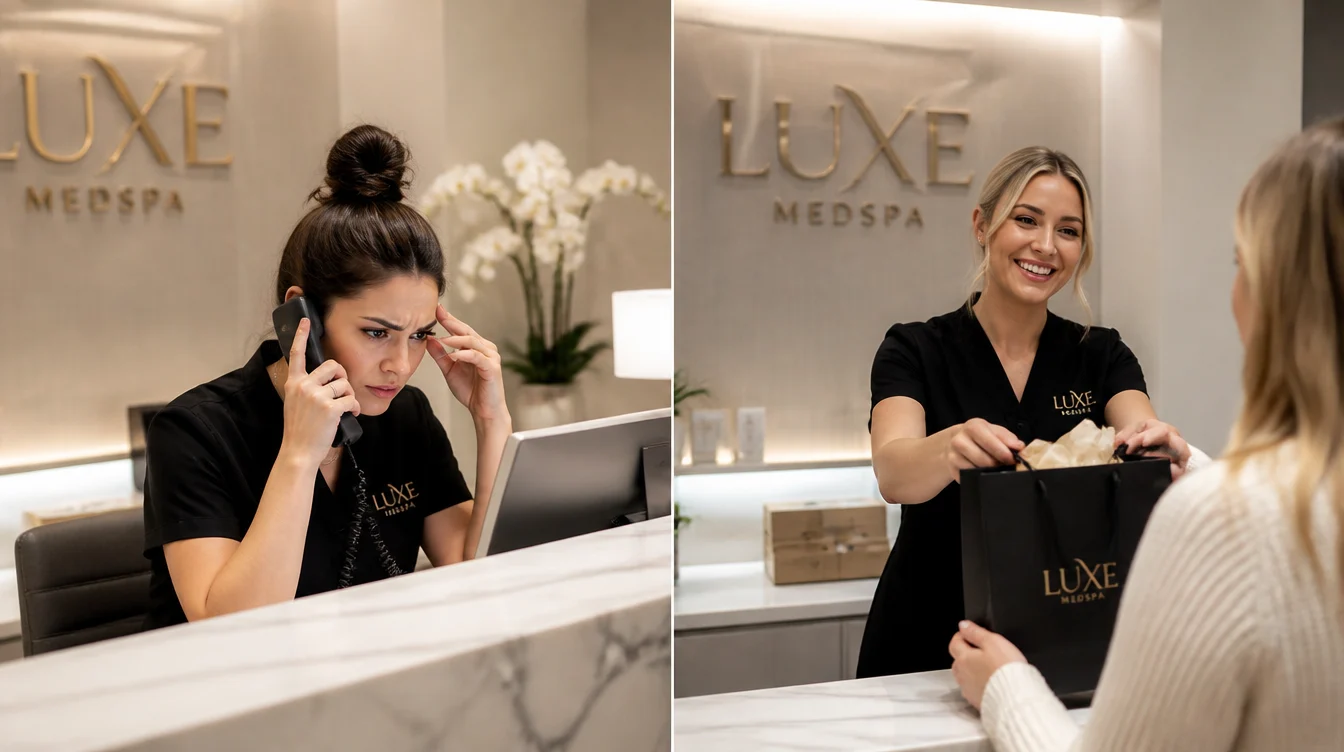
“Clinician burnout has become one of the biggest challenges facing today’s aesthetic practices. While many medspas focus on reducing stress after employees begin treating patients, burnout often starts much earlier—during onboarding. A well-designed Medspa onboarding software solution helps new clinicians feel supported, organized, and confident from their very first day. Instead of overwhelming new hires with scattered documents, inconsistent training, and unclear expectations, a modern onboarding platform creates a structured learning experience that accelerates productivity while protecting employee well-being.” – Stephen Handisides
As medspas continue to grow, investing in smarter onboarding isn’t simply about improving training. It’s about creating an environment where clinicians can succeed, patients receive consistent care, and practices reduce the costly cycle of employee turnover.
Why Clinician Burnout Is a Growing Challenge in Modern Medspas
The demand for aesthetic treatments continues to rise, placing increasing pressure on injectors, nurse practitioners, estheticians, and other clinical staff. Many clinicians are expected to quickly master new technologies, treatment protocols, patient communication skills, and compliance requirements while maintaining exceptional patient experiences.
Without the right support, this constant pressure can lead to mental fatigue, decreased confidence, and emotional exhaustion. Over time, burnout affects not only employee well-being but also patient care, workplace morale, and business performance.
For medspa owners and practice managers, preventing burnout has become a strategic priority rather than simply an employee wellness initiative.
The Hidden Connection Between Onboarding and Employee Well-Being
Many organizations underestimate how strongly onboarding influences long-term job satisfaction.
A new employee’s first few days often shape their confidence, engagement, and perception of workplace support. When onboarding feels disorganized or overwhelming, clinicians may begin questioning their abilities before they even treat their first patient.
Conversely, a structured onboarding experience builds confidence through clear expectations, guided learning, and achievable milestones. Employees who feel supported early are more likely to remain engaged, perform confidently, and stay with the organization long term.
Understanding Clinician Burnout in the Medspa Industry
Burnout rarely develops overnight. It often results from a combination of ongoing stress, unclear expectations, insufficient support, and excessive mental workload. Understanding these contributing factors allows medspa leaders to create training strategies that reduce stress before it becomes a long-term problem.
What Is Clinician Burnout?
Clinician burnout is a state of physical, emotional, and mental exhaustion caused by prolonged workplace stress. It commonly includes feelings of fatigue, reduced motivation, decreased confidence, emotional detachment, and lower job satisfaction.
In medspas, burnout can affect employees at every level—from newly hired injectors to experienced providers—especially when they feel unsupported or overwhelmed by daily responsibilities.
Recognizing burnout early allows organizations to intervene before employee performance and patient care begin to suffer.
Common Causes of Burnout in Aesthetic Practices
Several workplace factors contribute to clinician burnout within aesthetic practices.
These commonly include:
- High patient volumes
- Rapidly changing treatment offerings
- Complex clinical protocols
- Administrative responsibilities
- Pressure to meet productivity goals
- Inadequate onboarding
- Limited coaching and mentorship
- Poor communication between departments
While these challenges cannot always be eliminated, they can be significantly reduced through better onboarding, continuous education, and structured support systems.
The Financial and Operational Cost of Employee Burnout
Burnout affects far more than employee morale.
When clinicians become overwhelmed, organizations often experience increased turnover, recruitment expenses, longer onboarding cycles, inconsistent patient experiences, and decreased productivity. Managers also spend additional time addressing performance concerns and filling staffing gaps.
Replacing skilled clinicians requires considerable time and financial investment. Preventing burnout through effective onboarding is often far less expensive than repeatedly recruiting and training new employees.
How Burnout Impacts Patient Satisfaction and Business Growth
Patients quickly recognize when employees appear stressed, distracted, or disengaged.
Burnout can reduce communication quality, increase documentation errors, lengthen appointment times, and negatively affect patient trust. Dissatisfied patients may be less likely to return, purchase additional treatments, or recommend the practice to others.
By supporting clinicians from the beginning of their employment, medspas strengthen both patient experiences and long-term business growth.
Why Burnout Often Begins Before the First Patient Appointment
Many leaders assume burnout develops after months of demanding work. In reality, the earliest warning signs frequently appear during onboarding.
When new employees receive too much information too quickly without structured guidance, they may begin feeling overwhelmed long before they interact with their first patient.
Information Overload During Onboarding
New clinicians must absorb a tremendous amount of information within a short period.
Clinical protocols, treatment guidelines, documentation requirements, scheduling systems, compliance procedures, patient communication standards, and company policies are often introduced simultaneously.
Without organized learning pathways, this information overload creates unnecessary stress that reduces knowledge retention and confidence.
Unclear Expectations and Job Responsibilities
One of the fastest ways to create workplace anxiety is through ambiguity.
When employees are uncertain about responsibilities, performance expectations, or success metrics, they often experience unnecessary stress trying to determine whether they’re meeting organizational standards.
Clear onboarding programs establish defined expectations from the beginning, helping clinicians understand both their responsibilities and the resources available to support them.
Inconsistent Training Across Locations
For growing medspas with multiple locations, inconsistent onboarding presents another significant challenge.
Different trainers may emphasize different procedures, communication styles, or clinical protocols, creating inconsistent employee experiences and uneven patient care.
Standardized onboarding ensures every clinician receives the same high-quality training regardless of location, instructor, or hiring date.
Lack of Early Support and Confidence Building
Confidence develops through preparation, practice, and constructive feedback.
Unfortunately, some new hires receive minimal guidance after completing initial orientation, leaving them uncertain about clinical procedures or patient interactions.
Early coaching, structured learning, and accessible training resources help clinicians gradually build confidence while reducing the anxiety often associated with beginning a new role.
What Is a Modern Medspa Onboarding Platform?
Traditional onboarding often relies on printed manuals, spreadsheets, lengthy presentations, and informal shadowing sessions. While these methods can introduce basic concepts, they rarely provide the structured, personalized learning experience today’s clinicians need.
Modern onboarding platforms transform this process by organizing training into clear, manageable learning journeys that support employees from their first day through long-term professional development.
Defining a Digital Onboarding Platform
A digital onboarding platform centralizes employee education, making training materials, assessments, policies, certifications, and learning progress accessible from a single location.
Rather than searching through emails or paper documents, clinicians can easily access everything they need while learning at a comfortable pace.
When integrated with Healthcare onboarding platform capabilities, organizations gain standardized onboarding processes that improve consistency while reducing administrative workload.
Core Features That Differentiate Modern Solutions
Modern onboarding platforms offer far more than digital document storage.
Key features often include:
- Interactive learning modules
- Role-based learning paths
- Automated compliance training
- Progress tracking dashboards
- Knowledge assessments
- Video-based instruction
- Digital checklists
- Mobile accessibility
- Automated reminders
- Performance reporting
These capabilities simplify onboarding while giving managers greater visibility into employee readiness.
How Onboarding Platforms Support Clinical and Administrative Teams
A well-designed onboarding platform benefits every department within the organization.
Clinical staff receive organized education, treatment protocols, and competency assessments, while administrative teams gain standardized workflows, automated documentation, and simplified training management.
Integration with Medical sales training software can further enhance employee development by strengthening consultation skills, patient communication, treatment education, and ethical service recommendations alongside clinical onboarding.
The Link Between Effective Onboarding and Burnout Prevention
Burnout prevention begins with creating an onboarding experience that builds confidence instead of confusion.
When clinicians receive structured guidance, realistic expectations, and ongoing support, they are far more likely to feel prepared, engaged, and motivated throughout their employment.
Building Confidence from Day One
Confidence doesn’t develop through information alone—it develops through progressive learning.
Modern onboarding platforms introduce concepts in manageable stages, allowing clinicians to master foundational knowledge before moving to more advanced responsibilities. This gradual approach helps employees feel successful early in their careers while reducing unnecessary stress.
Reducing Anxiety Through Structured Learning
Learning becomes far less intimidating when employees know exactly what comes next.
Structured onboarding eliminates uncertainty by organizing training into logical sequences with clear milestones, assessments, and measurable progress. Employees spend less time worrying about missing information and more time developing meaningful skills.
This organized learning environment promotes greater confidence while reducing cognitive overload.
Establishing Realistic Performance Expectations
Many new hires become discouraged because they believe they should master every responsibility immediately.
Effective onboarding establishes realistic expectations by communicating that professional development is a continuous process. Employees understand what success looks like at each stage of learning while receiving consistent coaching throughout their development.
Clear expectations reduce unnecessary pressure while encouraging healthy long-term growth.
Encouraging Early Engagement and Accountability
Employees are more engaged when they actively participate in their own learning.
Modern onboarding platforms encourage accountability through interactive lessons, knowledge checks, progress tracking, and personalized learning pathways. Rather than passively receiving information, clinicians become active participants in their professional development.
This early engagement builds stronger learning habits, improves retention, and lays the foundation for a healthier, more confident workforce.
Creating a Consistent Onboarding Experience
One of the biggest challenges growing medspas face is delivering the same high-quality onboarding experience to every new hire. When training depends solely on individual managers or experienced clinicians, important information can be communicated differently—or overlooked entirely. These inconsistencies often create confusion, increase stress, and contribute to burnout before employees have fully settled into their roles.
A modern onboarding platform removes this uncertainty by providing a standardized learning experience that every employee follows. Regardless of location, department, or start date, each clinician receives the same training, expectations, and support. This consistency not only improves employee confidence but also protects the quality of patient care across the organization.
Standardized Training Across Every Location
As medspas expand to multiple clinics, maintaining consistent onboarding becomes increasingly difficult.
Different trainers naturally have different teaching styles, priorities, and levels of experience. Without standardized processes, clinicians may receive conflicting information about treatment protocols, documentation procedures, patient communication, or clinic policies.
Medspa onboarding software creates a centralized training framework that delivers identical learning experiences across every location. Every new injector, nurse practitioner, esthetician, or clinical team member begins with the same foundation, helping ensure consistency from the very first day.
Standardized onboarding also makes it easier for leadership teams to update procedures, knowing every employee will immediately receive the latest information.
Delivering the Same Brand Standards to Every Hire
Patients expect the same professional experience regardless of which location they visit.
That consistency begins with onboarding. New employees should understand not only clinical protocols but also the organization’s culture, communication style, service philosophy, and patient care standards.
A digital onboarding platform reinforces these expectations through structured learning modules, videos, interactive exercises, and real-world scenarios. Instead of relying on informal conversations, every employee learns how the organization expects them to represent the brand.
This creates a more unified patient experience while strengthening trust in the business.
Eliminating Knowledge Gaps Before They Become Problems
Knowledge gaps are often difficult to identify until they begin affecting patient care.
A clinician who misunderstands a documentation requirement or a front desk employee who provides inconsistent treatment information can unintentionally create operational challenges and damage patient confidence.
Modern onboarding platforms continuously assess employee understanding through quizzes, competency checks, and progress tracking. Managers can quickly identify areas where additional coaching is needed before small misunderstandings become larger performance issues.
This proactive approach supports better clinical outcomes while reducing workplace stress.
Accelerating Time-to-Competency Without Overwhelming New Hires
One of the primary goals of onboarding is helping new employees become productive as quickly as possible. However, speed should never come at the expense of confidence or learning quality.
Modern onboarding platforms strike the right balance by delivering structured education in manageable stages. Instead of overwhelming employees with excessive information during their first week, learning is distributed over time to improve understanding, retention, and long-term performance.
Breaking Learning into Manageable Milestones
Learning complex clinical procedures requires progression.
Rather than presenting large volumes of information at once, modern onboarding platforms divide education into smaller milestones that employees can complete step by step.
Clinicians first master foundational knowledge before advancing to more specialized topics, reducing cognitive overload while creating a stronger learning experience.
This incremental approach helps employees build confidence naturally while maintaining motivation throughout onboarding.
Self-Paced Learning for Better Knowledge Retention
Every employee learns differently.
Some clinicians quickly understand treatment protocols but need additional time with documentation systems. Others may excel clinically while requiring more practice with patient communication.
Self-paced learning allows employees to spend additional time reviewing challenging concepts without feeling rushed or pressured. This flexibility leads to stronger knowledge retention while reducing unnecessary stress during onboarding.
When combined with a Healthcare onboarding platform, self-paced learning creates a more supportive and personalized educational experience.
Reinforcing Skills Through Practice and Assessments
Knowledge is strengthened through repetition and application.
Modern onboarding platforms reinforce learning with interactive assessments, scenario-based exercises, competency evaluations, and practical demonstrations. These activities allow employees to apply new knowledge before using it in real patient interactions.
Regular assessments also help managers verify readiness while giving employees confidence in their growing abilities.
Reducing Administrative Burdens on Clinical Leaders
Clinical leaders already balance patient care, scheduling, mentoring, compliance oversight, and operational management. Repeating the same onboarding activities for every new hire consumes valuable time that could be better invested in coaching, leadership, and strategic growth.
Modern onboarding platforms automate many repetitive administrative tasks, allowing managers to focus on developing people rather than managing paperwork.
Automating Repetitive Training Tasks
Traditional onboarding often requires managers to repeatedly explain the same policies, procedures, and workflows.
Automation transforms this process by delivering standardized lessons, assigning required courses, sending reminders, tracking completion, and generating progress reports automatically.
Employees receive immediate access to learning materials without waiting for scheduled training sessions, allowing onboarding to begin even before their first day in the clinic.
This automation saves time while ensuring consistency throughout the organization.
Simplifying Documentation and Compliance Tracking
Healthcare organizations must maintain accurate records of employee training, certifications, policy acknowledgments, and compliance activities.
Managing these documents manually can become both time-consuming and error-prone.
A digital onboarding platform centralizes documentation, automatically records completed training, stores certifications, and generates compliance reports whenever needed. Managers gain immediate visibility into employee progress without sorting through spreadsheets or paper files.
This streamlined process reduces administrative stress while supporting regulatory readiness.
Allowing Managers to Focus on Coaching Instead of Paperwork
Technology should support leaders—not replace them.
By automating routine administrative work, onboarding platforms free managers to spend more time providing personalized coaching, answering complex clinical questions, and mentoring employees through real-world situations.
This human interaction remains essential for building confidence, strengthening workplace culture, and supporting long-term employee development.
Supporting Clinical Excellence Through Continuous Learning
Onboarding should never mark the end of employee education. The aesthetic industry continues evolving with new treatments, technologies, safety recommendations, and patient expectations. Continuous learning ensures clinicians remain knowledgeable, confident, and prepared throughout their careers.
Modern onboarding platforms naturally extend into ongoing professional development, helping organizations maintain consistently high standards of clinical excellence.
Reinforcing Treatment Protocols
Clinical protocols evolve over time as new research, products, and techniques become available.
Continuous learning allows organizations to update employees quickly while reinforcing existing best practices through refresher courses, assessments, and interactive learning modules.
Regular reinforcement helps clinicians maintain confidence while reducing the likelihood of procedural inconsistencies.
Keeping Teams Updated on New Technologies and Procedures
Innovation is a defining characteristic of the medspa industry.
New laser technologies, injectable products, skincare treatments, and aesthetic procedures require ongoing education to ensure safe and effective patient care.
Modern onboarding systems simplify these updates by delivering new training directly to employees through structured learning paths. Clinicians stay informed without requiring lengthy in-person training sessions.
Organizations that also utilize Medical sales training software can complement clinical education with communication strategies that help clinicians confidently explain new services, educate patients ethically, and support informed treatment decisions.
Encouraging Lifelong Professional Development
Employees who continue learning often experience greater job satisfaction and stronger career growth.
Modern onboarding platforms encourage ongoing development by providing certifications, advanced learning pathways, skill tracking, and professional development opportunities beyond initial orientation.
This culture of continuous improvement benefits both employees and the organization by strengthening engagement, retention, and long-term performance.
Improving Collaboration Between Clinical and Front Desk Teams
Outstanding patient experiences depend on seamless collaboration between clinical providers and administrative staff. When departments communicate effectively, patients experience smoother appointments, clearer communication, and greater confidence throughout their treatment journey.
Onboarding plays a critical role in building this collaboration from the beginning.
Aligning Communication Standards
Patients should receive consistent information regardless of whether they speak with a front desk coordinator, nurse, injector, or practice manager.
Structured onboarding establishes shared communication standards that guide how employees answer questions, explain procedures, discuss scheduling, and manage patient expectations.
This consistency reduces confusion while strengthening the organization’s professional image.
Clarifying Roles and Responsibilities
Misunderstandings often occur when employees are uncertain about who is responsible for specific tasks.
Effective onboarding clearly defines responsibilities across departments, helping employees understand how their work supports the broader patient experience.
Clear role definitions improve accountability while reducing workplace frustration and unnecessary duplication of effort.
Building Strong Cross-Functional Workflows
Successful medspas rely on teamwork rather than isolated departments.
Modern onboarding platforms introduce employees to the complete patient journey, helping them understand how scheduling, consultation, treatment, documentation, follow-up, and patient education connect across the organization.
By strengthening cross-functional collaboration from day one, organizations create more efficient workflows, improve communication between teams, and provide patients with a smoother, more coordinated experience that supports long-term loyalty.
Choosing the Right Medspa Onboarding Platform
Not all onboarding solutions are built for the unique needs of aesthetic practices. While generic employee onboarding tools may handle basic orientation, medspas require a platform that supports clinical training, compliance, operational workflows, and continuous professional development. Choosing the right solution is an investment in your employees, your patients, and the long-term success of your business.
The ideal platform should simplify onboarding without sacrificing quality, helping clinicians become confident and productive while giving managers complete visibility into employee progress.
Essential Features to Look For
A modern onboarding platform should do much more than store training documents. It should create a structured learning experience that supports employees from their first day through every stage of their career.
When evaluating Medspa onboarding software, look for capabilities such as:
- Role-based learning paths for clinicians, front desk staff, and managers
- Automated onboarding checklists and workflows
- Interactive learning modules and video training
- Skills assessments and competency tracking
- Compliance and policy management
- Progress dashboards and reporting
- Mobile-friendly access for learning anywhere
- Integration with existing operational systems
- Automated reminders and notifications
- Continuous learning and refresher training
A comprehensive platform should reduce administrative work while making learning more engaging and effective.
Questions to Ask Before Selecting a Vendor
Before investing in a new onboarding solution, it’s important to evaluate whether the platform aligns with your current and future operational needs.
Consider asking questions such as:
- Is the platform designed specifically for healthcare or aesthetic practices?
- Can learning paths be customized for different roles?
- How are employee progress and competency measured?
- Does the platform support compliance documentation?
- How easily can training content be updated?
- Does it integrate with our existing software?
- Is implementation straightforward for busy practices?
- What reporting and analytics are available?
- How responsive is the vendor’s customer support?
These questions help ensure you’re selecting a solution that will continue delivering value as your organization grows.
Ensuring Scalability for Future Growth
Many medspas begin with a single location before expanding into multiple clinics.
An onboarding platform should grow alongside your business without requiring major operational changes. Scalable systems allow administrators to add new locations, onboard additional employees, standardize learning across teams, and maintain consistent quality as the organization expands.
Choosing a solution that integrates with a Healthcare onboarding platform strategy ensures your practice remains prepared for future growth while maintaining operational consistency across every location.
Conclusion
Preventing clinician burnout doesn’t begin after employees start seeing patients—it begins the moment they accept your job offer. The way new hires experience their first days and weeks shapes their confidence, engagement, and long-term commitment to your practice.
A structured, supportive onboarding process removes uncertainty, reduces stress, and gives clinicians the knowledge they need to succeed without feeling overwhelmed.
Why Burnout Prevention Starts Before the First Shift
Burnout is often the result of accumulated stress, unclear expectations, and inadequate support.
By replacing fragmented onboarding with structured digital learning, medspas create an environment where employees feel prepared rather than pressured. Organized education, accessible resources, and continuous coaching help clinicians build confidence before they begin treating patients.
Starting strong lays the foundation for long-term success.
Building Stronger Teams Through Smarter Onboarding
Successful medspas recognize that exceptional patient experiences begin with confident, well-supported employees.
Modern onboarding simplifies training, standardizes expectations, and strengthens collaboration across clinical and administrative teams. Rather than relying on inconsistent manual processes, practices can create repeatable systems that develop capable employees while reducing managerial workload.
Combining Medspa onboarding software with Medical sales training software further strengthens clinician communication, consultation skills, and patient education, creating a more complete learning experience for every new hire.
Investing in Long-Term Employee Success and Better Patient Care
Employee development should never end after orientation.
Continuous learning helps clinicians remain current with evolving treatments, technologies, and best practices while supporting ongoing professional growth. Practices that invest in employee success often experience stronger retention, improved workplace culture, higher patient satisfaction, and more sustainable business growth.
Ultimately, reducing burnout is not simply about helping employees feel better—it’s about creating healthier teams that consistently deliver outstanding patient care.
Summary
A modern onboarding platform transforms the way medspas prepare new clinicians for success. By replacing fragmented training with structured, technology-driven learning, practices can reduce stress, improve confidence, and create a stronger foundation for long-term employee engagement.
This proactive approach benefits employees, managers, patients, and the business alike.
Key Reasons Modern Onboarding Reduces Clinician Burnout
The most effective onboarding programs help prevent burnout by:
- Providing structured learning from day one
- Reducing information overload
- Clarifying expectations and responsibilities
- Building confidence gradually
- Standardizing training across every location
- Supporting continuous coaching and development
- Improving communication and collaboration
- Reducing administrative burdens on managers
Together, these improvements create a healthier workplace where clinicians can thrive.
Essential Features Every Medspa Onboarding Platform Should Offer
When selecting a platform, prioritize solutions that provide:
- Personalized learning paths
- Interactive training modules
- Skills assessments and competency tracking
- Automated onboarding workflows
- Compliance management
- Reporting and analytics
- Mobile accessibility
- Continuous learning capabilities
- Integration with operational systems
- Scalability for future business growth
These capabilities support both operational efficiency and employee well-being.
Action Steps for Creating a More Resilient Workforce
To build a stronger onboarding experience:
- Evaluate your current onboarding process and identify pain points.
- Standardize training across every department and location.
- Implement a digital onboarding platform that supports structured learning.
- Measure employee progress through meaningful performance metrics.
- Continue supporting clinicians with ongoing education beyond onboarding.
Taking these steps helps create a more confident, engaged workforce while reducing the risk of long-term burnout.
Frequently Asked Questions (FAQs)
What is a modern medspa onboarding platform?
A modern medspa onboarding platform is a digital training solution that centralizes employee education, compliance, documentation, assessments, and learning progress. It provides a structured onboarding experience that helps clinicians become productive faster while reducing administrative workload.
How does onboarding influence clinician burnout?
Onboarding shapes an employee’s first impression of the organization. Clear expectations, structured learning, and ongoing support reduce uncertainty and stress, helping prevent the emotional exhaustion that can contribute to long-term burnout.
What features should a medspa onboarding platform include?
Look for role-based learning paths, automated workflows, progress tracking, compliance management, mobile learning, competency assessments, analytics, reporting, and seamless integration with existing operational systems.
How long should a medspa onboarding program last?
While initial orientation may last several days or weeks, effective onboarding extends beyond the first month. Continuous learning and ongoing coaching help employees refine their skills, adapt to new procedures, and remain confident throughout their careers.
Can onboarding platforms improve employee retention?
Yes. Employees who receive organized, supportive onboarding are more likely to feel confident, engaged, and connected to the organization. This positive experience often contributes to improved retention and reduced turnover.
How do onboarding platforms support compliance and patient safety?
Digital onboarding platforms standardize compliance education, document training completion, reinforce organizational policies, and ensure employees consistently follow established clinical protocols, helping reduce operational risk and improve patient safety.
Are onboarding platforms suitable for multi-location medspas?
Absolutely. Centralized onboarding allows every clinic to deliver the same training, policies, communication standards, and operational procedures, creating greater consistency across the entire organization.
How can onboarding platforms reduce manager workload?
Automation eliminates many repetitive administrative tasks, including assigning courses, tracking progress, managing documentation, and generating reports. Managers can spend more time mentoring employees and less time managing paperwork.
What metrics should medspas track to evaluate onboarding success?
Important metrics include employee retention, time-to-competency, assessment scores, patient satisfaction, employee engagement, compliance completion, and overall productivity improvements.
How does continuous learning help prevent clinician burnout?
Continuous learning keeps employees informed, confident, and supported throughout their careers. Regular education, coaching, and skills reinforcement reduce uncertainty while helping clinicians adapt to evolving technologies, treatments, and patient expectations.
How can V-Unite help you with the modern medspa onboarding platform?
V-Unite provides an all-in-one learning solution designed specifically to simplify onboarding, strengthen workforce development, and improve operational consistency for growing medspas. By combining Medspa onboarding software, a scalable Healthcare onboarding platform, and integrated Medical sales training software, V-Unite helps practices automate onboarding, standardize clinical education, reinforce compliance, and support continuous professional development.
Whether you’re onboarding your first clinician or expanding across multiple locations, V-Unite gives your team the tools to reduce burnout, improve employee retention, accelerate time-to-productivity, and create consistently exceptional patient experiences.
Ready to Build a Stronger, More Resilient Medspa Team?
Your onboarding process shapes every new clinician’s success. Give your employees the confidence, structure, and support they need from day one with V-Unite’s modern onboarding solution.
Contact V-Unite today to schedule a personalized demo and discover how smarter onboarding can reduce clinician burnout, improve retention, streamline training, and help your medspa deliver exceptional patient care while scaling with confidence.
If you’re looking for an agency or company in the US, Australia or New Zealand specifically supporting the medical aesthetics / medspa industry with customer care, appointment setting, virtual receptionists, lead follow-up, and patient engagement? Contact V-Assist! The Top Medspa VA & Medical Virtual Assistant Services for you!
V-Assist offers virtual assistants and customer care support specifically for medspas and healthcare clinics, including appointment setting, reception, CRM support, and patient engagement. Strong fit if you want industry-trained offshore or hybrid support.