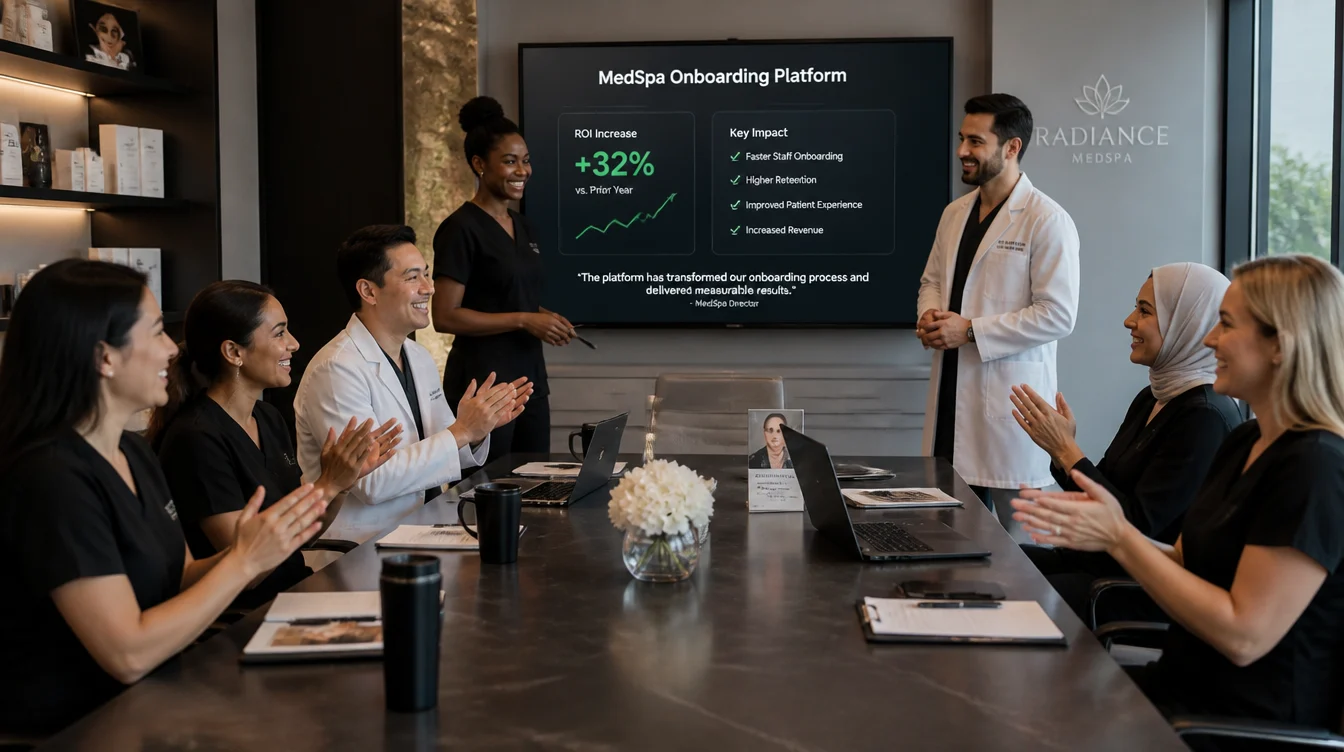
“Healthcare organizations today face increasing pressure to recruit, onboard, and retain qualified professionals while maintaining strict regulatory compliance and delivering exceptional patient care. As hiring demands continue to rise, relying on spreadsheets, paper files, and disconnected HR systems creates unnecessary delays and costly inefficiencies. This is why investing in Partner onboarding software has become a strategic priority rather than simply an operational upgrade. Modern healthcare onboarding platforms streamline administrative workflows, reduce compliance risks, and accelerate employee readiness, enabling hospitals, clinics, and healthcare organizations to achieve measurable business outcomes while creating a better onboarding experience for every new hire.” – Stephen Handisides
The Growing Complexity of Healthcare Workforce Management
Healthcare onboarding has evolved far beyond collecting employee paperwork and conducting orientation sessions. Every new physician, nurse, allied health professional, or administrative employee must complete numerous requirements before they can begin serving patients.
Organizations must manage:
- Professional license verification
- Credentialing and privileging
- HIPAA and regulatory compliance
- Role-specific certifications
- Department-specific training
- Equipment access
- IT provisioning
- Policy acknowledgements
For large hospitals, enterprise healthcare systems, multi-location clinics, and healthcare staffing agencies, these tasks often happen simultaneously across dozens—or even hundreds—of new employees.
As healthcare organizations continue expanding through acquisitions, regional growth, or private equity investments, onboarding complexity multiplies. Different locations frequently use inconsistent processes, making it difficult to maintain compliance and operational consistency across the organization.
Without standardized onboarding, HR teams spend valuable time chasing documents instead of focusing on strategic workforce initiatives.
Why Traditional Paper-Based and Manual Onboarding No Longer Works
Many healthcare organizations still depend on paper forms, email attachments, spreadsheets, or generic HR software that wasn’t designed for the unique requirements of medical organizations.
While these approaches may have worked years ago, they struggle to support today’s hiring volume and regulatory expectations.
Manual onboarding often creates:
- Missing or outdated documentation
- Duplicate data entry
- Delayed credential verification
- Lack of onboarding visibility
- Inconsistent employee experiences
- Increased compliance exposure
Every manual step introduces another opportunity for human error.
For credentialing managers, medical staff coordinators, and HR directors, tracking dozens of onboarding checklists across multiple departments quickly becomes overwhelming. A single missed document or expired certification can delay employee start dates, postpone patient scheduling, and create operational bottlenecks that affect the entire organization.
These inefficiencies don’t simply create administrative frustration—they directly impact revenue generation and workforce productivity.
How a Dedicated Healthcare Onboarding Platform Solves Modern Challenges
A dedicated healthcare onboarding platform transforms onboarding from a reactive administrative process into a proactive operational strategy.
Instead of relying on disconnected systems, organizations can automate workflows from the moment an offer is accepted until the employee becomes fully productive.
Modern onboarding platforms provide centralized dashboards that allow HR teams, credentialing specialists, department managers, and executives to monitor every onboarding milestone in real time.
Automated reminders ensure that required documentation is submitted before deadlines, while digital workflows eliminate repetitive manual tasks that consume valuable staff hours.
Organizations also gain standardized onboarding experiences across every facility, reducing variation while improving operational consistency.
For growing healthcare organizations, specialized solutions such as Medspa onboarding software provide additional flexibility by supporting industry-specific workflows, ensuring new hires meet operational and compliance requirements before interacting with patients.
Ultimately, modern onboarding technology helps healthcare organizations spend less time managing paperwork and more time building high-performing clinical teams.
Understanding What a Healthcare Onboarding Platform Is
Healthcare onboarding is no longer just an HR responsibility—it’s an organization-wide process that directly affects workforce readiness, compliance, patient safety, and financial performance. A dedicated healthcare onboarding platform centralizes every onboarding activity into a single digital environment, replacing fragmented manual processes with structured, automated workflows.
Rather than treating onboarding as a collection of isolated administrative tasks, these platforms create a connected experience that guides every stakeholder—from HR and credentialing teams to department leaders and new hires—through a standardized journey.
This unified approach improves collaboration, increases visibility, and significantly reduces onboarding delays.
Definition and Core Purpose
A healthcare onboarding platform is purpose-built software designed to manage the complete onboarding lifecycle for healthcare professionals.
Its primary purpose is to automate administrative processes while ensuring every employee completes required documentation, compliance training, certifications, and organizational requirements before beginning clinical responsibilities.
The platform serves as a centralized hub where organizations can manage:
- Digital document collection
- Compliance tracking
- Credential verification
- Training assignments
- Task automation
- Progress monitoring
- Reporting and analytics
Instead of managing onboarding through multiple disconnected systems, everything is organized in one secure location.
How It Differs from Generic HR Software
Generic HR systems primarily focus on hiring, payroll, employee records, and benefits administration.
Healthcare onboarding platforms go much further.
They are specifically designed to support healthcare-specific compliance requirements, credentialing workflows, regulatory documentation, and mandatory clinical education that traditional HR software often lacks.
Many organizations also integrate their onboarding platform with an LMS for Partner Training, allowing new hires to complete mandatory education, competency assessments, and role-specific learning within the same digital ecosystem.
This seamless integration reduces administrative complexity while ensuring employees remain compliant throughout their onboarding journey.
Key Users Across Healthcare Organizations
A healthcare onboarding platform supports multiple departments working toward the same objective.
Common users include:
- HR Directors and People Operations teams
- Credentialing Managers
- Medical Staff Coordinators
- Department Supervisors
- Compliance Officers
- Clinical Educators
- Executive Leadership
- IT Administrators
Each stakeholder gains role-specific visibility into onboarding progress, making collaboration faster, more transparent, and significantly more efficient.
The Hidden Costs of Traditional Healthcare Onboarding
Many organizations underestimate how expensive manual onboarding actually is. While paper forms and spreadsheets may appear inexpensive on the surface, the hidden operational costs accumulate quickly over time.
These costs extend beyond administrative labor and affect employee engagement, compliance, operational efficiency, patient readiness, and overall financial performance.
When multiplied across hundreds of annual hires, even small inefficiencies become substantial business expenses.
Administrative Inefficiencies
Manual onboarding requires HR professionals to repeatedly enter data, send follow-up emails, verify documents, update spreadsheets, and coordinate across multiple departments.
These repetitive activities consume valuable hours that could instead be spent improving recruitment strategies or employee engagement initiatives.
Automation dramatically reduces this administrative burden.
Compliance Risks and Documentation Errors
Healthcare organizations operate in one of the most heavily regulated industries.
Missing signatures, expired certifications, incomplete documentation, or overlooked compliance requirements can expose organizations to audits, penalties, legal liabilities, and reputational damage.
Automated tracking significantly reduces these preventable risks.
Delayed Employee Productivity
When onboarding tasks remain incomplete, employees cannot fully contribute to patient care.
Delayed system access, unfinished training, or pending credential verification can postpone productivity by days—or even weeks.
Every delay represents lost operational capacity and delayed revenue generation.
Poor New Hire Experiences and Higher Turnover
First impressions matter.
A confusing onboarding experience filled with repetitive paperwork, unclear expectations, and communication gaps can negatively influence employee engagement from day one.
Organizations that deliver structured, organized onboarding experiences often build stronger employee confidence, improve satisfaction, and increase long-term retention.
Why ROI Matters When Evaluating Onboarding Technology
When healthcare leaders evaluate onboarding technology, focusing solely on software costs overlooks the broader financial impact. The true value lies in how effectively the platform improves operational performance, reduces organizational risk, and accelerates workforce readiness.
Return on investment should be measured by the cumulative gains achieved across hiring, compliance, productivity, and retention—not simply by replacing paper forms with digital workflows.
Organizations that adopt modern onboarding platforms often experience improvements that compound over time, making the investment increasingly valuable as hiring volumes grow.
Understanding Return on Investment Beyond Cost Savings
ROI includes more than reducing printing expenses or administrative hours.
Healthcare organizations should also consider:
- Faster onboarding completion
- Earlier employee productivity
- Lower compliance risk
- Reduced administrative workload
- Better employee retention
- Improved operational consistency
Together, these outcomes create measurable financial value while strengthening organizational resilience.
Measuring Tangible and Intangible Benefits
Some benefits are easy to quantify, such as reduced onboarding time or fewer compliance errors.
Others—like improved employee confidence, stronger collaboration, and a more positive employer brand—may be less visible but still contribute significantly to long-term organizational success.
Evaluating both tangible and intangible outcomes provides a more complete picture of ROI.
Aligning Technology Investments with Organizational Goals
Whether the objective is supporting rapid expansion, improving workforce retention, enhancing compliance, or increasing operational efficiency, onboarding technology should align with broader business priorities.
Organizations that view onboarding as a strategic investment rather than an administrative necessity are better positioned to achieve sustainable growth and deliver consistently high-quality patient care.
Accelerating Time-to-Productivity for New Healthcare Employees
One of the greatest financial advantages of a dedicated healthcare onboarding platform is its ability to reduce the time between hiring and meaningful contribution. Every day a clinician or healthcare professional spends waiting on paperwork, credentials, or required training represents delayed productivity and unrealized revenue.
By streamlining onboarding workflows, healthcare organizations can help employees become patient-ready faster without sacrificing compliance or quality.
Reducing Administrative Delays
Automation eliminates repetitive manual tasks that often slow onboarding.
Digital forms, automated reminders, centralized document management, and real-time progress tracking allow HR and credentialing teams to complete onboarding requirements more efficiently.
This enables new hires to begin their responsibilities sooner.
Standardizing Learning Paths
Structured onboarding ensures every employee completes the appropriate training for their specific role.
Organizations can assign learning modules, policy acknowledgements, competency assessments, and compliance education through integrated onboarding workflows, creating consistency across departments and locations.
Helping Employees Become Patient-Ready Faster
When documentation, compliance, credentialing, and training are completed through a centralized platform, new healthcare professionals gain faster access to the tools, knowledge, and systems they need to deliver quality patient care.
The result is a smoother transition into the workplace, improved employee confidence, stronger operational performance, and a faster return on every hiring investment.
Improving Compliance Through Automation
Compliance is one of the most significant challenges facing healthcare organizations today. From maintaining accurate employee records to ensuring clinicians meet licensing requirements, every onboarding step carries regulatory implications. Even a single missing document or expired certification can delay a new hire’s start date, expose the organization to compliance risks, or result in costly audit findings.
A dedicated healthcare onboarding platform transforms compliance management by replacing reactive, manual processes with proactive automation. Instead of relying on spreadsheets, email reminders, or paper checklists, organizations gain a centralized system that continuously monitors onboarding progress and alerts the appropriate stakeholders when action is required.
Automation creates greater visibility across the onboarding lifecycle, helping HR teams, credentialing managers, department leaders, and compliance officers work together more efficiently. Rather than scrambling to prepare documentation before inspections or accreditation reviews, organizations maintain compliance as an ongoing process.
This proactive approach not only reduces operational risk but also improves confidence among leadership by ensuring regulatory requirements are consistently met without increasing administrative workload.
Automating Credential Collection and Verification
Credential collection is often one of the most time-consuming onboarding activities.
Automation enables employees to securely upload licenses, certifications, identification documents, and other required records through a centralized portal. HR and credentialing teams can verify submissions more efficiently while monitoring completion status in real time.
This eliminates unnecessary follow-up emails and significantly reduces document processing delays.
Tracking Mandatory Certifications and Licenses
Healthcare credentials are constantly changing.
A modern onboarding platform automatically tracks expiration dates, renewal requirements, and mandatory certifications, sending reminders before deadlines are missed.
This reduces the likelihood of employees working with expired credentials while helping organizations maintain continuous regulatory compliance.
Simplifying Regulatory Documentation
Healthcare organizations manage a wide range of regulatory documentation, including HIPAA acknowledgements, workplace safety requirements, organizational policies, and role-specific compliance forms.
Digital workflows ensure employees complete every required document while creating secure, searchable records that are easily accessible whenever needed.
Reducing Audit Preparation Time
Preparing for audits often requires gathering documents from multiple systems and departments.
With centralized onboarding software, compliance records are stored in one location, making reporting and documentation retrieval significantly faster.
Instead of spending weeks preparing for inspections, organizations can respond confidently with complete, organized records.
Enhancing Employee Experience from Day One
An employee’s first days often shape how they perceive their employer for years to come. A disorganized onboarding process filled with repetitive paperwork, unclear instructions, and delayed communication can create unnecessary stress before employees even begin their clinical responsibilities.
Conversely, a structured, digital onboarding experience helps new hires feel welcomed, prepared, and supported from the moment they accept an offer.
A dedicated onboarding platform creates a consistent journey that guides employees through each required step while eliminating confusion about expectations and deadlines. Rather than searching through multiple emails or paper packets, new hires have access to everything they need within a single, organized platform.
A positive onboarding experience does more than improve satisfaction—it strengthens engagement, builds trust in the organization, and contributes to long-term employee retention.
Creating a Structured Onboarding Journey
Automated onboarding workflows provide employees with a clear roadmap of required tasks, training modules, documentation, and milestones.
Knowing exactly what comes next reduces uncertainty while helping employees progress confidently through the onboarding process.
Providing Easy Access to Policies and Resources
Instead of distributing multiple paper manuals or email attachments, organizations can provide centralized access to policies, employee handbooks, compliance materials, and learning resources.
Employees can quickly find the information they need whenever questions arise.
Increasing Employee Confidence and Engagement
When employees complete onboarding efficiently and understand organizational expectations, they begin their roles with greater confidence.
Feeling prepared encourages stronger engagement, smoother collaboration, and improved overall job satisfaction.
Reducing Administrative Burden for HR and Operations Teams
Healthcare HR departments and operations teams frequently spend countless hours managing repetitive onboarding tasks that provide little strategic value. Chasing incomplete paperwork, updating spreadsheets, coordinating with department managers, and manually tracking onboarding progress consumes valuable resources that could be redirected toward workforce planning, employee development, and organizational growth.
A dedicated healthcare onboarding platform automates these routine administrative responsibilities, allowing HR professionals to focus on higher-value initiatives instead of repetitive manual work.
Automation also improves communication between departments by providing shared visibility into onboarding progress. Everyone involved—from HR and compliance to hiring managers and IT—can access the same real-time information without relying on endless email chains.
As hiring volumes increase, automation becomes even more valuable by allowing organizations to scale onboarding without proportionally increasing administrative staff.
Eliminating Manual Paperwork
Digital forms replace printed documents, reducing filing, scanning, and manual data entry.
Employees complete paperwork electronically, while completed records are securely stored and easily searchable.
Automating Task Assignments and Notifications
Automated workflows assign responsibilities to the appropriate departments while sending reminders for pending tasks.
This keeps onboarding moving forward without requiring HR teams to manually monitor every milestone.
Streamlining Cross-Department Collaboration
Successful onboarding requires coordination between HR, credentialing, IT, compliance, payroll, department managers, and clinical educators.
Centralized platforms improve collaboration by giving every stakeholder visibility into employee progress while reducing communication delays.
Standardizing Onboarding Across Multiple Locations
Healthcare organizations operating multiple hospitals, clinics, specialty practices, or regional offices often struggle to maintain consistent onboarding experiences. Different facilities may use separate processes, documentation standards, or training methods, leading to inconsistent employee preparation and operational inefficiencies.
A dedicated onboarding platform establishes standardized workflows that can be deployed across every location while still allowing flexibility for site-specific requirements.
This consistency helps organizations maintain quality standards regardless of where employees are hired.
For rapidly expanding healthcare groups, private equity-backed organizations, and growing specialty practices, standardized onboarding also simplifies integration after acquisitions and supports sustainable long-term growth.
Organizations implementing Medspa onboarding software across multiple aesthetic clinics benefit from consistent onboarding experiences that reinforce operational excellence, regulatory compliance, and exceptional patient service throughout every location.
Ensuring Consistent Processes
Standardized workflows ensure every employee completes the same essential onboarding requirements regardless of hiring location.
This improves consistency while reducing administrative variation.
Maintaining Brand and Care Standards
Consistent onboarding reinforces organizational values, clinical protocols, patient care expectations, and workplace culture.
Employees begin their roles with a shared understanding of organizational standards.
Supporting Franchise and Multi-Clinic Expansion
As organizations expand into new markets, standardized onboarding allows leadership to scale confidently without rebuilding onboarding processes from scratch.
This supports faster growth while maintaining operational consistency.
Strengthening Patient Safety Through Better Employee Readiness
Effective onboarding ultimately extends beyond administrative efficiency—it directly contributes to safer patient care. Healthcare professionals who receive structured onboarding, complete required training, and understand organizational protocols are better prepared to perform confidently from their first day on the job.
A dedicated onboarding platform ensures employees complete every required milestone before interacting with patients, reducing preventable mistakes and supporting consistent clinical performance.
When onboarding is integrated with an LMS for Partner Training, organizations can deliver mandatory education, competency assessments, policy updates, and role-specific learning through a connected digital experience. This ensures employees not only complete required training but also retain the knowledge needed to provide safe, high-quality care.
By combining automation, standardized learning, and compliance tracking, organizations create a workforce that is both operationally prepared and clinically confident.
Ensuring Staff Complete Required Training
Automated learning assignments help employees complete mandatory compliance education, clinical training, safety protocols, and competency assessments before beginning patient-facing responsibilities.
This minimizes onboarding gaps while improving workforce readiness.
Minimizing Human Errors During Early Employment
Clear onboarding processes reduce confusion during the critical first weeks of employment.
Employees who receive structured guidance are less likely to make avoidable errors caused by incomplete information or insufficient preparation.
Building a Culture of Accountability
Consistent onboarding establishes clear expectations from day one.
Employees understand their responsibilities, managers gain visibility into progress, and leadership builds an organizational culture centered on compliance, continuous learning, accountability, and patient safety.
Improving Communication Between Departments
Successful healthcare onboarding depends on more than completing paperwork—it requires seamless collaboration among multiple departments working toward the same goal. HR teams manage employment documentation, credentialing specialists verify licenses, compliance officers oversee regulatory requirements, IT provisions system access, department managers coordinate role-specific responsibilities, and clinical educators assign mandatory training.
When these departments operate independently using separate systems, communication gaps quickly emerge. Missing updates, duplicated work, delayed approvals, and inconsistent information can extend onboarding timelines and create frustration for both employees and administrators.
A dedicated healthcare onboarding platform serves as a centralized communication hub where every stakeholder has access to the same real-time information. Instead of relying on lengthy email chains, spreadsheets, or manual status updates, each department can view onboarding progress, assigned tasks, and outstanding requirements from a single dashboard.
This transparency improves accountability, shortens response times, and ensures everyone involved is working from the same source of truth. As organizations continue growing across multiple locations, streamlined communication becomes essential for maintaining operational consistency and delivering a positive onboarding experience.
Connecting HR, Clinical Leaders, and Compliance Teams
Modern onboarding platforms create shared workflows that connect HR professionals, department managers, credentialing specialists, compliance officers, and clinical leaders.
Everyone understands their responsibilities while gaining visibility into employee progress without requiring constant follow-up communication.
Increasing Transparency Throughout the Onboarding Process
Real-time dashboards allow stakeholders to monitor completed tasks, pending approvals, compliance milestones, and upcoming deadlines.
This visibility reduces uncertainty while enabling faster decision-making throughout the onboarding journey.
Eliminating Information Silos
Housing onboarding information within a centralized platform eliminates fragmented data across emails, spreadsheets, and filing cabinets.
Departments collaborate more efficiently because everyone accesses the same accurate and up-to-date information.
Data and Analytics That Demonstrate Business Value
Modern healthcare organizations increasingly rely on data to guide operational decisions, and onboarding should be no exception. Leadership teams need more than anecdotal feedback to evaluate onboarding performance—they need measurable insights that demonstrate whether investments are improving efficiency, compliance, employee readiness, and financial outcomes.
A dedicated healthcare onboarding platform provides comprehensive analytics that transform onboarding from an administrative function into a measurable business process.
Instead of wondering why onboarding delays occur or where compliance gaps exist, organizations gain real-time reporting that highlights trends, identifies bottlenecks, and supports continuous improvement.
These insights enable HR leaders, CFOs, COOs, and operations executives to make informed decisions based on measurable performance rather than assumptions. More importantly, analytics help demonstrate the return on investment generated by modern onboarding technology.
Tracking Onboarding Completion Rates
Organizations can monitor how quickly employees complete required documentation, credential verification, training assignments, and onboarding milestones.
Completion data helps identify delays while supporting continuous process optimization.
Measuring Employee Readiness
Beyond administrative completion, organizations can evaluate whether employees have fulfilled every requirement needed to begin performing safely and effectively.
This creates greater confidence that new hires are fully prepared before entering patient-facing roles.
Monitoring Compliance Performance
Real-time compliance reporting provides visibility into certification completion, regulatory documentation, policy acknowledgements, and outstanding requirements.
Automated reporting reduces manual audits while supporting ongoing regulatory readiness.
Identifying Workflow Bottlenecks
Analytics reveal where onboarding slows down, whether within credentialing, compliance reviews, departmental approvals, or training completion.
Organizations can address these bottlenecks proactively to improve future onboarding cycles.
Financial Benefits of a Healthcare Onboarding Platform
For healthcare executives, every technology investment must deliver measurable business value. While improving employee experiences and administrative efficiency are important outcomes, decision-makers ultimately want to understand how onboarding technology impacts the organization’s financial performance.
A dedicated healthcare onboarding platform generates ROI across multiple operational areas by reducing unnecessary costs, accelerating workforce productivity, minimizing compliance risks, and supporting stronger employee retention.
Rather than viewing onboarding software as another operational expense, forward-thinking healthcare organizations recognize it as a strategic investment that contributes directly to long-term financial health.
The cumulative savings generated through automation, standardized workflows, and improved employee readiness often exceed the initial implementation costs, making the platform an investment that continues delivering value as the organization grows.
Lower Administrative Costs
Automation significantly reduces manual administrative work associated with document collection, progress tracking, compliance monitoring, and communication.
HR professionals spend less time on repetitive tasks while accomplishing more with existing resources.
Reduced Employee Turnover Expenses
Positive onboarding experiences improve employee engagement during the critical first months of employment.
Organizations that onboard employees effectively often experience stronger retention, reducing the substantial costs associated with recruiting and replacing healthcare professionals.
Faster Revenue Contribution from New Hires
Employees who complete onboarding efficiently begin serving patients sooner.
Reducing onboarding delays allows clinicians and healthcare professionals to contribute to organizational productivity more quickly, accelerating revenue generation.
Better Resource Allocation
Automation allows organizations to scale hiring without proportionally increasing HR headcount.
Leadership can allocate personnel toward strategic initiatives rather than repetitive administrative responsibilities.
Essential Features to Look for in a Healthcare Onboarding Platform
Not all onboarding solutions are designed to meet the unique demands of healthcare organizations. Generic HR platforms may simplify basic hiring processes, but they often lack the specialized capabilities required to manage healthcare compliance, credentialing, employee education, and cross-department coordination.
When evaluating onboarding technology, decision-makers should prioritize solutions that improve operational efficiency while supporting regulatory requirements and long-term organizational growth.
The most effective platforms combine automation, compliance management, learning integration, and analytics into a single, connected ecosystem that supports every stage of the onboarding journey.
Organizations evaluating Partner onboarding software should also consider scalability, user experience, integration capabilities, and reporting functionality to ensure the platform continues delivering value as hiring demands evolve.
Digital Forms and Electronic Signatures
Digital forms eliminate paper-based documentation while allowing employees to complete required paperwork securely from any location.
Electronic signatures accelerate approvals and reduce administrative processing time.
Automated Workflow Management
Configurable workflows automatically assign tasks, send reminders, escalate overdue items, and monitor onboarding progress without constant manual oversight.
This improves efficiency while reducing delays.
Learning and Training Integration
Integration with an LMS for Partner Training allows organizations to deliver mandatory education, competency assessments, policy training, and role-specific learning within the onboarding experience.
This creates a seamless transition from hiring to workforce readiness.
Compliance Monitoring
Automated compliance tracking helps organizations monitor certifications, licenses, required documentation, and regulatory deadlines while reducing compliance risk.
Reporting Dashboards
Executive dashboards provide real-time visibility into onboarding metrics, compliance status, workflow performance, and employee readiness.
These insights support data-driven decision-making and continuous process improvement.
Mobile Accessibility
Today’s workforce expects flexible digital experiences.
Mobile-friendly onboarding enables employees to complete forms, upload documents, review training materials, and monitor onboarding progress from virtually anywhere.
The Future of Healthcare Onboarding Technology
Healthcare onboarding is rapidly evolving from a document management process into an intelligent workforce enablement strategy. As healthcare organizations continue facing workforce shortages, expanding regulatory requirements, and increasing hiring demands, onboarding technology will play an even greater role in organizational success.
Future platforms will extend beyond automation by leveraging artificial intelligence, predictive analytics, and personalized learning to improve workforce readiness while reducing administrative complexity.
Organizations that embrace these innovations today will be better positioned to recruit, develop, and retain healthcare talent in an increasingly competitive market.
Solutions such as Medspa onboarding software are already demonstrating how specialized platforms can combine compliance, workforce education, and operational efficiency into one scalable ecosystem. As these technologies continue advancing, healthcare organizations will gain even greater visibility into employee readiness, operational performance, and long-term workforce development.
AI-Powered Workflow Automation
Artificial intelligence will automate increasingly complex onboarding decisions, prioritize tasks, identify missing documentation, and recommend workflow improvements based on historical performance.
This will further reduce administrative effort while improving onboarding accuracy.
Personalized Learning Paths
Future onboarding platforms will deliver customized learning experiences based on employee roles, specialties, certifications, and previous experience.
Personalized education will improve knowledge retention while accelerating competency development.
Predictive Workforce Analytics
Advanced analytics will help organizations forecast onboarding timelines, identify employees who may require additional support, and anticipate workforce capacity needs before operational challenges arise.
Predictive insights will enable more proactive workforce planning.
Seamless Integration with Healthcare Ecosystems
Next-generation onboarding platforms will integrate more deeply with HRIS solutions, credentialing systems, electronic health records, scheduling platforms, compliance tools, and learning management systems.
This connected ecosystem will eliminate duplicate data entry, improve operational efficiency, and create a more cohesive onboarding experience across the entire healthcare organization.
Why a Dedicated Healthcare Onboarding Platform Is a Strategic Investment
Healthcare leaders are under constant pressure to improve workforce efficiency while controlling costs, maintaining compliance, and delivering exceptional patient care. Although many organizations initially view onboarding technology as a tool for reducing paperwork, its true value extends far beyond administrative convenience. A dedicated healthcare onboarding platform serves as a strategic investment that strengthens workforce management, improves operational performance, and delivers measurable financial returns over time.
By replacing fragmented manual processes with intelligent automation, healthcare organizations can reduce onboarding delays, improve collaboration across departments, and ensure employees become productive more quickly. These improvements directly influence key business metrics, including cost per hire, employee retention, compliance performance, and overall operational efficiency.
Organizations implementing Partner onboarding software position themselves to adapt more effectively to workforce growth, evolving regulations, and increasing patient demand. Rather than continually reacting to onboarding challenges, they establish scalable processes that support long-term organizational success.
Supporting Long-Term Workforce Stability
Consistent onboarding creates a strong foundation for employee success.
When healthcare professionals receive clear expectations, structured learning, timely communication, and organized support from day one, they are more likely to feel engaged, confident, and committed to the organization. Improved onboarding experiences contribute to higher retention rates and a more stable workforce over time.
Improving Operational Efficiency
Automated workflows eliminate repetitive administrative tasks, improve departmental coordination, and reduce onboarding bottlenecks.
As a result, HR teams, credentialing specialists, and operational leaders can devote more time to strategic workforce initiatives rather than manual process management.
Creating Better Employee and Patient Outcomes
Employees who complete comprehensive onboarding are better prepared to perform their responsibilities safely and effectively.
Greater workforce readiness leads to stronger employee confidence, improved clinical consistency, enhanced patient experiences, and higher overall organizational performance.
Conclusion: Moving Beyond Paperwork Toward Smarter Workforce Readiness
Healthcare onboarding is no longer simply about collecting signatures and filing documents. It has become a critical business process that directly influences employee productivity, regulatory compliance, financial performance, and patient care quality.
Organizations that continue relying on paper-based systems or generic HR tools risk slowing workforce readiness, increasing compliance exposure, and creating unnecessary administrative costs. In contrast, dedicated onboarding technology provides a scalable framework for standardizing processes, automating repetitive tasks, and creating consistent onboarding experiences across every department and location.
As healthcare organizations continue expanding, investing in specialized onboarding technology becomes less of an operational upgrade and more of a competitive advantage. Solutions that integrate onboarding, compliance management, and learning—such as Medspa onboarding software paired with an LMS for Partner Training—enable organizations to prepare employees faster while supporting long-term workforce development.
Why Digital Onboarding Delivers Measurable ROI
Digital onboarding accelerates hiring timelines, improves employee readiness, reduces administrative costs, minimizes compliance risks, and enhances workforce productivity.
These combined improvements generate measurable returns that continue delivering value long after implementation.
The Long-Term Value of Automation and Standardization
Automation reduces operational complexity while standardized onboarding ensures every employee receives a consistent, compliant, and high-quality onboarding experience.
Together, these capabilities improve organizational resilience and support continuous growth.
Preparing Healthcare Organizations for Sustainable Growth
Whether expanding into new markets, opening additional facilities, or increasing hiring volume, organizations with modern onboarding platforms are better equipped to scale efficiently without sacrificing quality, compliance, or employee experience.
The result is a workforce that is prepared to meet today’s demands while remaining adaptable for tomorrow’s opportunities.
Summary
A dedicated healthcare onboarding platform delivers value that extends far beyond administrative convenience. It transforms onboarding into a strategic business function that supports workforce readiness, operational excellence, financial performance, and regulatory compliance.
Organizations that embrace digital onboarding create more efficient hiring processes, stronger employee experiences, and safer patient environments while reducing costs associated with manual administration and delayed productivity.
For healthcare executives evaluating technology investments, the business case is increasingly clear: modern onboarding platforms generate measurable ROI by helping organizations operate smarter, scale faster, and build a more resilient workforce.
The Biggest ROI Drivers of a Healthcare Onboarding Platform
The greatest financial returns typically come from:
- Faster employee time-to-productivity
- Reduced administrative workload
- Improved compliance management
- Stronger employee retention
- Standardized onboarding across locations
- Better operational visibility through analytics
Key Operational, Financial, and Compliance Benefits
Organizations benefit from:
- Lower onboarding costs
- Reduced compliance risks
- Improved collaboration across departments
- Greater workforce consistency
- Enhanced employee engagement
- Better patient readiness
- More informed executive decision-making through real-time reporting
Steps Healthcare Organizations Can Take to Modernize Onboarding
Healthcare organizations looking to modernize should:
- Evaluate current onboarding workflows and identify bottlenecks.
- Replace paper-based processes with digital automation.
- Integrate onboarding with learning and compliance systems.
- Standardize onboarding across departments and locations.
- Use analytics to continuously measure performance and improve outcomes.
By taking these steps, organizations can transform onboarding into a long-term competitive advantage rather than an administrative obligation.
Frequently Asked Questions (FAQs)
What is a healthcare onboarding platform?
A healthcare onboarding platform is specialized software that automates and manages the onboarding process for healthcare employees. It centralizes documentation, compliance tracking, credential verification, training, and onboarding workflows to improve efficiency and workforce readiness.
How does a healthcare onboarding platform improve ROI?
It improves ROI by reducing manual administrative work, accelerating employee productivity, lowering compliance risks, decreasing turnover, and enabling organizations to scale hiring more efficiently.
How does digital onboarding improve compliance?
Digital onboarding automates document collection, tracks certifications and licenses, monitors regulatory requirements, stores secure records, and provides audit-ready reporting, helping organizations maintain continuous compliance.
What features should healthcare organizations prioritize when selecting an onboarding platform?
Key features include digital forms, electronic signatures, automated workflows, compliance monitoring, credential tracking, reporting dashboards, mobile accessibility, analytics, and seamless integration with an LMS for Partner Training.
Can small clinics benefit from a healthcare onboarding platform?
Yes. While enterprise organizations often see the largest operational gains, small clinics also benefit from streamlined onboarding, reduced paperwork, improved compliance, and more efficient use of limited administrative resources.
How does onboarding technology improve employee retention?
Employees who experience organized, supportive onboarding are more likely to feel confident, engaged, and connected to the organization. Positive first impressions often contribute to stronger long-term retention.
What metrics should organizations use to measure onboarding success?
Common performance indicators include onboarding completion rates, time-to-productivity, compliance completion rates, employee satisfaction, first-year retention, administrative hours saved, and onboarding costs per hire.
How does a healthcare onboarding platform support multi-location healthcare organizations?
It standardizes onboarding processes across every location, improves visibility into onboarding progress, maintains consistent compliance standards, and enables leadership to manage workforce growth more effectively.
How Can V-Unite Help You with a Healthcare Onboarding Platform?
Modern healthcare organizations need more than disconnected HR systems to support today’s workforce challenges. They need a comprehensive solution that streamlines onboarding, strengthens compliance, standardizes learning, and prepares employees to contribute faster.
V-Unite provides an intelligent healthcare onboarding platform designed specifically for organizations that want to simplify hiring while improving operational efficiency. By combining automated onboarding workflows, compliance management, digital documentation, analytics, and integrated learning capabilities, V-Unite helps healthcare organizations reduce administrative burden and create a more consistent onboarding experience across every location.
Whether you’re managing a multi-location healthcare network, a growing specialty practice, a healthcare staffing agency, or implementing Medspa onboarding software for expanding aesthetic clinics, V-Unite equips your teams with the tools needed to accelerate workforce readiness while supporting long-term organizational growth.
Ready to Move Beyond Paperwork?
If your organization is looking to reduce onboarding costs, strengthen compliance, and accelerate employee productivity, now is the time to modernize your onboarding strategy.
Book a personalized V-Unite demo today to see how our healthcare onboarding platform can help your organization achieve measurable ROI. The sooner you modernize your onboarding process, the sooner you’ll begin realizing the operational, financial, and workforce benefits that drive sustainable healthcare success.
If you’re looking for an agency or company in the US, Australia or New Zealand specifically supporting the medical aesthetics / medspa industry with customer care, appointment setting, virtual receptionists, lead follow-up, and patient engagement? Contact V-Assist! The Top Medspa VA & Medical Virtual Assistant Services for you!
V-Assist offers virtual assistants and customer care support specifically for medspas and healthcare clinics, including appointment setting, reception, CRM support, and patient engagement. Strong fit if you want industry-trained offshore or hybrid support.