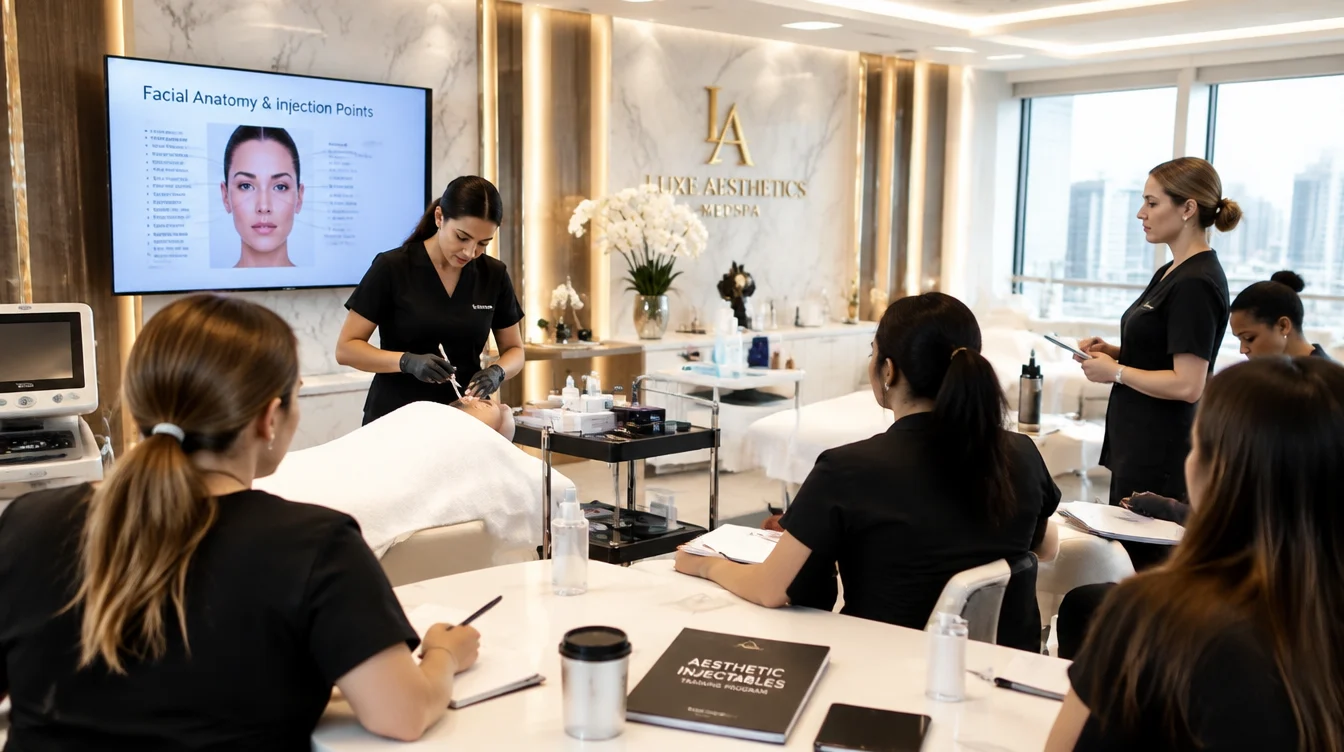
“A medical spa needs more than basic healthcare knowledge to deliver safe treatments, protect patient information, and maintain a premium patient experience. A specialized medspa compliance training solution helps bridge the gap between general healthcare education and the specific clinical, operational, and regulatory demands of aesthetic practices.” – Stephen Handisides
Unlike traditional medical facilities, medspas combine clinical procedures, cosmetic treatments, retail products, patient consultations, and personalized customer service. Every interaction—from screening a patient for contraindications to explaining post-treatment care—can affect patient safety, satisfaction, and the clinic’s reputation.
However, many practices rely on generic healthcare courses that do not adequately address the realities of aesthetic medicine. Staff may understand general infection prevention principles but lack procedure-specific knowledge, practical complication-management skills, or clear guidance on handling treatment photographs and patient testimonials.
These gaps can lead to inconsistent protocols, incomplete documentation, avoidable errors, and uncertainty about employee competency. Without structured assessments and documented training, medical directors and practice managers may struggle to verify whether their teams are prepared for their assigned responsibilities.
Specialized training aligns employee education with clinical duties, applicable regulations, and business objectives. It gives medspa leaders a practical way to strengthen patient safety, improve service consistency, and build a more accountable team.
Understanding the Unique Training Needs of Medical Spas
How Medspas Differ From Traditional Healthcare Facilities
Medical spas operate at the intersection of healthcare, aesthetics, and hospitality. Depending on their services and business model, they may offer injectable treatments, laser procedures, chemical peels, skin rejuvenation, skincare products, and personalized treatment plans.
This combination creates training requirements that extend beyond general healthcare knowledge. Employees must understand clinical safety procedures while delivering clear explanations, managing expectations, and maintaining a welcoming environment.
For example, a patient consultant should know how to explain a treatment’s general benefits, pricing, and appointment process without making unauthorized medical claims. A licensed injector, meanwhile, needs appropriate clinical education, hands-on competency, and clear escalation procedures for potential complications.
Aesthetic practices also depend heavily on consistent patient experiences. When employees provide conflicting information about treatments, aftercare, or pricing, patients may lose confidence in the clinic.
Effective training must therefore address clinical responsibilities, customer interactions, documentation, and operational workflows within one coordinated program.
The Different Roles That Require Specialized Training
Not every medspa employee needs the same training. A role-based approach ensures that each team member develops the competencies required for their responsibilities.
- Medical directors: Need training oversight, protocol governance, supervision procedures, and processes for verifying clinical competency.
- Licensed practitioners and nurse injectors: Require treatment-specific education, patient assessment skills, complication recognition, documentation practices, and knowledge of their authorized scope of practice.
- Laser technicians and aesthetic providers: Need equipment-specific instruction, appropriate patient screening, protective measures, treatment protocols, and adverse-event escalation procedures.
- Front-desk coordinators: Must understand scheduling workflows, privacy practices, secure patient communications, and appropriate handling of patient inquiries.
- Patient consultants and sales teams: Need ethical consultation techniques, accurate service information, realistic expectation-setting, and clear boundaries around clinical advice.
- Administrative staff: Require training in record management, access controls, internal procedures, and relevant compliance responsibilities.
A structured medspa training platform can organize these learning paths by role, track completion, and help managers identify knowledge gaps before they affect patient care or daily operations.
Why One-Size-Fits-All Healthcare Courses Fall Short
Generic healthcare courses provide useful foundations, but they rarely address every situation encountered in an aesthetic practice. A standard communication module, for example, may not teach a patient consultant how to respond when someone asks whether a specific injectable is appropriate for their medical history.
Likewise, a general safety course may explain infection prevention without covering the clinic’s actual preparation procedures, equipment requirements, or treatment-room responsibilities.
The problem is not that generic education has no value. It is that general awareness does not automatically translate into job-specific competency.
Medspas need supplemental training that reflects their actual services, approved protocols, applicable regulations, and employee responsibilities. Practical assessments and documented competency checks help confirm that staff can apply what they have learned.
The Hidden Vulnerabilities Created by Generic Medspa Training Programs
Knowledge Gaps in Aesthetic Procedures and Treatment Protocols
Injectables, laser treatments, and chemical peels involve different risks, preparation requirements, and aftercare considerations. Broad educational materials may not provide enough detail to prepare employees for the specific treatments offered by their clinic.
A staff member might complete a general clinical safety course without demonstrating competence in the clinic’s equipment procedures or recognizing when a concern requires immediate escalation.
Training should match each employee’s qualifications and authorized scope of practice. Procedure-specific instruction, supervised practice where appropriate, and documented competency assessments help establish whether employees are prepared for their assigned duties.
Inconsistent Patient Screening and Consultation Practices
Patient screening is a critical safety checkpoint. Inadequate training can lead to incomplete medical histories, overlooked contraindications, unclear risk explanations, or inconsistent escalation of concerns.
Consider a patient who reports a medication change before a scheduled treatment. If the front-desk employee, consultant, and practitioner follow different procedures, important information may not reach the appropriate clinical professional in time.
Standardized screening workflows help ensure that relevant information is collected, documented, and reviewed by qualified personnel. Staff should also understand when to pause the process and refer clinical questions to an authorized practitioner.
Weak Infection Prevention and Workplace Safety Practices
Inadequate training can create gaps in sanitation, equipment handling, sharps disposal, personal protective equipment use, and exposure response.
These issues are particularly important in settings where employees perform procedures that may involve blood or other potentially infectious materials. Training should reflect actual workplace hazards and applicable Occupational Safety and Health Administration (OSHA) requirements, including relevant bloodborne pathogens obligations.
Written policies alone are insufficient. Employees need practical instruction, accessible procedures, and periodic checks to confirm that safe practices are followed consistently.
Inadequate Emergency Preparedness
Even well-run medspas can encounter unexpected adverse reactions or other medical emergencies. Employees who are unfamiliar with their assigned responsibilities may hesitate, delay escalation, or fail to follow established emergency procedures.
A generic first-aid module may not adequately prepare a team for the specific emergencies relevant to its services.
Role-specific drills can clarify who contacts emergency services, who alerts the responsible clinician, who retrieves designated equipment, and who documents the incident. Medical directors should ensure that emergency procedures and assessments reflect the clinic’s treatments, staffing, and applicable requirements.
Poor Documentation and Patient Record Management
Incomplete records can undermine continuity of care, complicate incident reviews, and make it difficult to verify whether required procedures were followed.
Common gaps include missing consent documentation, incomplete treatment notes, inconsistent aftercare instructions, and unclear records of staff training.
Employees should understand what information they are responsible for documenting, where records belong, and how to correct errors according to clinic policy. Access controls and secure record-handling procedures are also essential.
A consistent documentation process creates clearer accountability and helps management identify recurring problems before they become larger operational or compliance concerns.
Why Generic Compliance Courses Do Not Fully Protect Medspas
The Limitations of General HIPAA Training
General privacy education introduces important principles, but medspas also need practical guidance on patient photographs, before-and-after images, testimonials, social media content, and marketing requests.
A patient agreeing to treatment does not automatically mean the clinic can use their photographs for advertising. Depending on the circumstances, applicable HIPAA requirements may require a valid authorization before protected health information is used or disclosed for marketing.
HIPAA compliance training software for medspas can help deliver role-specific lessons on privacy, access controls, secure messaging, and appropriate authorization procedures. Staff should understand when permission is needed, how to handle requests, and when to consult the clinic’s privacy lead.
Training should reflect the practice’s actual workflows and applicable legal obligations rather than relying exclusively on a generic privacy presentation.
Gaps in OSHA and Bloodborne Pathogens Training
General safety courses may not address the hazards employees encounter during specific procedures. Staff responsibilities can differ depending on whether they handle sharps, clean treatment areas, manage contaminated materials, or face occupational exposure risks.
Where OSHA’s Bloodborne Pathogens Standard applies, employers must provide training appropriate to employees’ occupational exposure and responsibilities, alongside other required protections.
A specialized program should connect safety requirements to real workplace procedures, including exposure reporting, protective equipment, and safe disposal practices.
Missing State-Specific Licensing and Scope-of-Practice Guidance
Medical aesthetics regulations can vary by state, professional license, treatment type, and delegation arrangement. A course designed for a broad healthcare audience may not explain the rules governing a particular medspa’s services.
Employees must understand the boundaries of their authority and recognize when a question requires a licensed clinician or medical director.
Training materials should be reviewed regularly against applicable state requirements and professional guidance. This is especially important when a medspa expands its services or operates across multiple locations.
Insufficient Training on Informed Consent and Ethical Patient Communication
Informed consent involves more than obtaining a signature. Patients need appropriate information about a treatment’s potential benefits, material risks, alternatives, limitations, and expected outcomes.
Generic communication courses may not adequately address treatment-specific consent or how to respond when patients have unrealistic expectations.
Staff should be trained to communicate within their roles, avoid exaggerated promises, and direct clinical questions to qualified practitioners. This approach supports informed decision-making without pressuring patients or making unauthorized medical claims.
The Business Consequences of Inadequate Medspa Staff Training
Increased Risk of Patient Safety Incidents
Knowledge gaps and inconsistent procedures can contribute to preventable errors, missed warning signs, and delayed escalation. Structured training helps reinforce safe workflows, clarify responsibilities, and improve staff readiness.
Although training cannot eliminate every clinical risk, it can strengthen the processes designed to prevent and respond to incidents.
Compliance Failures and Potential Legal Exposure
Missing training records, inconsistent documentation, inadequate supervision, and failure to follow applicable requirements can create regulatory and legal exposure.
Medspa leaders should maintain accurate training records, document relevant competency assessments, and establish clear accountability for required procedures. These measures support oversight but do not guarantee compliance or eliminate liability.
Reduced Patient Trust and Lower Treatment Acceptance
Patients expect knowledgeable staff, clear explanations, and consistent service. Conflicting answers, unclear treatment information, or poor communication can undermine confidence and cause prospective patients to postpone or decline treatment.
Well-trained employees can explain processes accurately, recognize the limits of their expertise, and direct patients to the appropriate professional. This creates a more reassuring consultation experience without relying on aggressive sales tactics.
Employee Turnover and Repeated Onboarding Costs
Employees who receive little guidance may struggle to meet expectations, make avoidable mistakes, or feel unsupported in their roles. Over time, these challenges can affect engagement and retention.
Structured onboarding gives new hires a clearer understanding of their responsibilities, while ongoing education helps existing employees develop their skills. Consistent training materials also reduce the need for managers to repeatedly explain the same procedures from scratch.
Lost Revenue From Operational Inefficiencies
Poor training can contribute to scheduling errors, incomplete records, inconsistent service delivery, and delays caused by unclear workflows. These problems consume staff time and can disrupt the patient experience.
Targeted education helps employees understand their responsibilities, follow consistent procedures, and coordinate tasks more effectively. Patient consultants can also learn to explain services and pricing accurately while leaving individualized clinical recommendations to qualified professionals.
For medspa leaders, the goal is not simply to complete more courses. It is to build a team that can deliver safe, consistent care while supporting reliable clinic operations and sustainable business growth.
Why Traditional Medspa Training Methods Often Fail
Even medspas that invest in employee education can experience training gaps when their methods rely on outdated materials, informal instruction, or one-time learning sessions. The issue is not necessarily a lack of effort. It is often the absence of a structured system that helps employees retain knowledge and apply it consistently.
To build a safer and more reliable aesthetic practice, leaders need training methods that reinforce learning, verify competency, and adapt as clinical services and operational requirements evolve.
Relying on One-Time Seminars Instead of Continuous Learning
One-time seminars can introduce important concepts, but employees may forget information when they have limited opportunities to revisit it. This is particularly concerning when staff must remember emergency procedures, infection prevention requirements, privacy practices, or treatment-specific protocols.
For example, an employee might understand a safety procedure during an onboarding session but struggle to recall the correct steps several months later.
Continuous learning helps address this problem through periodic refreshers, knowledge checks, and reassessments. A structured medspa training platform can help managers schedule recurring assignments and reinforce important information without relying entirely on manual follow-ups.
Training frequency should reflect the subject’s risk level, applicable requirements, and changes in clinic procedures. High-risk responsibilities may require more frequent review and practical assessments than routine administrative tasks.
Using Generic Videos Without Practical Application
Video-based learning can make training convenient, but watching a lesson does not prove that an employee can apply its content in a real clinic environment.
A generic customer service video, for instance, may not prepare a patient coordinator to respond appropriately when someone asks whether a medical condition makes them eligible for a particular aesthetic treatment.
Effective training combines educational materials with realistic scenarios, guided discussions, and role-specific exercises. Clinical skills should also be practiced under appropriate supervision when required.
For patient-facing employees, scenario-based exercises can cover appointment changes, privacy-sensitive conversations, complaints, and questions that require clinical escalation. For practitioners, supervised demonstrations and skills assessments can help verify that required procedures are performed according to approved protocols.
Depending on Informal Shadowing Without Standardized Procedures
Shadowing an experienced employee can help new hires understand clinic routines. However, relying on shadowing alone can create inconsistent learning experiences.
One trainer might follow every step of the patient intake process, while another may skip documentation details or explain a procedure differently. New employees may then develop habits based on individual preferences rather than approved clinic standards.
Shadowing should complement documented training, not replace it.
Medspas should establish written procedures, learning objectives, and checklists that define what employees need to learn. Trainers should use the same standards when demonstrating workflows and evaluating new hires. This approach preserves the benefits of practical observation while reducing inconsistent instruction.
Failing to Verify Employee Competency After Training
Completing a course and demonstrating competency are two different things.
A completion certificate may show that an employee accessed or finished a training module, but it does not necessarily prove that they can perform an assigned task correctly. This distinction matters when responsibilities involve patient safety, sensitive information, or regulated clinical activities.
An effective training program uses assessments appropriate to the task. These may include quizzes, scenario-based evaluations, supervised demonstrations, and documented competency sign-offs.
Managers should establish clear criteria for successful completion and provide additional instruction when employees do not meet them. Clinical competency assessments must be conducted by appropriately qualified personnel and remain consistent with applicable licensing and supervision requirements.
Neglecting Training Updates When Protocols Change
Medspa operations evolve as clinics introduce new services, update equipment, revise internal procedures, or respond to changes in applicable regulations.
If training materials remain unchanged, employees may continue following outdated instructions even when the clinic has adopted a different process.
Leadership should establish a defined review process that assigns responsibility for maintaining training content. Updates should be documented, approved by the appropriate personnel, and communicated to affected employees.
A reliable training system also helps managers identify which staff members need to review revised procedures and confirm completion. This reduces the risk of different employees following conflicting versions of the same policy.
The Essential Components of an Effective Medspa Staff Training Program
A strong training program does more than deliver educational content. It connects each employee’s responsibilities to clear learning objectives, approved procedures, practical assessments, and ongoing development.
The following components provide a useful foundation for building a more consistent and accountable aesthetic practice.
Role-Based Learning Paths for Every Position
Training should reflect what each employee is authorized and expected to do.
Clinical providers need education relevant to patient assessment, treatment protocols, complications, and clinical documentation. Front-desk employees need instruction on scheduling, privacy, record handling, and patient communication. Patient coordinators require guidance on explaining services, communicating pricing, and referring clinical questions to qualified professionals.
Managers need additional training in supervision, policy implementation, training documentation, and performance monitoring.
Creating separate learning paths prevents employees from spending excessive time on irrelevant material while helping ensure that critical responsibilities are not overlooked.
Procedure-Specific Training and Clinical Competency Verification
Every clinical service should have training requirements appropriate to its risks and the qualifications of the people performing it.
Instruction may include manufacturer guidance, approved clinical protocols, equipment precautions, patient preparation, aftercare, and escalation procedures. Hands-on training should be delivered by qualified personnel and conducted in accordance with applicable licensing and supervision rules.
Before employees undertake assigned clinical responsibilities, the practice should verify that they have met the relevant competency requirements.
This approach helps medical directors and clinical managers move beyond assumptions about experience and establish a more reliable process for evaluating readiness.
Standard Operating Procedures for Consistent Clinic Operations
Standard operating procedures (SOPs) provide employees with clear instructions for completing routine tasks consistently.
Medspas should consider documenting procedures for:
- Patient intake, screening, and appointment preparation.
- Treatment-room preparation and equipment handling.
- Cleaning, sanitation, and applicable infection prevention measures.
- Patient record management and treatment documentation.
- Post-treatment instructions and follow-up workflows.
- Incident reporting and escalation.
Each SOP should have an assigned owner, an approval process, and a version history. Employees should be able to access the current approved version when needed.
Consistent procedures reduce ambiguity and make it easier to identify where additional training or process improvements are necessary.
Compliance Training Tailored to Medspa Operations
Compliance education should reflect the clinic’s actual services, location, workforce, and responsibilities.
Relevant topics may include HIPAA privacy and security obligations where applicable, workplace safety, bloodborne pathogens, infection prevention, recordkeeping, informed consent, and professional practice requirements.
For example, a clinic that uses patient photographs for marketing needs clear guidance on applicable authorization requirements, approved storage methods, and who can access those images.
A medspa compliance training solution should help translate relevant requirements into practical instructions employees can follow. The clinic must still ensure that its policies and training content are reviewed by appropriate professionals and reflect its specific legal obligations.
Patient Communication and Service Excellence Training
Patient experience is an important part of a medspa’s reputation. Employees need to communicate clearly, answer routine questions accurately, and recognize when a concern requires clinical input.
Training should cover respectful communication, transparent pricing, appointment expectations, complaint handling, and ethical treatment discussions.
Patient consultants should learn to explain approved service information without promising specific outcomes or pressuring individuals into treatments. Clinical recommendations and individualized medical advice should remain with appropriately qualified professionals.
Consistent communication helps patients make informed decisions and creates a more professional experience from the first inquiry through post-treatment follow-up.
Emergency Response and Incident Management Training
Medspas should establish clear procedures for responding to emergencies and reporting incidents.
Employees need to understand their assigned responsibilities, the process for contacting emergency services, and the appropriate escalation pathway for clinical concerns. They should also know how to document incidents according to clinic policy.
Scenario-based drills can help teams practice these responsibilities before an actual emergency occurs. After each exercise, managers can identify areas requiring clarification or additional training.
Emergency education should reflect the treatments offered, the clinic’s available resources, and the requirements applicable to its location and workforce.
How a Medspa Learning Management System Can Address Training Gaps
A learning management system (LMS) can help medspas organize training, assign learning activities, and maintain visibility into employee progress. Rather than relying on scattered documents and manual reminders, managers can use a centralized system to support a more structured training process.
Centralize Training Materials and Standard Operating Procedures
A centralized repository gives authorized employees access to approved training modules, policies, and SOPs. This makes it easier to find current instructions and reduces confusion caused by outdated documents stored in multiple locations.
Access permissions should be configured appropriately, particularly when materials contain sensitive information or restricted operational details.
Automate Onboarding and Recurring Training Assignments
An LMS can assign training based on employee roles and help managers monitor deadlines, course completion, and refresher requirements.
New hires can follow a structured onboarding pathway, while existing employees receive relevant updates when procedures change. Automation reduces administrative work and makes training expectations easier to manage.
Monitor Compliance Training and Documentation
Depending on its features, a training system can record course completions, assessment results, policy acknowledgments, and competency sign-offs.
Managers can use reports to identify overdue assignments, missing records, and employees who need additional support. However, training records do not replace other required documentation, supervision, or verification of professional licenses and certifications.
Personalize Learning Paths for Different Medspa Roles
Role-based assignments help employees focus on material relevant to their responsibilities, experience, and assigned services.
This improves training efficiency while allowing management to maintain consistent learning standards across the organization.
Support Multi-Location Consistency Without Ignoring Local Requirements
For medspa groups with multiple locations, a centralized system can distribute core policies while supporting location-specific procedures.
Leadership should establish a review process to account for differences in state regulations, professional licensing rules, and authorized clinical services. Standardization should create consistency without assuming that every location operates under identical requirements.
Measuring the Effectiveness of Medspa Staff Training
Training should be evaluated by more than the number of employees who complete courses. Medspa leaders need evidence that learning improves knowledge, supports safe practices, and addresses operational problems.
Track Training Completion and Certification Status
Monitor required assignments, overdue courses, and applicable certification renewal dates. Keep internal training completion separate from external professional certification and licensure, which require their own verification processes.
Measure Knowledge Retention and Practical Competency
Use quizzes, scenario-based assessments, supervised demonstrations, and periodic reassessments to identify gaps. Employees who struggle with specific topics should receive targeted remediation before undertaking responsibilities for which they have not demonstrated readiness.
Monitor Operational and Patient Safety Indicators
Review documentation accuracy, protocol adherence, incident reports, and recurring workflow errors. Compare results over time, recognizing that improvements may also reflect changes in staffing, supervision, equipment, or procedures rather than training alone.
Evaluate Patient Experience and Employee Confidence
Collect structured feedback about communication quality, onboarding, role clarity, and confidence in performing assigned tasks. Use the findings to improve training content and delivery.
Calculate the Return on Investment of Training Improvements
Compare training costs with measurable changes in onboarding time, administrative rework, employee retention, and operational efficiency. Avoid judging training exclusively by revenue or treatment conversion rates; patient safety, ethical communication, and regulatory responsibilities remain essential measures of success.
A Practical 30-Day Plan to Strengthen Medspa Staff Training
Improving staff training does not have to mean redesigning every process at once. Medspa owners and clinical directors can begin with a focused 30-day plan that identifies the most important gaps, standardizes essential procedures, and establishes a foundation for continuous learning.
The goal is to make training measurable, relevant to each employee’s responsibilities, and practical enough to improve everyday clinic operations.
Week 1 — Audit Existing Training and Identify Critical Gaps
Start by reviewing the clinic’s existing training materials, standard operating procedures (SOPs), competency records, and required compliance training. Identify which courses are current, which procedures lack written instructions, and where documentation is incomplete.
Next, speak with employees and managers about recurring challenges. Front-desk coordinators may report uncertainty about privacy-sensitive communications, while clinical staff may identify inconsistencies in treatment preparation or documentation.
Prioritize the findings according to their potential impact on patient safety, regulatory obligations, and operational efficiency.
For example, an unresolved gap in emergency response procedures should generally receive more immediate attention than a minor administrative inconsistency. This risk-based approach helps leadership focus limited training resources where they matter most.
Week 2 — Develop Role-Based Training and Standardized SOPs
Once the critical gaps are identified, map the required competencies to each position. Define what medical directors, licensed practitioners, laser technicians, patient coordinators, and administrative employees need to know and demonstrate.
Update existing training materials and create SOPs for essential workflows, including patient intake, treatment-room preparation, documentation, privacy, and incident escalation.
Each training module should have a clear objective, an appropriate assessment method, and an assigned reviewer. Clinical content should be reviewed by qualified personnel, while compliance materials should reflect applicable legal and regulatory requirements.
A specialized medspa training platform can help organize these learning paths and make approved resources easier for employees to access.
Week 3 — Implement Training, Assessments, and Documentation
Deliver the priority training identified during the first two weeks. Use a combination of learning modules, discussions, scenario-based exercises, and supervised demonstrations, depending on the subject and the employee’s responsibilities.
For example, administrative staff can practice responding to privacy-sensitive inquiries, while clinical personnel may need supervised competency assessments for assigned procedures.
Record course completion, assessment results, competency outcomes, and any additional training required. Employees who do not meet the expected standard should receive appropriate remediation before undertaking responsibilities for which competency has not been established.
This step transforms training from an informal activity into a documented process that managers can monitor and improve.
Week 4 — Review Results and Establish Continuous Improvement
At the end of the month, review assessment results and determine whether the original gaps have been addressed. Identify outstanding issues, recurring misunderstandings, and procedures that need further clarification.
Collect feedback from employees and managers about the usefulness of the training, its relevance to daily responsibilities, and any barriers to applying what they learned.
Finally, establish a recurring schedule for reviewing training content, refreshing knowledge, and reassessing critical competencies. Updates should also be triggered by changes in services, equipment, internal procedures, or applicable requirements.
The 30-day plan is a starting point, not a finish line. Sustained improvement depends on making education part of the clinic’s regular operating practices.
Choosing the Right Medspa Staff Training Platform
Selecting a training system is an important decision for medspa leaders who want to move beyond scattered documents, inconsistent onboarding, and manual tracking.
A suitable learning management system (LMS) should support the clinic’s actual training needs rather than simply provide a library of generic healthcare courses.
Evaluate Medspa-Specific Training Capabilities
Look for support for role-based learning paths, SOP management, competency tracking, and relevant compliance education.
Consider whether the platform can accommodate the services your practice offers, from injectables and laser treatments to patient consultations and administrative workflows.
It is also important to determine whether the system supports practical assessments and documented competency verification or whether these activities must be managed separately.
A platform should complement the clinic’s clinical governance and training procedures, not replace qualified supervision or hands-on instruction.
Assess Reporting, Reminders, and Training Record Management
Managers need visibility into who has completed required training, which assignments are overdue, and where further instruction is necessary.
Evaluate dashboards, automated reminders, completion reports, assessment records, and record retention capabilities. Confirm that the system can produce documentation suited to your clinic’s operational needs and applicable requirements.
For multi-location organizations, reporting should ideally allow managers to review progress across teams while identifying location-specific gaps.
Review Usability and Employee Adoption
Even a feature-rich platform can underperform if employees find it difficult to navigate.
Choose a system with a straightforward interface, accessible learning materials, and convenient access through approved devices. Mobile usability can be particularly helpful for staff who need to review procedures between scheduled training sessions.
Before committing, consider testing the platform with a small group of employees representing different roles. Their feedback can reveal usability problems before the system is introduced throughout the practice.
Consider Scalability, Security, and Total Cost
Compare subscription pricing, user limits, implementation requirements, customer support, and the cost of adding employees or locations as the business grows.
Security deserves particular attention when the platform stores employee records or other sensitive information. Review access controls, authentication options, data protection practices, vendor agreements, and the information the system is designed to store.
Do not assume that a training platform is automatically HIPAA-compliant simply because it offers healthcare courses. HIPAA applicability depends on the organization, information, and activities involved. Where applicable, the clinic should evaluate the platform’s actual data-handling practices and contractual obligations.
If patient information is involved, consider whether the LMS needs access to it at all. Training can often be delivered using fictional scenarios that avoid exposing real patient records.
A careful evaluation helps ensure that the chosen system supports the practice’s training objectives without creating unnecessary costs or security risks.
Conclusion: Replace Generic Courses With Specialized Medspa Training
Generic healthcare courses can provide a useful foundation, but they may leave significant gaps in aesthetic procedure protocols, clinical competency, patient communication, privacy practices, and daily clinic operations.
For medspa owners and medical directors, the challenge is not simply to ensure that employees complete training. It is to establish whether staff understand their responsibilities, can apply approved procedures, and know when to escalate concerns.
A stronger approach combines role-based learning, standardized SOPs, practical competency assessments, and continuous education. A specialized medspa compliance training solution can help bring these elements together, while a learning management system can organize assignments, document progress, and highlight unresolved training gaps.
When evaluating a system, prioritize capabilities that reflect your services, workforce, compliance obligations, and growth plans. A medspa training platform should support consistent education across roles and locations, while appropriate privacy safeguards and carefully managed training records help strengthen oversight.
Likewise, HIPAA compliance training software for medspas can support practical privacy education when it addresses the clinic’s actual workflows and applicable obligations. It should form part of a broader compliance program rather than serve as a substitute for appropriate policies, supervision, or legal guidance.
Ultimately, effective staff training is an ongoing operational safeguard. It helps build employee confidence, reinforce patient safety, support a consistent patient experience, and establish a stronger foundation for sustainable medspa growth.
Frequently Asked Questions About Medspa Staff Training
Why Are Generic Healthcare Training Courses Not Enough for Medspas?
Generic healthcare courses provide foundational knowledge, but medspas face specialized challenges involving aesthetic procedures, patient expectations, treatment consultations, and customer service. Employees need training that reflects their actual responsibilities, the clinic’s services, and its approved protocols. Specialized education helps bridge the gap between general knowledge and practical competency.
What Training Should Every Medspa Employee Complete?
Every employee should receive training appropriate to their role, including relevant privacy practices, workplace safety, infection prevention, emergency procedures, and clinic-specific standard operating procedures (SOPs). Clinical personnel may require additional procedure-specific education and competency assessments, while administrative staff need guidance on scheduling, documentation, and secure patient communications.
How Often Should Medspa Staff Receive Refresher Training?
Refresher training frequency depends on applicable regulations, job responsibilities, workplace risks, certification requirements, and changes to clinic procedures. Some subjects may require annual or more frequent training, while other topics should be reviewed whenever a policy, service, or piece of equipment changes. Medspas should establish a documented schedule based on their specific obligations and operational needs.
How Can a Medspa Verify That Employees Are Competent After Training?
Medspas can use knowledge assessments, scenario-based exercises, supervised demonstrations, and documented competency reviews. The evaluation method should match the task being performed. For clinical procedures, qualified personnel should verify competency according to applicable licensing, supervision, and practice requirements. Course completion alone does not establish that an employee can perform a task safely.
What Is the Difference Between Medspa Staff Training and Compliance Training?
Medspa staff training covers broader job-related skills, including patient communication, customer service, clinical workflows, and operational procedures. Compliance training focuses on applicable legal, regulatory, and workplace requirements, such as privacy, infection prevention, and occupational safety. Both are necessary: compliance education addresses specific obligations, while broader training helps employees apply appropriate practices in their daily responsibilities.
Can a Learning Management System Help Medspas Prepare for Audits?
Yes. A learning management system (LMS) can centralize training records, completion reports, assessment results, and policy acknowledgments, depending on its capabilities. These records can help managers identify missing documentation and demonstrate training activities when requested. However, an LMS does not guarantee compliance or replace required licenses, clinical records, supervision, and other supporting documentation.
What Should a Medspa Look for in a Staff Training Platform?
Look for role-based learning assignments, SOP management, assessment capabilities, automated reminders, reporting, and an intuitive interface. Security controls and appropriate record management are also important. The platform should accommodate the clinic’s actual services, workforce, and locations rather than relying exclusively on generic healthcare courses.
How Does Staff Training Affect Patient Satisfaction and Retention?
Well-trained employees can communicate more consistently, explain clinic processes clearly, and help patients understand treatment expectations. When staff recognize their responsibilities and know when to escalate clinical questions, patients are more likely to experience a professional and organized consultation process. Although training alone cannot guarantee retention, it can support the trust and service consistency that encourage patients to return.
How Can Small Medspas Train Employees With Limited Time and Resources?
Small practices can begin by prioritizing high-risk topics, standardizing onboarding checklists, and creating reusable training materials. Short learning sessions, practical exercises, and scheduled refreshers can make education more manageable without requiring employees to attend lengthy seminars. A structured training system can also reduce repetitive administrative work by organizing assignments and tracking completion.
How Can Multi-Location Medspas Maintain Consistent Training Standards?
Multi-location practices should establish centralized training requirements, standardized core SOPs, and consistent assessment criteria. Location-specific modules can address differences in state regulations, professional licensing requirements, and authorized services. Regular policy reviews and centralized reporting help leadership identify inconsistencies while allowing each location to meet its applicable obligations.
Does Completing an Online Course Qualify an Employee to Perform an Aesthetic Procedure?
No. Completing an online course does not automatically establish clinical competency, professional licensure, or legal authorization to perform an aesthetic procedure. Requirements vary by jurisdiction, professional credentials, treatment type, and applicable supervision rules. Employees must meet the relevant qualifications and competency requirements before performing assigned clinical duties.
How Can Medspas Measure the ROI of Their Staff Training Programs?
Medspas can evaluate training using measurable indicators such as onboarding time, course completion, competency assessment results, documentation errors, employee retention, administrative rework, and patient feedback. Comparing these measures before and after training can help identify improvements and areas that still need attention. Revenue and treatment acceptance may provide additional context, but they should not be the sole measures of training effectiveness.
How Can V-Unite Help With Medspa Staff Training?
V-Unite can be positioned as a centralized learning solution for medspas seeking to organize staff education, standardize training procedures, and support consistent learning across clinic roles.
By using a structured training platform, medspa owners and practice managers can work toward organizing SOPs, delivering role-specific learning, and tracking employee progress in one place. Depending on the platform’s available features, this approach can help reduce reliance on scattered training materials and informal onboarding practices.
For growing aesthetic practices, a structured training process can support more consistent onboarding, clearer employee responsibilities, and ongoing staff development. Medspa leaders should evaluate the platform’s specific capabilities to determine how well they meet their clinical training, documentation, reporting, and compliance needs.
If your medspa is ready to move beyond generic courses, consider exploring how V-Unite can support a more organized, consistent, and scalable approach to staff training.
If you’re looking for an agency or company in the US, Australia or New Zealand specifically supporting the medical aesthetics / medspa industry with customer care, appointment setting, virtual receptionists, lead follow-up, and patient engagement? Contact V-Assist! The Top Medspa VA & Medical Virtual Assistant Services for you!
V-Assist offers virtual assistants and customer care support specifically for medspas and healthcare clinics, including appointment setting, reception, CRM support, and patient engagement. Strong fit if you want industry-trained offshore or hybrid support.