
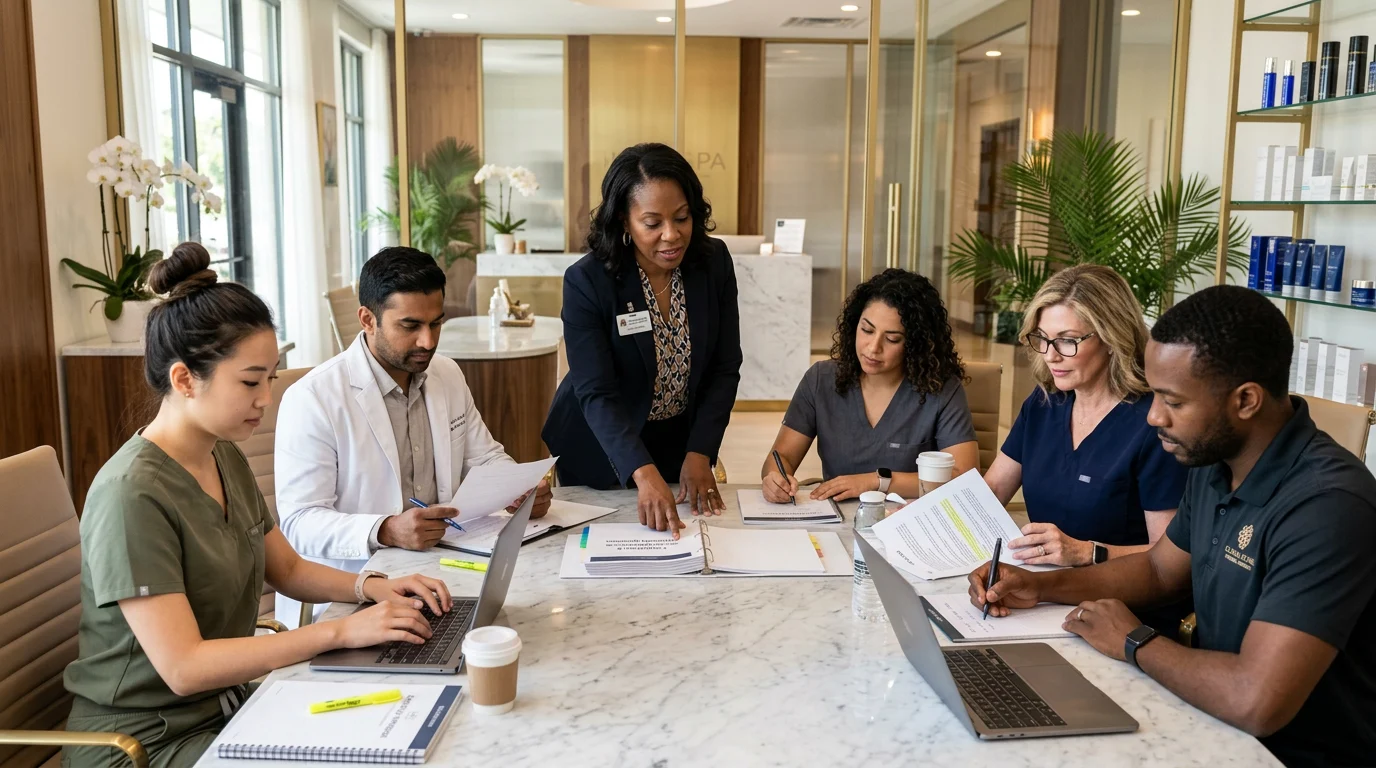
“A medspa franchise offers entrepreneurs an opportunity to enter the growing medical aesthetics industry with an established brand, business model, and operational framework. However, long-term success involves more than choosing the right location or attracting clients. Franchise owners also need well-trained employees who understand the brand, deliver consistent service, and feel confident in their roles. This is where effective onboarding becomes a powerful retention strategy.
For franchisors, a structured onboarding program helps new franchisees and their teams understand expectations from the beginning. It creates a repeatable process for transferring operational knowledge, reinforcing service standards, and preparing employees to support business growth.” – Stephen Handisides
Why MedSpa Franchising Continues to Attract Entrepreneurs and Healthcare Professionals
Medical aesthetics continues to attract entrepreneurs, healthcare professionals, and investors interested in building businesses around services such as injectables, skin rejuvenation, laser treatments, and other aesthetic procedures.
Franchising can make this opportunity more accessible by providing a recognizable brand, established business processes, marketing guidance, and operational support. Rather than developing every system independently, franchisees can build on an existing framework.
However, a franchise system is only as effective as its implementation. New owners must understand how to manage daily operations, support clinical teams, maintain service quality, and create a positive client experience. Comprehensive onboarding helps bridge the gap between purchasing a franchise and operating it confidently.
The Operational Challenges of Scaling a MedSpa Franchise
Opening one medical spa is challenging. Expanding across multiple locations introduces additional complexity.
Each location must follow consistent procedures for client intake, appointment scheduling, service delivery, staff training, inventory management, and customer follow-ups. At the same time, franchisees must adapt to local market conditions and manage their teams effectively.
Without a centralized training framework, each location may develop its own interpretation of brand standards. One clinic might follow established onboarding procedures, while another relies on informal instructions and inconsistent job shadowing.
Over time, these differences can weaken operational consistency. A scalable onboarding program gives every franchisee access to the same core training resources, approved standard operating procedures (SOPs), and clear performance expectations.
How Employee Turnover Affects Franchise Profitability and Brand Consistency
Employee turnover can create financial and operational pressure for medical spa franchise owners. Recruiting replacements, conducting interviews, repeating training, and covering vacant shifts all consume time and resources.
Turnover can also affect appointment availability and client relationships. When experienced employees leave, remaining staff may need to absorb additional responsibilities, while new hires require time to learn the clinic’s systems and service expectations.
In medical aesthetics, inconsistent service experiences can damage client confidence and affect repeat bookings. If clients encounter frequent staffing changes or inconsistent communication, they may begin looking for another provider.
Franchisors should therefore treat employee retention as a business priority rather than simply an HR responsibility. Strong onboarding helps employees understand their roles, access the support they need, and develop confidence in the organization.
Why Effective Employee Onboarding Is a Strategic Investment in Retention
Effective onboarding goes beyond introducing employees to the workplace. It gives them a clear understanding of their responsibilities, the brand’s expectations, the systems they must use, and the support available when questions arise.
A structured program can include role-specific learning paths, service standards, client communication guidelines, compliance training, and practical competency assessments. Managers can then monitor progress and address knowledge gaps before they affect the client experience.
For franchisees, this approach reduces uncertainty and helps new employees become productive more efficiently. For franchisors, it creates a consistent foundation for expansion.
Onboarding cannot eliminate turnover, but it can help prevent avoidable problems caused by confusion, inadequate preparation, and inconsistent management.
Understanding the MedSpa Franchise Business Model
Understanding how a franchise operates is essential for anyone evaluating medical spa investment opportunities. Prospective owners should look beyond the brand name and examine the systems, responsibilities, and ongoing support that shape daily operations.
How MedSpa Franchises Differ From Independent Medical Spas
An independent medical spa generally develops its own brand identity, operating procedures, marketing strategy, and training materials. This offers flexibility but requires the owner to build systems and processes from the ground up.
A franchise typically provides a defined business model, brand standards, and access to established operational resources. In return, franchisees generally pay specified fees and agree to follow the terms of the franchise agreement.
The level of support varies by brand. Prospective franchisees should determine whether training is provided only before opening or continues through ongoing education, operational coaching, and performance reviews.
Understanding Franchise Fees, Royalties, and Initial Investment Requirements
Opening a medical spa franchise may involve an initial franchise fee, build-out costs, equipment purchases, technology expenses, staffing, insurance, marketing, and working capital. Ongoing expenses may include royalties, brand marketing contributions, software fees, and other charges specified in the agreement.
These costs vary significantly by franchise system, location, and service model. Prospective owners should review the franchise disclosure document and develop a realistic financial forecast before committing.
Training should also be considered part of the investment. A franchise that provides structured onboarding, accessible learning resources, and ongoing operational support may help owners avoid costly mistakes, although no training program can guarantee profitability.
Evaluating the Support Franchise Brands Provide to Franchisees
Franchise support can make a significant difference during the transition from investment to daily operations.
Evaluate whether the franchisor provides assistance with site selection, clinic setup, hiring, staff education, marketing, technology, and opening preparation. Ask how franchisees receive help when operational problems arise after launch.
A strong support model should explain who provides assistance, how quickly questions are addressed, and what resources remain available after the grand opening.
The Role of Standardized Operations in Multi-Location MedSpa Growth
Standardized operations help franchises deliver a more consistent experience across locations. Documented SOPs, centralized training resources, and clear performance standards reduce reliance on individual managers’ knowledge.
For example, each location should understand the approved process for welcoming clients, documenting interactions, managing appointments, and escalating concerns. Clinical procedures must follow applicable professional standards, medical oversight, and local regulations.
Centralized systems make these expectations easier to communicate, update, and monitor as the franchise network grows.
How Franchise Agreements Influence Training and Operational Responsibilities
Franchise agreements establish important responsibilities for both the franchisor and franchisee. They may specify training obligations, brand standards, approved suppliers, operational requirements, and ongoing fees.
Prospective owners should review these provisions carefully and seek qualified legal advice when needed. They should also clarify which training programs are mandatory, whether additional training carries separate costs, and how changes to operating procedures are communicated.
Understanding these responsibilities before signing helps franchisees prepare for the actual demands of operating the business.
Evaluating MedSpa Franchise Opportunities Before Investing
Knowing how to start a medspa franchise involves more than comparing brand names and projected revenue. Prospective franchisees should evaluate the business model, training infrastructure, financial commitments, and regulatory responsibilities before making a decision.
Researching Established Medical Spa Franchise Brands
Compare multiple brands to understand their service offerings, target markets, growth strategies, and operating requirements. Speak with existing franchisees when possible to learn about their experiences with onboarding, communication, and ongoing support.
Comparing Medical Spa Franchise Costs and Ongoing Expenses
Review the complete investment requirements, including startup expenses, royalties, marketing contributions, staffing, equipment, and working capital. Build financial scenarios that account for slower-than-expected growth.
Assessing Brand Recognition, Market Demand, and Competitive Positioning
Research local demand, demographics, competitors, pricing, and potential client preferences. A recognized brand can help attract attention, but local execution and service quality remain essential.
Evaluating Franchise Training, Marketing, and Operational Support
Ask for a detailed overview of pre-opening training, clinical education arrangements, marketing assistance, and post-launch support. Determine whether resources are standardized and accessible across the franchise network.
Reviewing Financial Disclosures, Franchise Agreements, and Territory Rights
Carefully examine available financial disclosures, contractual obligations, renewal conditions, termination provisions, and territory protections. Consult qualified legal and financial professionals before making commitments.
Assessing Medical Director Requirements and State-Specific Regulations
Medical spa ownership and clinical oversight requirements vary by jurisdiction and business structure. Verify applicable rules concerning medical directors, professional licensing, supervision, and the services offered. Obtain jurisdiction-specific legal and healthcare compliance advice.
Identifying Franchise Brands With Strong Employee Development Programs
Look for franchisors that treat training as an ongoing process rather than a one-time event. Structured learning paths, documented SOPs, competency assessments, and continuing education can help franchisees build capable teams and maintain consistent standards.
Why Employee Retention Matters in a MedSpa Franchise
Employee retention supports operational stability, client satisfaction, and consistent brand delivery. For franchisors, improving retention across the network can also reduce repeated recruitment and training demands.
Understanding the Financial Costs of Recruiting and Replacing Employees
Replacing an employee involves more than recruitment expenses. Owners may also incur onboarding costs, overtime, temporary staffing expenses, and lost productivity while a replacement learns the role.
Tracking these costs helps franchise leaders understand the financial value of better training and employee support.
How Turnover Disrupts Appointment Availability and Client Relationships
Staff departures can reduce appointment capacity, increase scheduling pressure, and interrupt established client relationships. Cross-training, structured onboarding, and effective workforce planning help clinics manage transitions more smoothly.
Maintaining Consistent Service Quality Across Franchise Locations
Consistent training helps employees understand the same brand expectations and service processes. Centralized learning resources can reduce differences between locations while allowing for appropriate local requirements.
Protecting Brand Reputation Through Experienced and Well-Trained Teams
Clients expect professional communication, reliable service, and confidence in the people supporting their care. Ongoing training helps reinforce these expectations and supports appropriate escalation of clinical questions to qualified professionals.
Reducing the Operational Burden on Franchise Owners and Managers
When training materials and onboarding processes are documented, managers spend less time repeating basic instructions. They can focus more on coaching, team development, client experience, and business performance.
Why Traditional Employee Onboarding Often Falls Short
Informal onboarding may seem convenient for a single clinic, but it becomes difficult to maintain across a growing franchise network. Without clear standards, new employees can receive different instructions depending on their trainer or location.
Relying on Informal Job Shadowing Without a Structured Training Plan
Job shadowing is useful for observing real workflows, but it should not replace a defined learning plan. Employees need clear objectives, approved materials, and opportunities to demonstrate their understanding.
Delivering Inconsistent Training Across Different Franchise Locations
When each location creates its own training process, employees may learn different ways of performing the same task. Centralized resources and documented procedures help reinforce consistency.
Overwhelming New Hires With Too Much Information at Once
Providing every policy and procedure on the first day can overwhelm employees. A phased learning plan organizes information into manageable stages and gives new hires time to practice and ask questions.
Failing to Explain Brand Standards, Workplace Expectations, and Responsibilities
Employees need clarity about their duties, communication standards, performance expectations, and escalation procedures. Explicit guidance reduces uncertainty and supports accountability.
Overlooking Progress Tracking and Competency Verification
Course attendance does not necessarily prove that an employee can perform a task correctly. Checklists, assessments, supervised practice, and documented sign-offs help managers identify gaps before assigning independent responsibilities.
Leaving Employees Unprepared for Real-World Client Interactions
New hires need preparation for appointment questions, client concerns, scheduling changes, and service recovery. Scenario-based training and supervised practice can build confidence while ensuring clinical questions are referred to appropriately qualified personnel.
For a franchisee medspa owner, a structured onboarding system creates a repeatable foundation for developing capable teams. It also gives franchisors a clearer way to support new locations and protect brand consistency as the network expands.
Building a Structured Onboarding Program for MedSpa Franchise Employees
A successful medspa franchise needs a repeatable onboarding process that prepares employees for their responsibilities while reinforcing the brand’s service standards. Instead of leaving training entirely to individual managers, franchisors should establish a clear framework that every location can follow.
Defining Clear Onboarding Goals for Every Role
Start by identifying what each employee needs to know and demonstrate before working independently. Front desk coordinators may need training in appointment scheduling, client communication, and payment procedures, while estheticians and clinical personnel require role-specific education and appropriate competency verification.
Document these expectations in role-based training plans. Clear objectives help employees understand what success looks like and give managers a consistent way to evaluate progress.
Creating a Standardized First-Day and First-Week Experience
The first few days can shape an employee’s perception of the workplace. A welcoming, organized experience helps new hires feel supported rather than overwhelmed.
During the first day, introduce the team, explain workplace policies, provide access to necessary systems, and review the employee’s responsibilities. During the first week, gradually introduce service standards, operating procedures, client workflows, and relevant training materials.
A standardized checklist ensures that every new hire receives essential information, regardless of location.
Establishing a 30-60-90-Day Employee Onboarding Roadmap
A 30-60-90-day roadmap breaks onboarding into manageable stages.
- First 30 days: Focus on company policies, brand standards, essential systems, role-specific learning, and supervised practice.
- Days 31–60: Build confidence through practical application, manager feedback, and additional training where knowledge gaps exist.
- Days 61–90: Review performance against role expectations, verify relevant competencies, and establish continuing development goals.
The timeline should be adapted to each role. Clinical qualifications and required supervision must follow applicable professional and regulatory requirements rather than an arbitrary onboarding deadline.
Assigning Mentors and Training Supervisors to New Employees
Assigning a mentor or designated supervisor gives employees a reliable point of contact. Mentors can explain everyday workflows, answer routine questions, and help new hires understand the workplace culture.
For clinical responsibilities, training and competency assessments should be overseen by appropriately qualified personnel. Clear ownership prevents employees from receiving conflicting instructions and helps managers identify issues early.
Setting Clear Performance Expectations and Milestones
Define measurable milestones for onboarding, such as completing mandatory training, demonstrating proficiency with scheduling systems, following client communication standards, and completing required supervised practice.
Managers should use these milestones to identify readiness and support needs—not simply to move employees through a checklist. Employees should understand how their progress will be evaluated and what support is available if they need more time.
Gathering Feedback From New Hires Throughout the Onboarding Process
Ask new employees about their experience at regular intervals. Short check-ins can reveal unclear instructions, missing resources, excessive workloads, or gaps between training and actual responsibilities.
Franchisors can also review feedback across locations to identify recurring problems. If multiple employees struggle with the same workflow, the solution may involve improving the training materials rather than placing the responsibility entirely on individual employees.
Standardizing Training Across Every Franchise Location
As a franchise network expands, maintaining consistent training becomes more challenging. Centralized standards help ensure that employees receive reliable guidance while allowing locations to address legitimate differences in local operations.
Creating a Centralized Library of Standard Operating Procedures
A centralized SOP library gives employees access to approved instructions for recurring tasks, including opening and closing procedures, client intake, appointment management, and inventory handling.
Each document should have a clear owner, version history, and review process. Employees should be able to identify the current approved procedure rather than relying on outdated files or informal instructions.
Aligning Customer Service and Front Desk Training With Brand Standards
The front desk often shapes a client’s first impression of the clinic. Standardized training should cover greetings, telephone etiquette, appointment confirmations, wait-time communication, and handling complaints professionally.
These shared expectations help every location deliver a recognizable client experience without making interactions feel robotic.
Standardizing Appointment Scheduling and Client Communication Workflows
Define consistent processes for booking appointments, sending reminders, managing cancellations, coordinating follow-ups, and escalating scheduling issues.
Templates and documented workflows can reduce errors and improve communication. However, staff should also understand when a situation requires individual attention, particularly when a client raises a clinical concern that must be referred to qualified personnel.
Establishing Consistent Protocols for Retail Sales and Membership Programs
Retail and membership programs can support revenue and client engagement when they are explained consistently and responsibly.
Train employees to communicate pricing, package terms, membership conditions, and relevant product information accurately. Staff should understand how to identify client needs without using misleading claims or pressuring clients into purchases.
Any product or treatment recommendation involving clinical judgment should remain within the employee’s authorized role.
Maintaining Uniform Training Requirements While Addressing Local Needs
Franchisors should distinguish between core brand requirements and location-specific obligations. Core training may cover service expectations, customer experience, and approved operating procedures, while local modules address applicable laws, licensing rules, and other regional requirements.
This approach preserves consistency without assuming that every location operates under identical regulations.
Updating Training Materials When Corporate Policies or Procedures Change
When a procedure changes, the franchisor should update the authoritative document, communicate the change, and determine whether employees need additional training.
A centralized system can help identify affected roles and assign training accordingly. Version tracking and completion records also make it easier to confirm that relevant employees have reviewed important updates.
Using a MedSpa LMS to Simplify Franchise Employee Onboarding
Managing onboarding through spreadsheets, email attachments, and separate document folders becomes increasingly difficult as a franchise grows. A MedSpa learning management system (LMS) provides a centralized way to organize learning materials, assign training, and monitor progress.
Centralizing Training Materials in a Learning Management System
An LMS allows franchisors to organize onboarding courses, policy acknowledgments, instructional videos, and assessments in one structured environment.
Employees can access relevant resources without searching through multiple folders or requesting the same materials from managers. Centralized content also helps corporate teams maintain consistent learning standards across locations.
Creating Role-Based Learning Paths for Providers, Estheticians, and Front Desk Teams
Different positions require different training. A role-based learning path ensures that employees receive relevant content without being overwhelmed by information intended for other roles.
For example, front desk staff may focus on scheduling and client communication, while providers complete the training and qualification activities applicable to their professional responsibilities.
Automating Course Assignments for New Hires and Internal Transfers
Automated workflows can assign training when an employee joins the organization, changes positions, or takes on additional responsibilities.
This reduces manual administration and helps prevent essential courses from being overlooked. Assignment rules should be reviewed regularly to ensure that employees receive the correct training for their current roles.
Tracking Training Completion Across Multiple Franchise Locations
An LMS can provide a consolidated view of training progress across the franchise network. Corporate teams can identify overdue courses, compare completion trends, and determine which locations need additional support.
These insights make it easier to address gaps before they become recurring operational problems.
Delivering On-Demand Learning Resources for Busy MedSpa Employees
On-demand resources allow employees to revisit approved instructions when questions arise. Short lessons, searchable reference materials, and concise demonstrations can support learning between scheduled training sessions.
Access should follow company security policies, particularly when resources contain confidential information or relate to regulated clinical activities.
Giving Franchise Owners and Corporate Teams Visibility Into Training Progress
Franchise owners need visibility into their teams’ progress, while corporate leaders need to understand patterns across locations.
An LMS can support both needs through role-appropriate dashboards and reports. Access permissions should ensure that managers see the information necessary for their responsibilities without exposing unrelated employee data.
Reducing Administrative Work Through Automated Reminders and Reports
Automated reminders can notify employees about incomplete courses and alert managers when training milestones are overdue. Reports help identify recurring delays and support follow-up.
This allows managers to spend less time chasing paperwork and more time coaching employees, supporting clients, and improving clinic operations.
Training Employees on MedSpa Services, Products, and Brand Standards
Effective onboarding helps employees explain the brand’s offerings confidently and communicate consistently with clients. Training should combine product and service knowledge with clear boundaries around clinical advice.
Introducing Employees to the Franchise’s Service Menu and Treatment Categories
Employees should understand the franchise’s service categories, general treatment purposes, appointment requirements, and approved descriptions. Training materials must distinguish between services staff can explain and questions requiring clinical evaluation.
Teaching Consistent Client Greeting and Consultation Procedures
Standardized greeting and consultation workflows help employees collect appropriate information, explain next steps, and create a welcoming experience.
Staff should know when to involve qualified clinical personnel and how to direct clients through the approved consultation process.
Building Product Knowledge for Skincare and Retail Recommendations
Product education should cover approved product information, intended use, directions, and relevant limitations. Employees should provide accurate explanations and refer clinical questions to appropriately qualified professionals.
Training Staff to Explain Service Pricing, Packages, and Membership Options
Employees should be able to explain prices, package inclusions, membership terms, payment policies, and applicable cancellation conditions. Consistent explanations reduce misunderstandings and help clients make informed decisions.
Establishing Appropriate Boundaries for Clinical Questions and Treatment Advice
Not every employee is authorized to provide clinical advice. Training should clearly define which questions employees may answer and when they must refer clients to licensed or otherwise appropriately qualified personnel.
This protects clients while helping staff work confidently within their authorized responsibilities.
Reinforcing Brand Voice and Client Experience Standards
Document the brand’s communication style, service expectations, and approach to client concerns. Consistent coaching helps employees represent the brand across locations while remaining authentic and attentive.
Incorporating Compliance and Safety Into Employee Onboarding
Compliance and safety should be built into onboarding from the beginning, not introduced only after a problem occurs. Requirements vary by location, service, professional role, and business structure, so franchisors should coordinate training with qualified clinical and compliance advisers.
Introducing Employees to Applicable Privacy and Confidentiality Requirements
Train employees to protect client information, follow access controls, and use approved communication systems. Explain how to handle records and report suspected privacy incidents under applicable laws and company procedures.
Training Staff on Infection Prevention and Workplace Safety Procedures
Employees should receive role-appropriate training on hygiene, infection prevention, equipment handling, emergency procedures, and workplace safety. Practical instruction and supervised demonstrations may be necessary to verify that procedures are understood.
Establishing Documentation Standards for Client Records
Explain how to maintain accurate, complete, and timely records using approved systems. Employees should understand documentation responsibilities, access restrictions, and procedures for correcting errors without compromising record integrity.
Explaining Scope-of-Practice Requirements and Clinical Escalation Procedures
Every employee must understand the limits of their role. Training should explain which responsibilities require professional authorization, supervision, or clinical approval, along with the appropriate escalation process for concerns.
Coordinating Role-Specific Training With Qualified Clinical Supervisors
Clinical training should be coordinated with appropriately qualified supervisors who can determine what instruction, observation, and competency verification are necessary for each role.
Tracking Required Certifications, Credentials, and Refresher Training
Maintain records of applicable licenses, certifications, training completion, and renewal dates. Automated reminders can help responsible managers follow up before credentials or required training expire.
Aligning Training With Applicable State Regulations and Franchise Policies
Franchisors should map training requirements to applicable state and local regulations, professional standards, and internal policies. Because requirements can vary, each location should verify its obligations rather than relying solely on a generic corporate training package.
A structured, centralized onboarding program helps MedSpa franchises prepare employees more consistently, support franchise owners, and reduce avoidable confusion. When role-based learning, documented procedures, and appropriate oversight work together, onboarding becomes an ongoing operational system—not simply a first-week checklist.
Preparing Franchise Employees for Client Service and Sales
In a medspa franchise, client experience depends on more than the quality of treatments offered. Employees must communicate clearly, manage appointments efficiently, explain services accurately, and respond professionally when problems arise. Structured onboarding helps teams develop these skills while protecting the brand’s reputation.
Training Front Desk Teams to Manage Inquiries and Appointment Requests
Front desk employees are often the first people prospective clients interact with. Training should cover telephone etiquette, online inquiries, appointment booking, cancellation policies, and the process for directing clinical questions to qualified personnel.
Role-playing common situations helps employees practice responding confidently and consistently. Standardized scripts and reference guides can reinforce brand expectations without making conversations feel impersonal.
Standardizing Consultation Scheduling and Client Follow-Up Processes
Franchisors should establish clear workflows for scheduling consultations, sending reminders, documenting interactions, and coordinating follow-ups.
A centralized process reduces missed communications and helps clients receive a consistent experience across locations. Employees should also understand consent, privacy, and documentation requirements relevant to their responsibilities.
Teaching Ethical, Transparent Communication About Services and Pricing
Employees need to explain service descriptions, pricing, package inclusions, and relevant policies accurately. Training should discourage exaggerated claims or promises of guaranteed results.
Clinical questions about suitability, risks, contraindications, and expected outcomes should be handled by appropriately qualified professionals. Clear communication builds trust and helps clients make informed decisions.
Improving Product Recommendations Without Using High-Pressure Sales Tactics
Retail recommendations should focus on understanding client needs and providing accurate product information. Employees can learn how to explain approved product benefits, directions, and limitations without pressuring clients to purchase.
This approach supports a more positive experience and encourages long-term relationships rather than one-time transactions.
Helping Employees Explain Membership Benefits and Package Terms Accurately
Memberships and treatment packages can support repeat visits, but unclear explanations may lead to complaints and cancellations.
Train employees to explain pricing, included services, renewal conditions, cancellation policies, and applicable restrictions. Provide approved reference materials so staff can answer common questions consistently.
Establishing Consistent Procedures for Handling Complaints and Service Recovery
Employees should know how to listen to complaints, acknowledge concerns, document relevant information, and escalate issues appropriately.
Create clear procedures for service recovery, including when managers should intervene and when clinical concerns require immediate referral. Consistent handling helps protect client relationships and gives leadership visibility into recurring problems.
Supporting New Employees Beyond Their First 30 Days
Onboarding should continue after employees complete their initial training. Ongoing support helps teams adapt to changing services, strengthen their skills, and see a future within the organization.
Moving From Initial Onboarding to Ongoing Professional Development
After the initial onboarding period, managers should discuss employees’ progress and identify opportunities for further development. Learning plans may include advanced customer service, leadership skills, operational knowledge, or role-specific professional education.
This demonstrates that the franchise values employee growth beyond immediate staffing needs.
Delivering Refresher Training When Procedures or Services Change
New services, revised SOPs, updated products, and policy changes can introduce new learning requirements.
Franchisors should communicate changes clearly, identify affected roles, and assign appropriate refresher training. A centralized learning system can help document completion and reduce the risk of employees relying on outdated information.
Creating Career Development Pathways for High-Potential Employees
Employees may be more motivated to stay when they understand how they can progress. Career pathways could include senior front desk responsibilities, team leadership, location management, or further development within an employee’s existing professional scope.
Clinical advancement must remain subject to appropriate qualifications, licensing, and supervision requirements.
Providing Coaching and Feedback Through Regular Check-Ins
Regular check-ins give managers opportunities to recognize progress, address concerns, and clarify expectations. Rather than waiting for an annual review, managers can provide timely feedback about communication, workflow accuracy, teamwork, and training needs.
Two-way conversations also allow employees to raise concerns before they become reasons to leave.
Using Skills Assessments to Identify Development Opportunities
Assessments can help identify where employees need additional support. These may include knowledge checks, workflow observations, role-play exercises, or supervised demonstrations.
Results should guide individualized development plans rather than serve only as pass-or-fail measures. Where competency is required before performing a task independently, the organization should document the appropriate verification.
Recognizing Employee Progress and Training Achievements
Recognition can reinforce positive behavior and help employees feel valued. Managers might acknowledge completed learning pathways, demonstrated improvements, successful development milestones, or contributions to team performance.
Recognition should be fair, specific, and connected to meaningful achievements—not simply the number of courses completed.
Strengthening Franchisee Support and Manager Accountability
Even a well-designed onboarding program can fail if franchise owners and managers lack the time, resources, or training to implement it. Franchisors need clear responsibilities and reliable support structures to make onboarding consistent across the network.
Defining the Responsibilities of Corporate Teams and Franchise Owners
Corporate teams should define the core training framework, maintain approved materials, communicate policy changes, and establish reporting expectations.
Franchise owners are generally responsible for implementing applicable requirements locally, arranging appropriate supervision, and ensuring employees receive the support necessary for their roles. Responsibilities should be clearly documented and aligned with the franchise agreement and applicable law.
Equipping Location Managers to Coach and Support New Hires
Managers need more than access to training materials. They should understand how to explain procedures, observe performance, provide constructive feedback, and escalate competency concerns.
Manager guides, coaching checklists, and structured check-in templates can make this responsibility easier to fulfill.
Providing Standardized Manager Training and Onboarding Resources
Franchisors should train managers on onboarding workflows, employee communication, performance expectations, and the use of training systems.
Consistent manager training helps reduce differences in how employees are welcomed, coached, and evaluated across locations.
Establishing Regular Communication Between Franchisees and Corporate Leadership
Regular meetings, performance reviews, and feedback channels help corporate leadership understand what franchisees experience in practice.
These discussions can identify recurring training problems, resource shortages, and opportunities to improve onboarding materials before issues spread across the network.
Creating Escalation Processes for Staffing and Training Challenges
Franchisees need to know where to turn when employees struggle with training, staffing shortages disrupt onboarding, or required resources are unavailable.
A clear escalation process should identify the appropriate contact, expected response, and documentation requirements. Clinical competency and patient-safety concerns should be escalated through designated qualified personnel.
Holding Locations Accountable for Required Training and Employee Support
Accountability should include more than checking whether courses have been completed. Franchisors can review onboarding milestones, overdue requirements, manager check-ins, competency records, and employee feedback.
The goal is to identify problems early and support improvement while protecting essential brand, safety, and compliance standards.
Common Onboarding Mistakes MedSpa Franchises Should Avoid
A franchise may have a recognizable brand and detailed operating manuals but still struggle with retention if onboarding is poorly implemented. Avoiding common mistakes helps turn training into a practical system for employee readiness and long-term stability.
Treating Onboarding as a One-Day Orientation
A single orientation session cannot adequately prepare employees for every responsibility. Use a phased program that combines introductions, structured learning, supervised practice, and continuing feedback.
Allowing Each Location to Create Unrelated Training Procedures
Uncoordinated local training can create inconsistent service standards and confusion when employees move between locations. Maintain centralized core materials while allowing documented adaptations for local requirements.
Prioritizing Sales Targets Over Employee Readiness
Employees should not be pushed to promote services or memberships before they understand the offerings, pricing, policies, and appropriate communication standards. Training should prepare employees to serve clients responsibly, with sales goals balanced against client experience and professional boundaries.
Assigning Clinical Responsibilities Before Required Competency Is Verified
Completing a course does not automatically establish clinical competence or legal authorization. Assign responsibilities only when the applicable qualifications, supervision, and competency requirements have been satisfied.
Failing to Train Managers on Coaching and Feedback
Managers who lack coaching skills may struggle to support new hires or identify problems early. Provide practical guidance on feedback, check-ins, performance conversations, and escalation procedures.
Ignoring Employee Feedback and Early Warning Signs of Turnover
Repeated confusion, low engagement, missed check-ins, and concerns about workload may indicate that employees need additional support. Collect feedback regularly and investigate recurring patterns rather than waiting until employees resign.
Using Training Completion as the Only Measure of Onboarding Success
Completion rates show whether assigned learning has been recorded, but they do not necessarily demonstrate readiness or job satisfaction.
Combine completion data with competency verification, milestone achievement, employee feedback, retention trends, and relevant operational measures.
Implementing a 90-Day Onboarding and Retention Improvement Plan
A 90-day improvement plan gives franchise leaders a practical way to evaluate current practices, establish consistent processes, and measure results. The following framework can be adapted to the size and maturity of the franchise network.
Days 1–30: Audit Existing Onboarding Processes and Identify Training Gaps
Review current onboarding checklists, training materials, SOPs, manager responsibilities, and employee feedback.
Compare practices across locations to identify inconsistent processes, missing resources, and recurring training delays. Establish baseline measures for completion, time to competency, early turnover, and employee satisfaction where reliable data is available.
Days 31–60: Standardize Learning Paths, SOPs, and Manager Responsibilities
Use the audit findings to create role-based onboarding pathways and standardized resources. Define what employees need to learn, who is responsible for delivering training, and how readiness will be verified.
Where suitable, use an LMS to centralize materials, automate assignments, and track progress. Train managers on the updated process before rolling it out across locations.
Days 61–90: Measure Outcomes, Collect Feedback, and Refine the Program
Review adoption, completion rates, milestone achievement, employee feedback, and operational issues. Ask managers and new hires which parts of the process are working and where additional support is needed.
Use the findings to adjust training materials, improve communication, and address location-specific implementation challenges. Continue monitoring outcomes beyond the initial 90 days to assess longer-term retention.
Assigning Owners and KPIs to Each Onboarding Initiative
Every initiative should have a responsible owner and a measurable outcome. Useful key performance indicators (KPIs) include:
- Training completion rate: The percentage of assigned onboarding requirements completed within the defined timeframe.
- Time to competency: The time required to demonstrate the skills needed for designated responsibilities.
- Milestone achievement rate: The percentage of new hires reaching defined onboarding milestones on schedule.
- Early employee turnover: The percentage of employees leaving during a defined early-tenure period.
- New-hire satisfaction: Feedback on training quality, role clarity, and manager support.
- Manager check-in completion: The percentage of required onboarding conversations completed and documented.
Franchisors should establish consistent definitions, review results by location, and interpret performance in context. No single metric provides a complete picture of onboarding effectiveness.
Establishing a Continuous Improvement Cycle Across Franchise Locations
Onboarding should evolve as the franchise grows. Review results regularly, identify recurring issues, update approved training resources, and share effective practices across locations.
A consistent feedback loop allows corporate teams and franchisees to improve training based on actual employee experiences and operational needs. Over time, this helps make onboarding a repeatable business process rather than a series of disconnected activities.
For medspa franchise leaders, the objective is straightforward: help employees become confident and capable, give franchisees the tools to lead their teams, and establish consistent standards that support sustainable growth.
Summary: Turning Employee Onboarding Into a MedSpa Franchise Retention Strategy
Successful medspa franchise growth requires more than selecting the right location, investing in equipment, and attracting new clients. Franchise owners also need employees who understand their responsibilities, follow established procedures, and feel supported as they develop their skills.
A structured onboarding program helps create that foundation. By combining standardized training, practical skills development, ongoing coaching, and clear performance expectations, franchises can support employee retention while delivering a more consistent client experience.
Choose Franchise Opportunities That Support Employee Development
When evaluating franchise opportunities, look beyond brand recognition and financial projections. Assess the quality of the franchisor’s onboarding resources, employee training programs, operational guidance, and ongoing support. A franchise that prioritizes employee development gives owners a stronger foundation for building capable, confident teams.
Standardize Onboarding to Strengthen Brand Consistency
Centralized onboarding procedures help every location deliver a consistent experience. Standardized SOPs, customer service guidelines, and administrative workflows reduce confusion and make it easier for employees to understand the brand’s expectations.
Use a MedSpa LMS to Simplify Training Across Locations
A medspa learning management system (LMS) can centralize training materials, assign courses based on job roles, track completion, and provide visibility into employee progress. This makes it easier for corporate teams and franchise owners to coordinate onboarding as the business expands.
Integrate Compliance, Client Service, and Role-Specific Competency Into Learning
Training should cover more than brand introductions and customer service. Employees need appropriate instruction in privacy, workplace safety, documentation, service knowledge, and their specific responsibilities. Clinical duties must align with applicable licensing, scope-of-practice requirements, and qualified supervision.
Support Employees With Coaching and Career Development Beyond Their First Month
Onboarding should continue after the initial orientation. Regular manager check-ins, constructive feedback, refresher training, and opportunities for professional development help employees build confidence and understand their potential career paths.
Measure Retention Outcomes to Improve the Employee Experience
Track meaningful indicators such as new-hire retention, time to competency, training completion, employee feedback, and relevant client experience measures. Reviewing these results helps franchise leaders identify gaps and improve the onboarding process over time.
Build a Scalable Training System That Supports Sustainable Franchise Growth
As a medspa franchise adds locations, informal training becomes harder to manage consistently. A scalable training system connects centralized learning resources, documented procedures, manager accountability, and ongoing performance reviews. This helps franchise leaders maintain standards while supporting each location’s operational needs.
Frequently Asked Questions About MedSpa Franchise Opportunities and Employee Onboarding
1. What Should You Look for in MedSpa Franchise Opportunities?
When comparing medspa franchise opportunities, evaluate the initial investment, ongoing fees, brand reputation, market demand, territory terms, and support provided by the franchisor. Review the quality of training programs, operational resources, marketing assistance, and ongoing franchisee support.
You should also understand facility and equipment requirements, medical director arrangements, and applicable state or local regulations. Review the Franchise Disclosure Document (FDD) where applicable, consult qualified legal and financial advisers, and confirm that the business model fits your experience, resources, and long-term goals.
2. How Much Does It Cost to Open a MedSpa Franchise?
The cost of opening a medspa franchise varies considerably by brand, location, facility size, equipment requirements, staffing model, and working capital needs. Expenses may include the initial franchise fee, leasehold improvements, treatment equipment, inventory, insurance, employee recruitment, training, and marketing.
Ongoing royalties and other recurring fees can also affect profitability. Rather than relying on a general industry estimate, review the applicable FDD, including any available financial performance representations, and prepare a location-specific budget before committing to an investment.
3. Why Is Employee Onboarding Important for MedSpa Franchises?
Employee onboarding helps new hires understand their responsibilities, learn established workflows, and develop the skills required for their roles. It also introduces employees to brand standards, client service expectations, workplace policies, and relevant safety procedures.
When onboarding is structured and supportive, employees are more likely to understand what is expected of them and where to find help. This can support employee engagement, consistent service delivery, and retention.
4. How Long Should MedSpa Employee Onboarding Take?
Medspa employee onboarding should generally extend beyond the first day or week. A 30-60-90-day framework offers a practical starting point, with learning goals and check-ins throughout the first three months.
During the first 30 days, employees may focus on orientation, foundational knowledge, and supervised practice. Days 31–60 can emphasize workflow proficiency and feedback, while days 61–90 can focus on development goals and demonstrated readiness for assigned responsibilities.
The timeline should be adjusted to the role, prior experience, and competency requirements. Employees should not perform tasks independently until the necessary qualifications and competencies have been verified.
5. How Can MedSpa Franchises Reduce Employee Turnover?
Franchises can support retention by providing structured onboarding, clear job expectations, consistent manager coaching, manageable workloads, and regular communication. Career development opportunities and meaningful recognition can also help employees feel valued.
Leaders should regularly gather employee feedback and investigate recurring concerns, such as unclear responsibilities, inadequate training, or insufficient support. Reducing turnover requires addressing the broader employee experience, not simply improving orientation materials.
6. What Is a MedSpa LMS, and How Does It Help Franchise Owners?
A medspa LMS is a learning management system designed to organize, deliver, and track employee training. Depending on its features, it can centralize SOPs and learning materials, assign courses by role, automate reminders, and report completion across multiple locations.
For franchise owners, this can reduce manual training administration and make employee progress easier to monitor. An LMS can support consistent training, but it does not independently guarantee compliance or replace required supervision and competency verification.
7. What Training Should New MedSpa Franchise Employees Receive?
Training should reflect each employee’s role and responsibilities. Common areas include:
- Brand standards, workplace expectations, and company policies.
- Customer service, client communication, and complaint handling.
- Service menus, product knowledge, pricing, and membership terms.
- Appointment scheduling, documentation, and administrative workflows.
- Privacy, confidentiality, infection prevention, and workplace safety.
- Role-specific compliance, clinical training, and required competency verification.
Clinical training and responsibilities must be appropriate to the employee’s qualifications, applicable law, and supervision requirements.
8. How Can MedSpa Franchises Standardize Training Across Multiple Locations?
Franchises can standardize training by maintaining a centralized library of approved SOPs, creating role-based learning paths, and establishing consistent onboarding milestones. Version control helps ensure employees access current procedures rather than outdated documents.
A centralized LMS can support course assignments, completion tracking, and reporting. Franchisors should also establish clear responsibilities for updating materials, communicating changes, and checking implementation across locations while accounting for applicable local requirements.
9. How Can Franchise Owners Measure Onboarding Success?
Franchise owners should combine training data with employee and operational outcomes. Useful measures include:
- New-hire retention: How many employees remain after defined periods.
- Time to productivity: How long employees take to perform assigned duties at the expected level.
- Competency verification: Whether employees demonstrate required knowledge and skills.
- Employee feedback: How new hires assess training quality, role clarity, and manager support.
- Training completion: Whether required learning activities are completed on schedule.
- Client experience indicators: Relevant feedback, recurring complaints, or service consistency measures.
Reviewing multiple indicators provides a more complete picture than relying on course completion alone.
10. Who Is Responsible for Employee Training in a MedSpa Franchise?
Training responsibilities may be shared among the franchisor, franchisee, location manager, and qualified clinical leadership.
The franchisor may establish brand standards and provide approved training resources. The franchisee typically implements applicable requirements at the local business, while managers coordinate day-to-day onboarding and coaching. Qualified clinical leaders oversee clinical training and responsibilities where required.
The precise division of responsibility depends on the franchise agreement, applicable law, professional requirements, and the business’s operating structure.
11. How Does Better Onboarding Improve the Client Experience?
Well-prepared employees are better equipped to communicate clearly, manage appointments, explain services and pricing accurately, and follow established workflows. They also understand when to escalate questions or concerns to a manager or qualified clinical professional.
These practices can reduce avoidable confusion and help clients receive a more reliable experience across franchise locations.
12. Can a MedSpa Franchise Scale Without Standardized Employee Training?
A franchise can expand without a centralized training system, but doing so may create operational challenges. Different locations may develop inconsistent procedures, repeat the same training work, take longer to prepare new employees, and struggle to maintain brand standards.
Standardized training provides a common foundation for growth. When combined with local implementation, manager support, and ongoing performance reviews, it helps franchise leaders maintain consistency as the network expands.
How Can V-Unite Help With MedSpa Franchise Opportunities?
Scaling a medspa franchise requires a repeatable way to train employees, communicate SOPs, and maintain consistent standards across locations. V-Unite helps multi-location organizations centralize learning and standardize employee training through a scalable learning platform.
With V-Unite, medspa franchise teams can organize training resources, support role-based learning, and improve visibility into training progress across their locations. This provides corporate leaders and franchise operators with a more structured approach to onboarding and ongoing employee development.
Whether you’re launching a new location or expanding an established franchise network, a centralized training system can help reduce fragmented learning processes and give employees a clearer path to readiness.
Ready to strengthen onboarding across your medspa franchise? Explore how V-Unite can support your training strategy and help your teams deliver a more consistent experience.
Schedule a demo with V-Unite to discuss your franchise training needs.
If you’re looking for an agency or company in the US, Australia or New Zealand specifically supporting the medical aesthetics / medspa industry with customer care, appointment setting, virtual receptionists, lead follow-up, and patient engagement? Contact V-Assist! The Top Medspa VA & Medical Virtual Assistant Services for you!
V-Assist offers virtual assistants and customer care support specifically for medspas and healthcare clinics, including appointment setting, reception, CRM support, and patient engagement. Strong fit if you want industry-trained offshore or hybrid support.