“When evaluating a franchisee medspa opportunity, most investors focus on franchise fees, brand recognition, revenue potential, and marketing support. While these factors are important, there is another consideration that can significantly influence long-term success: employee onboarding.
A medspa franchise is only as strong as the people operating its clinics. From front-desk coordinators and patient care representatives to licensed medical professionals, every employee needs the right training to deliver consistent service, follow established procedures, and maintain operational standards.” – Stephen Handisides
Without a structured onboarding process, even a promising franchise opportunity can encounter unnecessary challenges, including high employee turnover, inconsistent client experiences, and costly operational mistakes.
Before deciding how to start a medspa franchise, prospective owners should look beyond the franchisor’s initial support package. They should evaluate how effectively the brand prepares new employees, develops their skills, and supports their growth. A well-designed onboarding system can make the difference between a clinic that struggles to maintain consistency and one that builds a reliable, productive team.
The Hidden Impact of Poor Employee Onboarding on MedSpa Franchise Success
Poor employee onboarding creates problems that extend beyond an employee’s first few weeks. In a medspa environment, inadequate training can affect staffing costs, patient satisfaction, regulatory compliance, and the overall reputation of the franchise.
For franchise owners, these challenges can quickly become expensive, particularly during the critical launch phase when teams are still learning daily operations.
How Employee Turnover Increases Recruitment and Training Costs
Employee turnover is one of the hidden expenses that can affect a medspa franchise’s profitability. When employees leave shortly after being hired, owners must spend additional time and money recruiting replacements, conducting interviews, completing administrative requirements, and providing training all over again.
The costs go beyond recruitment expenses. Experienced employees often develop valuable knowledge about clinic procedures, patient preferences, scheduling systems, and service standards. When they leave, the clinic loses that experience and must invest in rebuilding it.
A weak onboarding experience can contribute to early turnover when employees feel overwhelmed, unsupported, or uncertain about their responsibilities.
A structured onboarding program helps prevent these problems by giving employees clear guidance, practical training, and access to the resources they need to succeed. This allows franchise owners to build a more stable workforce while reducing avoidable recruitment and retraining expenses.
Why Inconsistent Training Leads to Uneven Client Experiences
A medspa’s reputation depends heavily on the quality and consistency of its client experience. Whether someone visits for their first consultation or returns for a follow-up treatment, they expect professional service and reliable communication.
However, when employees receive inconsistent training, the quality of service can vary from one employee or franchise location to another.
For example, one front-desk employee might understand the clinic’s consultation booking process, membership policies, and follow-up procedures, while another may struggle to explain them correctly. Similarly, inconsistent training among clinical staff can lead to differences in how established treatment protocols are understood and followed.
These inconsistencies can damage client confidence and weaken brand credibility.
Franchisors should therefore establish standardized onboarding materials that clearly communicate service expectations, communication guidelines, and operational procedures. This helps every location deliver a more consistent experience regardless of who is serving the client.
How Knowledge Gaps Create Compliance and Operational Challenges
Medspas operate in a specialized environment where employee knowledge is essential for maintaining safe and compliant operations.
Employees must understand applicable privacy requirements, workplace safety procedures, documentation standards, and their individual responsibilities. Clinical personnel also need appropriate training, qualifications, and supervision before performing authorized procedures.
Without proper onboarding, employees may misunderstand important policies, mishandle sensitive patient information, or overlook required operational steps.
These knowledge gaps can expose the clinic to compliance concerns, operational disruptions, and potential reputational damage.
A reliable onboarding program should make essential policies and procedures accessible from the beginning. It should also include role-specific training, competency verification, and regular updates whenever requirements or internal procedures change.
Why Employee Retention Starts With a Strong Onboarding Experience
Employee retention does not begin after someone has worked at a clinic for six months. It starts on the employee’s first day.
The onboarding experience shapes how new hires understand the organization, how confident they feel performing their responsibilities, and whether they see opportunities to develop within the business.
For medspa franchise owners, creating a positive and structured introduction to the workplace is an important step toward building a dependable team.
Creating Positive First Impressions for New MedSpa Employees
First impressions matter in employment just as much as they do in client relationships.
When new employees arrive without clear instructions, organized training materials, or someone to guide them, they may feel disconnected from the organization. This can create uncertainty before they even begin performing their responsibilities.
A positive onboarding experience introduces employees to the clinic’s culture, values, service standards, and expectations. It should include a clear welcome process, an introduction to team members, access to essential resources, and an explanation of how the clinic operates.
When employees feel welcomed and supported, they are more likely to develop a sense of belonging and confidence in their decision to join the organization.
Establishing Clear Roles, Responsibilities, and Performance Expectations
Employees perform better when they understand exactly what their jobs require.
A front-desk coordinator, for example, needs to understand appointment scheduling, patient communication, administrative workflows, and escalation procedures. Meanwhile, clinical employees require training aligned with their professional qualifications, authorized responsibilities, and treatment protocols.
Without clearly defined responsibilities, employees may duplicate tasks, overlook important duties, or become uncertain about who should handle specific situations.
A structured onboarding process should establish role expectations from the beginning. Providing job descriptions, task checklists, performance standards, and documented procedures helps employees understand how their contributions support the clinic’s overall success.
Building Employee Confidence Through Structured Training Programs
Starting a new job in medical aesthetics can be challenging, particularly for employees entering an unfamiliar clinical environment.
Even experienced healthcare professionals may need time to understand a franchise’s specific workflows, patient service standards, technology platforms, and internal policies.
Structured training helps bridge this knowledge gap.
Instead of expecting employees to learn everything through observation or informal instructions, franchisors should provide organized learning materials, guided demonstrations, practical exercises, and assessments.
This approach gives employees opportunities to develop their knowledge progressively while helping managers identify areas where additional support is needed.
Reducing Early Turnover With a Consistent Onboarding Process
An inconsistent onboarding experience can leave new employees feeling unprepared and unsupported.
One location might provide several weeks of structured training, while another relies primarily on informal guidance from existing staff. This creates different employee experiences across the franchise network.
A consistent onboarding process establishes clear milestones for every new hire. It defines what employees should learn, which tasks they should complete, and how their progress should be evaluated.
Regular check-ins during the first 30, 60, and 90 days can also help managers identify concerns early, provide additional guidance, and improve employee engagement.
What to Look for in a MedSpa Franchise’s Employee Onboarding Program
When comparing franchise opportunities, prospective owners should evaluate the franchisor’s employee development system as carefully as its marketing strategy and operational support.
A strong onboarding program should provide practical resources that franchisees can use immediately rather than leaving them to develop training processes independently.
Standardized Training Materials and Operational Guidelines
Look for a franchisor that provides documented training resources, employee handbooks, standard operating procedures (SOPs), and operational checklists.
These materials should explain how essential clinic activities are performed, from opening and closing procedures to appointment management and patient communication.
Standardized documentation reduces confusion and helps franchisees maintain consistent operational expectations across their teams.
Role-Specific Training for Clinical and Nonclinical Employees
Not every employee needs the same training.
Clinical professionals require appropriate education covering patient safety, treatment protocols, documentation, and their authorized scope of practice. Nonclinical employees need training in scheduling, customer service, administrative workflows, and patient coordination.
A strong franchise onboarding program recognizes these differences and provides learning paths based on each employee’s position.
This makes training more relevant while ensuring that employees receive the knowledge necessary to perform their specific responsibilities.
Practical Skills Development and Employee Competency Assessments
Completing a training module does not automatically mean an employee can perform a task correctly.
Prospective franchisees should ask whether the franchisor includes practical demonstrations, supervised practice, and competency assessments in its training program.
For clinical responsibilities, appropriate qualifications, hands-on instruction, and documented competency verification are particularly important.
These assessments help managers confirm employee readiness instead of relying solely on training attendance or course completion.
Ongoing Education Beyond Initial Employee Orientation
Employee development should continue long after the first week of employment.
Aesthetic medicine, clinic technologies, patient expectations, and operational requirements can change over time. Employees need access to updated training to maintain their knowledge and improve their performance.
Look for franchise brands that provide continuing education, refresher courses, updated SOPs, and opportunities for professional development.
How Structured Onboarding Improves Employee Retention Across Franchise Locations
A standardized onboarding system creates a more predictable employee experience while helping franchise owners maintain consistent service quality.
For growing medspa networks, this becomes increasingly important as additional locations introduce new employees and management teams.
Helping New Employees Become Productive and Confident Faster
Employees who receive organized training can understand their responsibilities faster and require less repeated guidance from managers.
Clear learning paths, practical exercises, and accessible resources help new hires develop the knowledge needed to perform their jobs.
This can shorten the adjustment period and allow employees to contribute more effectively to daily clinic operations.
Creating Consistent Training Experiences Across Multiple Clinics
Franchise networks need consistent standards regardless of location.
A centralized training approach ensures that employees receive the same essential information about brand expectations, clinic procedures, and service standards.
This reduces dependence on individual managers to deliver training and helps protect the franchise’s overall reputation.
Supporting Employee Engagement Through Continuous Learning
Employees are more likely to remain engaged when they feel their professional development matters.
Providing regular training opportunities, refresher courses, and clear development pathways demonstrates that the organization is invested in its workforce.
This can strengthen employee satisfaction and encourage long-term commitment.
Identifying Performance Gaps Through Regular Training Assessments
Regular assessments help managers identify where employees need additional support.
For example, a clinic might discover that several employees struggle with patient communication or have difficulty following a particular administrative workflow.
By identifying these gaps early, managers can provide targeted coaching before small issues become larger operational problems.
The Role of a MedSpa LMS in Streamlining Franchise Onboarding
As a medspa franchise expands, managing employee training through spreadsheets, printed manuals, and scattered documents becomes increasingly difficult.
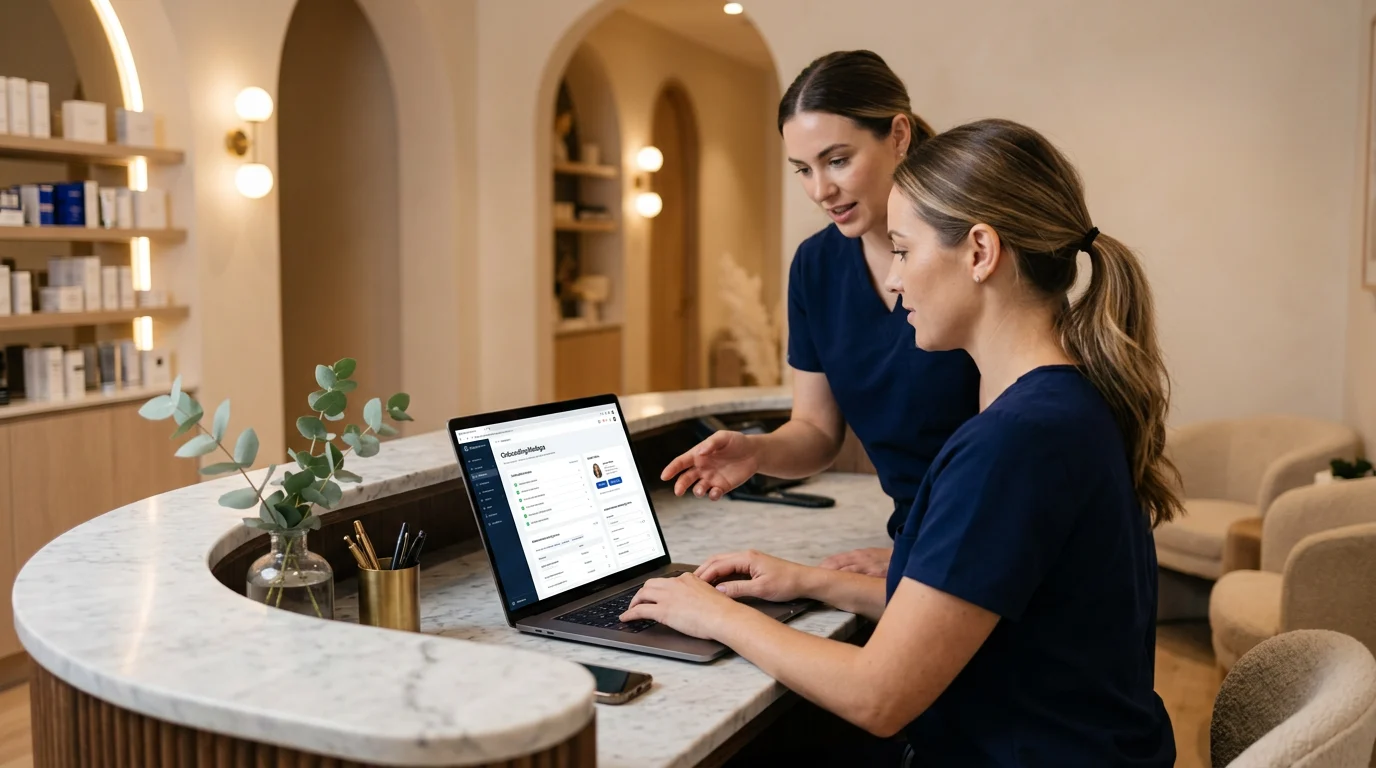
This is where Medspa onboarding software and a dedicated learning management system (LMS) become valuable.
A centralized LMS allows franchisors to organize training resources, assign learning activities, monitor employee progress, and maintain consistent training standards across locations.
Centralizing Employee Training Materials, SOPs, and Policies
A MedSpa LMS provides a central location for employee handbooks, training videos, SOPs, compliance materials, and operational guidelines.
Instead of searching through multiple folders or relying on outdated documents, employees can access relevant learning resources through one platform.
Automating New Employee Onboarding and Training Assignments
Automated onboarding workflows make it easier to assign training based on employee roles.
For example, newly hired administrative employees can receive customer service and scheduling modules, while clinical personnel can be assigned appropriate safety, documentation, and procedure-related learning materials.
This reduces administrative work and helps ensure that essential training is not overlooked.
Monitoring Employee Progress and Training Completion
An LMS allows franchise owners and managers to track completed courses, outstanding assignments, and assessment results.
These insights make it easier to identify employees who need additional guidance and determine whether training requirements are being met.
Maintaining Consistent Training Standards Across Franchise Locations
Centralized learning resources help ensure that every franchise location follows the same core training framework.
Franchisors can distribute updated materials and communicate procedural changes more efficiently, reducing inconsistencies between clinics.
Scaling Employee Development as the Franchise Network Grows
As a franchise expands, its training requirements grow with it.
A scalable LMS allows franchisors to onboard additional employees without rebuilding the training process for every new location.
This makes employee development more manageable while supporting consistent standards throughout the franchise network.
Essential Training Areas Every MedSpa Franchise Should Cover
A comprehensive onboarding program should prepare employees for the clinical, administrative, and customer-facing responsibilities of a medspa.
Prospective franchisees should verify that the franchisor covers the following essential training areas.
Compliance, HIPAA, and Workplace Safety Training
Employees should understand applicable privacy requirements, HIPAA obligations where relevant, workplace safety policies, infection prevention, and proper handling of sensitive information.
Training should be appropriate to each employee’s role and regularly updated to reflect applicable requirements.
Clinical Procedures, Treatment Protocols, and Patient Safety
Clinical training should cover authorized procedures, treatment protocols, patient screening, documentation, and safety practices.
Franchisors should also establish appropriate supervision and competency verification requirements for clinical personnel.
Patient Communication and Customer Experience Training
Every employee who interacts with clients should understand professional communication, appointment coordination, patient inquiries, and service recovery procedures.
Consistent training helps create a welcoming and professional experience throughout the client journey.
Sales, Consultations, and Membership Training
Employees involved in consultations and sales should understand treatment options, membership structures, pricing policies, and ethical communication.
Training should emphasize informed decision-making and appropriate recommendations rather than aggressive selling.
Daily Clinic Operations and Standard Operating Procedures
Finally, employees need clear instructions for everyday responsibilities, including opening and closing procedures, scheduling, inventory management, documentation, and administrative workflows.
Documented SOPs help ensure that employees understand how to complete essential tasks consistently and efficiently.
Questions to Ask Before Investing in a MedSpa Franchise
Before committing to a medspa franchise, prospective owners should evaluate more than the brand’s reputation, startup costs, and projected revenue. They should also understand how much support the franchisor provides in recruiting, training, and retaining employees.
A franchise may offer an attractive business model, but without a reliable employee development system, owners could end up spending more time managing training challenges than growing their clinics.
The following questions can help investors determine whether a franchisor has a structured and scalable onboarding approach.
Does the Franchisor Provide a Structured Employee Onboarding Program?
Ask whether the franchisor provides a documented onboarding process for newly hired employees. This should include clear training timelines, learning objectives, role-specific materials, and performance expectations.
A structured program demonstrates that the franchisor has an established system for preparing employees rather than expecting individual franchise owners to figure everything out.
Ideally, the program should outline what employees need to learn during their first few days, weeks, and months of employment.
Are Training Materials Standardized Across All Franchise Locations?
Consistency is essential when operating multiple franchise locations. Ask whether every clinic receives the same employee handbooks, SOPs, training videos, and operational guidelines.
Without standardized materials, each location may develop its own approach to training, potentially creating differences in customer service, administrative processes, and operational performance.
A reliable franchisor should provide centralized resources that help every franchise location maintain consistent brand standards.
Does the Franchise Use an LMS to Manage Employee Training?
Technology can make a significant difference in how efficiently a franchise manages employee onboarding.
Ask whether the franchisor uses a learning management system (LMS) to organize training materials, assign courses, monitor employee progress, and track completion.
A dedicated MedSpa LMS allows franchise owners to manage employee development through a centralized platform instead of relying entirely on printed manuals, spreadsheets, or informal instructions.
It also makes it easier to introduce new training requirements as the franchise network expands.
How Does the Franchisor Handle New Employee Training and Development?
Another important consideration is understanding who is responsible for training new employees.
Does the franchisor provide direct training support, train franchise managers to onboard their teams, or simply supply educational materials?
Prospective buyers should also ask whether training includes practical exercises, supervised learning, and competency assessments.
These details help determine whether the franchisor provides meaningful operational support or simply transfers the responsibility of employee development to individual owners.
What Ongoing Training and Operational Support Do Franchise Owners Receive?
Employee onboarding should not end after the clinic opens.
Ask whether the franchisor provides continuing education, updated SOPs, compliance training, operational guidance, and refresher courses.
A strong franchise support system recognizes that employees need continuous development to keep up with changing procedures, technologies, and customer expectations.
This is particularly important in medical aesthetics, where maintaining appropriate clinical standards and professional knowledge is essential.
Measuring the ROI of Employee Onboarding and Retention
Investing in employee onboarding may initially seem like an additional operational expense. However, a well-designed training system can create measurable financial benefits by improving productivity, reducing turnover, and preventing avoidable mistakes.
For medspa franchise owners, measuring onboarding ROI helps determine whether their training investments are contributing to a more efficient and profitable business.
Tracking Employee Turnover and Retention Rates
Employee turnover is one of the most straightforward indicators of onboarding effectiveness.
Franchise owners should monitor how many employees leave within their first 30, 60, and 90 days. High early turnover may indicate problems with recruitment expectations, training quality, management support, or workplace culture.
Comparing turnover rates over time can help determine whether improvements to onboarding are making a difference.
For example, if a clinic experiences fewer early resignations after introducing structured training and regular employee check-ins, this may indicate that the new process is improving the employee experience.
Measuring New Employee Productivity and Time to Competency
Another important metric is how long it takes new employees to perform their responsibilities confidently and independently.
This is often referred to as time to competency.
For example, a newly hired front-desk coordinator should gradually become proficient in appointment scheduling, patient communication, and administrative procedures.
Franchise owners can establish competency milestones and measure how quickly employees achieve them.
A structured onboarding program can help reduce unnecessary learning delays by providing clear instructions, organized resources, and practical training activities.
Monitoring Training Completion and Assessment Results
Training completion rates help franchise owners determine whether employees are receiving the required education.
However, completion alone does not guarantee that employees understand or can apply what they have learned.
That is why assessments should also be included.
An LMS can help managers monitor course completion, quiz results, assessment scores, and outstanding training requirements. These insights make it easier to identify knowledge gaps and provide additional coaching.
Evaluating Operational Consistency and Client Satisfaction
Employee training also influences the experience clients receive.
Franchise owners should monitor customer satisfaction, appointment handling, service complaints, consultation quality, and feedback about employee interactions.
If standardized training improves communication and daily workflows, clinics may experience fewer service inconsistencies and stronger client relationships.
These indicators help demonstrate how employee development contributes to the franchise’s overall reputation and performance.
Understanding the Financial Impact of Reduced Employee Turnover
Reducing employee turnover can help protect a clinic’s operating budget.
Every resignation can create expenses related to recruitment, replacement training, administrative processing, and lost productivity.
By improving onboarding and retention, franchise owners can reduce the frequency of these expenses.
For a growing franchise, even modest improvements in employee retention can create meaningful savings across multiple locations.
The key is to compare training investments against measurable outcomes, including recruitment costs avoided, reduced training duplication, improved productivity, and stronger operational performance.
Common Red Flags in MedSpa Franchise Training and Onboarding Programs
Not every medspa franchisor offers the same level of employee training and operational support.
Some brands have well-established systems, while others rely on informal processes that may become difficult to manage as the business grows.
Before signing a franchise agreement, prospective investors should watch for the following warning signs.
Training Support Ends After the Initial Franchise Launch
One major red flag is a franchisor that provides training only before or immediately after the clinic opens.
Although initial launch support is important, employees will continue to need guidance as new services, technologies, and operational requirements are introduced.
A franchise that does not provide ongoing education may leave owners responsible for developing training programs independently.
No Standardized Training Materials or Employee Learning Paths
Be cautious if the franchisor cannot provide documented SOPs, employee handbooks, or role-specific training materials.
Without these resources, franchise owners may need to create their own procedures, resulting in inconsistent employee experiences across locations.
A reliable franchisor should have an established training framework that can be adapted to different employee roles without compromising core brand standards.
No System for Tracking Training Progress and Competency
Another warning sign is the absence of a reliable way to monitor employee learning.
If the franchisor cannot explain how training completion, assessment results, or competency requirements are documented, it may indicate that employee development is not being managed systematically.
A centralized LMS can address this challenge by providing visibility into training progress and helping managers identify employees who require additional support.
Franchise Managers Must Handle All Training Manually
Franchise managers already have several responsibilities, including scheduling, inventory management, customer service, and daily clinic operations.
If they must also create training materials, manually track employee progress, and repeatedly explain procedures, their workload can become overwhelming.
Manual training processes also make it difficult to maintain consistency as additional locations open.
Look for franchisors that provide ready-to-use learning resources and technology that reduces unnecessary administrative work.
No Clear Process for Updating Compliance Policies and SOPs
Medspas must keep their operational policies aligned with applicable regulations, professional standards, and workplace requirements.
A franchisor should have a clear process for reviewing, updating, and distributing important policies and training materials.
If there is no established system for communicating changes, employees may continue following outdated procedures.
This can create unnecessary compliance and operational risks.
Building a Long-Term Employee Retention Strategy Through Continuous Training
A successful medspa franchise needs more than an effective first-day orientation. It needs an employee development strategy that supports people throughout their employment journey.
Continuous training helps employees improve their skills, understand evolving responsibilities, and remain connected to the organization’s goals.
Developing a Structured 30-60-90-Day Employee Onboarding Plan
A 30-60-90-day onboarding plan provides a practical framework for introducing employees to their responsibilities.
- First 30 days: Focus on company orientation, policies, essential SOPs, role expectations, and foundational training.
- Days 31-60: Introduce more advanced responsibilities, practical exercises, supervised activities, and performance feedback.
- Days 61-90: Evaluate competency, identify remaining knowledge gaps, and establish ongoing development goals.
This approach gives employees a clear learning pathway while allowing managers to monitor their progress.
Creating Career Development and Advancement Opportunities
Employees are more likely to remain engaged when they can see opportunities for professional growth.
Medspa franchises can introduce development pathways that allow employees to strengthen their existing skills, pursue relevant professional education, and prepare for leadership responsibilities.
For example, experienced administrative employees may progress into clinic coordination or management roles, while qualified clinical professionals may pursue additional training within their professional scope.
Career development demonstrates that the franchise values its employees beyond their immediate job responsibilities.
Establishing Regular Employee Feedback and Coaching Sessions
Regular communication helps managers understand employee concerns before they develop into larger retention problems.
Schedule periodic check-ins to discuss workload, training challenges, performance expectations, and professional goals.
Managers should also encourage employees to share feedback about the onboarding experience and identify areas where training resources could improve.
These conversations create opportunities for coaching while helping employees feel supported.
Using Technology to Support Continuous Employee Development
Managing ongoing training manually becomes increasingly difficult as a medspa franchise grows.
A centralized LMS provides employees with convenient access to updated learning materials, refresher courses, and role-specific development resources.
Managers can also assign additional training based on assessment results or changing operational requirements.
With the right technology, continuous learning becomes part of the franchise’s everyday operations rather than an occasional activity.
How the Right Training Infrastructure Supports MedSpa Franchise Growth
As a medspa franchise expands, its employee training requirements become more complex.
Opening additional locations means recruiting more employees, introducing new management teams, and maintaining consistent service standards across different markets.
Without reliable training infrastructure, growth can create operational inconsistencies that weaken the franchise’s reputation.
Reducing Dependence on Individual Managers for Employee Training
A scalable training system reduces the need for managers to personally explain every procedure or create learning materials from scratch.
Centralized resources give employees access to consistent instructions while allowing managers to focus on coaching, performance management, and clinic operations.
This creates a more efficient approach to employee development.
Maintaining Brand Standards and Service Quality Across Locations
Every franchise location should reflect the same core brand values and service expectations.
Standardized onboarding materials and operational guidelines help employees understand how the brand expects them to interact with clients and perform their responsibilities.
This consistency becomes particularly valuable when a franchise operates across multiple cities or regions.
Preparing Employees for New Treatments, Services, and Operational Changes
Franchise operations evolve as businesses introduce new services, technologies, and internal procedures.
Employees need timely access to updated information to perform their responsibilities correctly.
A centralized training infrastructure allows franchisors to distribute new learning materials and communicate important procedural updates across their network.
Using a MedSpa LMS to Build a Scalable Franchise Training System
Ultimately, a dedicated MedSpa LMS can become an important part of a franchise’s long-term growth strategy.
By centralizing training materials, automating onboarding assignments, monitoring employee progress, and supporting continuous education, an LMS helps franchisors maintain consistent training standards as their networks expand.
For prospective franchisees, this is an important consideration when comparing brands.
A franchisor that invests in scalable training infrastructure demonstrates a commitment to supporting not only the business model but also the people responsible for delivering it.
Summary: Make Employee Onboarding a Key Factor When Evaluating MedSpa Franchise Opportunities
Choosing the right medspa franchise involves more than comparing startup costs, brand recognition, marketing support, and revenue potential. Prospective franchisees should also evaluate how effectively a franchisor prepares its employees to operate the business, deliver quality service, and maintain consistent standards.
A strong employee onboarding program can significantly influence a clinic’s long-term performance. It helps reduce early employee turnover, minimize recruitment and retraining expenses, improve workplace productivity, and create more consistent client experiences. More importantly, it gives franchise owners a structured system for building a capable team without having to develop every training process from scratch.
Before deciding how to start a medspa franchise, investors should ask whether the franchisor provides standardized training materials, role-specific learning paths, practical competency assessments, and ongoing operational support. They should also determine whether the brand uses technology to simplify employee development and maintain consistent training standards across locations.
A dedicated Medspa onboarding software or learning management system can make this process significantly more manageable. By centralizing SOPs, automating training assignments, tracking employee progress, and delivering continuous education, these platforms help franchise owners and managers maintain a more organized approach to workforce development.
Ultimately, a successful medspa franchise is built not only on a recognizable brand or profitable business model but also on the people who bring that business to life. Franchisors that prioritize employee onboarding demonstrate a commitment to supporting their franchisees beyond the initial launch.
When evaluating your next medspa franchise opportunity, look beyond what the franchisor promises to help you build. Examine how well they prepare the people who will make that business successful. A franchise with a strong onboarding and employee development system gives you a better foundation for building a consistent, confident, and sustainable team.
Frequently Asked Questions About MedSpa Franchise Onboarding and Employee Retention
1. Why Is Employee Onboarding Important When Choosing a MedSpa Franchise?
Employee onboarding is important because it directly affects how quickly new employees become productive, how well they understand clinic procedures, and how consistently they deliver client experiences. For medspa franchise owners, a structured onboarding program can reduce early employee turnover, minimize operational mistakes, and lower recruitment and retraining costs. Evaluating a franchisor’s onboarding support before investing also helps determine whether the brand provides the resources needed to build and maintain a reliable workforce.
2. What Should a MedSpa Franchise Onboarding Program Include?
A comprehensive medspa franchise onboarding program should include company orientation, employee handbooks, standardized SOPs, role-specific training, compliance education, and practical skills development. It should also establish clear performance expectations and provide assessments to evaluate employee readiness. Ideally, the franchisor should offer centralized training resources that franchise owners can use consistently across their locations.
3. How Long Should Employee Onboarding Take in a MedSpa?
Medspa employee onboarding typically extends beyond the first few days of employment. A structured 30-60-90-day onboarding plan provides a practical framework for introducing employees to their responsibilities, developing their skills, and evaluating their progress. The actual timeline depends on the employee’s position, experience, and responsibilities. Clinical roles may require additional supervised training and competency verification before employees perform specific procedures.
4. How Does a MedSpa LMS Help Improve Employee Retention?
A MedSpa LMS improves employee retention by making training more organized, accessible, and consistent. Employees can access learning materials, review important procedures, complete assigned courses, and develop their skills through a centralized platform. Managers can also monitor training progress and identify employees who need additional support. By providing a more structured learning experience, an LMS helps employees feel better prepared and supported in their roles.
5. What Training Should MedSpa Franchise Employees Receive?
Medspa franchise employees should receive training based on their specific responsibilities. Essential areas include:
- HIPAA and applicable healthcare privacy requirements.
- Workplace safety and infection prevention.
- Clinical procedures and patient safety protocols.
- Patient communication and customer service.
- Appointment scheduling and administrative workflows.
- Consultations, ethical sales practices, and membership programs.
- Daily clinic operations and standard operating procedures.
Clinical training must also reflect professional qualifications, applicable regulations, and individual scopes of practice.
6. How Can Franchise Owners Maintain Consistent Training Across Multiple Locations?
Franchise owners can maintain consistent training by implementing standardized onboarding materials, documented SOPs, and centralized employee development programs. Using a learning management system allows franchisors to distribute updated training resources and assign courses across different locations. Regular assessments and training progress reports also help managers identify inconsistencies and ensure employees meet established brand standards.
7. What Are the Signs of a Poor MedSpa Employee Onboarding Program?
Common warning signs include the absence of documented training materials, inconsistent onboarding procedures, unclear employee responsibilities, and limited support after the initial clinic launch. Other red flags include relying entirely on managers to train new hires, having no system for tracking training completion, and failing to update compliance policies and operational guidelines. These gaps can create unnecessary challenges for franchise owners and negatively affect employee retention.
8. How Can MedSpa Franchise Owners Measure the ROI of Employee Training?
Franchise owners can measure employee training ROI by comparing training investments against improvements in workforce and business performance. Important indicators include employee turnover rates, recruitment expenses, time to competency, training completion rates, assessment results, and client satisfaction. Tracking these metrics over time helps determine whether onboarding improvements are reducing operational costs and contributing to a more productive workforce.
9. Why Is Ongoing Employee Training Important After Onboarding?
Ongoing training helps medspa employees maintain their knowledge, improve their skills, and adapt to changes in clinic operations, technologies, and applicable requirements. It also creates opportunities for professional development and career advancement. For franchise owners, continuous education supports consistent service delivery while helping employees remain engaged and confident in their responsibilities.
10. What Questions Should I Ask a Franchisor About Its Employee Training System?
Before investing in a medspa franchise, ask the franchisor questions such as:
- Do you provide a standardized employee onboarding program?
- Are training materials and SOPs available for every franchise location?
- Do you offer role-specific training for clinical and nonclinical employees?
- Do you use an LMS to manage employee training?
- How do you assess employee competency and training completion?
- What ongoing training and compliance support do franchisees receive?
- How frequently are training materials and operational guidelines updated?
The answers can help you determine whether the franchisor has a scalable employee development system or expects individual franchise owners to manage most training responsibilities themselves.
How Can V-Unite Help With MedSpa Franchise Onboarding and Employee Retention?
Building a successful medspa franchise requires more than hiring qualified employees. It requires a reliable system for training, developing, and supporting people across every clinic location.
V-Unite helps medspa businesses organize and streamline employee training through a centralized learning management platform. Instead of relying on scattered documents, manual training assignments, and inconsistent onboarding processes, medspa operators can establish a more structured approach to employee development.
With V-Unite , medspa franchises can:
- Centralize Training Resources: Organize employee handbooks, SOPs, policies, and educational materials in one accessible platform.
- Standardize Employee Onboarding: Provide consistent training experiences across different franchise locations.
- Simplify Training Management: Organize learning assignments and help employees follow structured training pathways.
- Monitor Employee Progress: Track course completion and training assessments to identify knowledge gaps.
- Support Continuous Learning: Make training resources available to employees beyond their initial orientation.
- Build a Scalable Training System: Establish a repeatable employee development process that can support additional locations as the franchise grows.
Whether you’re launching your first medspa clinic or managing an expanding franchise network, having the right training infrastructure can make employee development more manageable and consistent.
Ready to build a stronger and more consistent medspa workforce?
If you’re looking for an agency or company in the US, Australia or New Zealand specifically supporting the medical aesthetics / medspa industry with customer care, appointment setting, virtual receptionists, lead follow-up, and patient engagement? Contact V-Assist! The Top Medspa VA & Medical Virtual Assistant Services for you!
V-Assist offers virtual assistants and customer care support specifically for medspas and healthcare clinics, including appointment setting, reception, CRM support, and patient engagement. Strong fit if you want industry-trained offshore or hybrid support.