“Running a modern medical spa involves much more than delivering exceptional aesthetic treatments. Medspa owners and managers must coordinate employee training, certifications, policies, standard operating procedures, workplace safety, patient privacy, and documentation. As these responsibilities grow, a medspa compliance training solution can help turn scattered compliance tasks into a more organized, manageable process.” – Stephen Handisides
The challenge is that many practices still rely on spreadsheets, paper files, email reminders, and manually maintained calendars. These methods may work for a small team, but they become increasingly difficult to manage as employee numbers, services, and locations expand.
The Growing Complexity of Compliance in Modern Medical Spas
Medspas operate at the intersection of healthcare and aesthetics, creating a compliance environment that can involve multiple requirements and responsibilities.
Depending on the services and workplace, teams may need training related to OSHA requirements, patient privacy, infection prevention, workplace safety, professional responsibilities, and internal SOPs. Employees may also have licenses, certifications, and other credentials that require ongoing monitoring.
The more requirements a practice manages, the more opportunities there are for something to be overlooked.
Why Manual Compliance Processes Leave Practices Exposed
Manual tracking depends heavily on people remembering what needs to happen and when.
A manager might maintain a spreadsheet of employee certifications while keeping training certificates in another folder and policy acknowledgments in email. A renewal date can be missed simply because a reminder was overlooked or a spreadsheet was not updated.
The issue isn’t that managers aren’t careful. It’s that manual systems create too many opportunities for human error.
The Hidden Operational Costs of Compliance Administration
Compliance administration also has a cost that isn’t always visible on a financial statement.
Consider the hours spent chasing signatures, sending reminders, checking expiration dates, collecting certificates, updating spreadsheets, and searching for records before an audit. Those hours take managers away from staffing, patient experience, employee development, and business operations.
As a practice grows, administrative inefficiency can grow with it.
How Automation Transforms Compliance From a Burden Into a Strategic Advantage
Automation can change the way a practice approaches these responsibilities.
Instead of relying on managers to remember every deadline, a digital system can help organize assignments, reminders, documentation, and employee status in one environment.
The result is a more proactive approach. Managers can focus their attention on exceptions and decisions rather than repeatedly performing routine administrative tasks.
What Automated Medspa Compliance Should Accomplish
Effective automation should make compliance more visible, consistent, and manageable.
It should help practices assign relevant training, monitor employee requirements, organize documentation, reinforce policies, and identify potential gaps before they become larger problems.
Automation doesn’t eliminate the need for human oversight or professional judgment. Instead, it gives leaders better tools for managing those responsibilities consistently.
Understanding Compliance Risk in the Medspa Industry
Compliance risk is an important consideration for every medspa, regardless of size. The consequences of a compliance failure can extend beyond a single missed document or training deadline.
A structured compliance program helps organizations identify where exposure may occur and establish processes for managing it.
Why Medspas Face a Unique Compliance Environment
A medspa may combine clinical procedures with aesthetic services and business operations under one roof.
Employees can include physicians, nurse practitioners, registered nurses, aestheticians, front-desk staff, sales personnel, and managers. Each role may interact with different regulations, workplace hazards, patient information, or internal procedures.
This diversity makes a one-size-fits-all approach to compliance difficult.
The Intersection of Healthcare, Beauty, and Business Regulations
Medspas often need to manage requirements that span multiple operational areas.
Clinical staff may need appropriate professional credentials and safety training. Administrative teams may handle sensitive patient information. The business may also need documented policies, workplace safety procedures, and standardized operational processes.
Compliance therefore becomes an organization-wide responsibility rather than something handled exclusively by the medical director.
How Employee Actions Can Create Compliance Exposure
Even well-designed policies are only effective when employees understand and follow them.
An employee who skips an established procedure, uses equipment incorrectly, mishandles confidential information, or fails to complete required training can potentially create risk for the practice.
Consistent education and clear accountability help reduce the likelihood of these gaps.
The Difference Between Compliance Risk and Operational Risk
Compliance risk concerns the possibility of failing to meet applicable laws, regulations, standards, or required obligations.
Operational risk is broader and can include problems involving staffing, workflows, communication, technology, or day-to-day processes.
The two can overlap. For example, an inconsistent onboarding process is an operational problem that may also result in employees missing required compliance training.
Why Compliance Must Be Managed Continuously
Compliance is not a once-a-year event.
Employee roles change. Certifications expire. Policies are revised. New services are introduced. New employees join the organization, and existing employees may take on additional responsibilities.
Continuous compliance management helps practices respond to these changes instead of relying on periodic manual reviews.
The Most Common Compliance Challenges Medspas Face
As medspa organizations grow, several recurring compliance problems can make manual management increasingly difficult.
Inconsistent Employee Training
Employees may receive different information depending on who trained them, when they joined, or which location they work in.
A standardized training process can help create greater consistency.
Outdated Policies and Procedures
Policies that are not reviewed regularly can become disconnected from current workflows.
Digital systems can make it easier to organize policy updates and communicate changes to employees.
Missed Certification and Training Renewals
Expiration dates are easy to overlook when they are tracked manually. Automated reminders can help bring upcoming renewals to a manager’s attention.
Incomplete Compliance Documentation
A practice may have completed training but still struggle to locate proof of completion.
Centralized documentation makes records easier to organize and retrieve.
Inconsistent SOP Execution Across Locations
Multi-location organizations can face additional challenges when individual clinics develop different interpretations of the same procedure.
A centralized training environment can distribute standardized SOPs while allowing appropriate location-specific procedures.
Difficulty Monitoring Employee Compliance
Managers need visibility into who has completed required training, whose credentials are approaching expiration, and where gaps remain.
A centralized dashboard can make this information easier to review.
Reactive Responses to Compliance Issues
When compliance is managed manually, problems may only receive attention after something goes wrong.
Automation supports a more proactive approach by surfacing upcoming deadlines and incomplete requirements earlier.
What Is Automated Medspa Compliance?
Automated medspa compliance refers to using digital systems to organize, assign, monitor, and document compliance-related activities.
Rather than relying entirely on paper records and manual follow-up, practices can use technology to create repeatable workflows around employee education, documentation, policies, SOPs, and accountability.
Defining Compliance Automation for Medical Spas
Compliance automation involves using software to reduce repetitive administrative tasks.
For example, a system may assign training to an employee based on their role, send reminders before a requirement becomes overdue, and record completion automatically.
How Automated Compliance Differs From Traditional Compliance Management
Traditional compliance management often depends on spreadsheets, calendars, email, paper files, and manual checklists.
Automated management creates a system-driven process where tasks and records are connected, making it easier for managers to see what needs attention.
The Role of an LMS in Compliance Automation
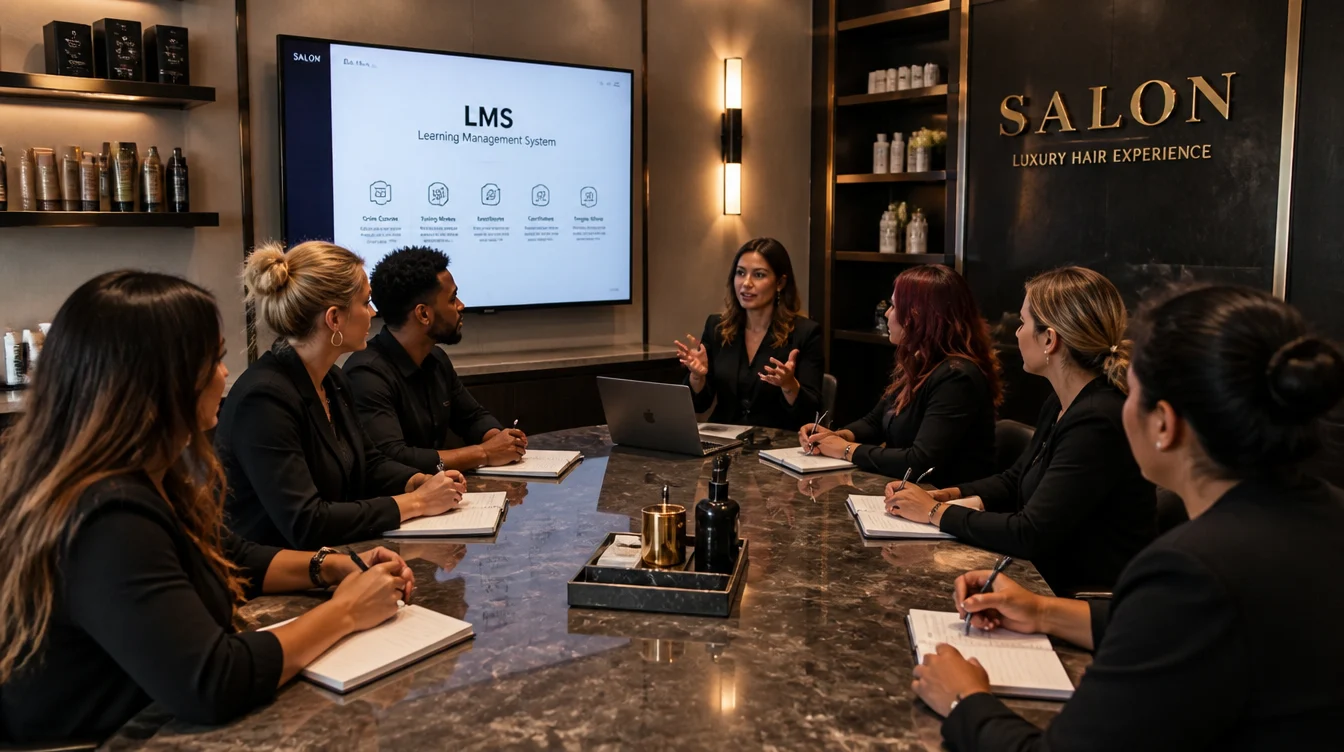
An LMS, or Learning Management System, can serve as the central training environment for a medspa.
It can organize courses, employee learning paths, assessments, completion records, and recurring training. When configured appropriately, it can become an important component of a broader compliance program.
Connecting Training, SOPs, Documentation, and Accountability
Compliance becomes more practical when training connects directly with how employees perform their jobs.
A dedicated platform can bring training materials, SOPs, acknowledgments, and learning records together, helping employees understand not only what the policy says but how it applies to their responsibilities.
Moving From Manual Administration to System-Driven Compliance
The objective is not to remove managers from the compliance process.
It is to remove unnecessary repetitive work so managers can focus on oversight, problem-solving, and continuous improvement.
How Automated Training Reduces Compliance Risk
Training gaps are among the areas where automation can provide immediate operational value.
A structured system can help ensure that employees receive appropriate education at the right stage of their employment.
Automatically Assigning Required Compliance Training
Once training requirements are mapped to specific roles, a platform can automatically assign applicable courses.
This reduces the need for managers to manually create individual training checklists.
Delivering Role-Based Training to the Right Employees
Role-based learning paths ensure that training is relevant to employee responsibilities.
A clinical practitioner may need extensive safety and compliance education, while an administrative employee may require a different set of courses.
Ensuring New Hires Receive Required Education
New-hire onboarding is a common source of compliance gaps.
Automated assignments can make required training part of the onboarding workflow, helping managers establish expectations from the beginning of employment.
Automating Recurring and Refresher Training
Some training requirements recur at defined intervals. Automation can help schedule these assignments and provide reminders when they approach their renewal dates.
Preventing Employees From Falling Through the Cracks
Perhaps the biggest advantage is visibility.
Instead of relying on memory to identify who has not completed training, managers can use centralized status information to find incomplete assignments and take action.
Automating OSHA Compliance for Medspa Teams
Workplace safety is another area where structured training management can help medspas reduce administrative complexity.
The specific OSHA requirements applicable to a practice depend on its workplace hazards, employee responsibilities, and jurisdiction. Automation should therefore support—not replace—the practice’s assessment of its applicable obligations.
Managing Bloodborne Pathogens Training
For employees who may reasonably anticipate occupational exposure to blood or other potentially infectious materials, applicable Bloodborne Pathogens training needs to be managed carefully.
A digital system can help assign relevant training, track completion, and organize recurring requirements.
Reinforcing Hazard Communication Requirements
Medspas may use treatment-related chemicals, disinfectants, cleaning products, and other substances that require appropriate safety education.
Training can reinforce hazard communication principles and connect them with the products and procedures employees encounter.
Supporting PPE and Workplace Safety Training
Employees should understand applicable PPE requirements and workplace safety practices associated with their responsibilities.
A centralized learning system can provide structured education and refresher content when appropriate.
Tracking OSHA Training Completion
Managers can use centralized records to monitor employee training status rather than maintaining separate spreadsheets for every requirement.
This makes it easier to identify incomplete assignments and follow up proactively.
Maintaining Accessible Training Documentation
When training records are centralized, managers can more efficiently locate available documentation when conducting internal reviews or preparing for an inspection.
Preparing Employees for Workplace Safety Responsibilities
Ultimately, OSHA training should help employees understand how to work safely within their actual environment.
By combining structured education with workplace-specific procedures, medspas can make safety a more consistent part of daily operations rather than treating compliance as a box to check.
Automating HIPAA Compliance Training and Awareness
HIPAA compliance is an ongoing responsibility for medspas that create, receive, maintain, or transmit protected health information. With front-desk teams, clinicians, managers, and other employees interacting with patient information in different ways, a standardized approach to privacy and security awareness is essential.
A dedicated system can make HIPAA education easier to assign, reinforce, and document. For organizations looking beyond basic training sessions, HIPAA compliance training software for medspas can provide a centralized environment for managing employee education and keeping training records organized.
Establishing Consistent HIPAA Training Requirements
Every employee should understand the privacy and security responsibilities relevant to their role.
Rather than relying on informal orientation, medspas can establish a consistent training framework that identifies which employees need privacy education, security awareness, or additional role-specific instruction.
This creates a repeatable process as the practice hires new employees or expands into additional locations.
Assigning Privacy and Security Training by Role
Not every employee interacts with patient information in the same way.
A front-desk employee may handle patient forms and scheduling information, while a clinician may access detailed medical records. Managers may have additional responsibilities involving systems, policies, and employee oversight.
Role-based assignments help ensure that employees receive relevant education without treating every position identically.
Reinforcing Secure Handling of Patient Information
HIPAA awareness should translate into everyday behavior.
Employees need to understand appropriate practices for accessing, discussing, storing, transmitting, and protecting patient information. Regular reinforcement can help keep privacy and security expectations visible after initial onboarding.
Automating Refresher Training and Policy Updates
Compliance education should evolve when policies, technologies, workflows, or organizational responsibilities change.
An automated system can help deliver refresher education and notify employees when updated policies require their attention.
This reduces the likelihood that important updates become buried in email or overlooked during busy clinic operations.
Documenting Employee HIPAA Training Completion
Training documentation is another important part of compliance management.
A centralized platform can maintain available completion records, making it easier for managers to determine who has completed assigned education and where outstanding requirements remain.
The system supports documentation; leadership remains responsible for ensuring that the organization’s overall HIPAA compliance program is appropriate.
How Automation Strengthens Medspa SOP Compliance
Standard operating procedures provide the practical instructions employees use to perform work consistently. However, SOPs are only useful when employees can find them, understand them, and follow the current version.
Automation can connect SOP management with employee learning and acknowledgment processes.
Centralizing Standard Operating Procedures
Instead of storing SOPs across shared drives, email threads, printed binders, and individual computers, a centralized platform can provide employees with a consistent location for approved procedures.
This can make information easier to locate and reduce confusion over where the latest version lives.
Connecting SOPs to Employee Training
An SOP can explain what employees should do, while training can help them understand why and how the procedure should be followed.
Connecting the two creates a stronger learning experience. For example, a new employee might complete training on a specific workflow and then review the corresponding SOP as part of the learning path.
Making Procedures Accessible When Employees Need Them
Employees don’t only need SOPs during onboarding.
They may need to reference a procedure when performing an unfamiliar task, using equipment, handling an incident, or responding to a workflow change.
On-demand access can make procedures more useful in everyday operations.
Tracking SOP Acknowledgment
When employees are required to review and acknowledge updated procedures, a digital system can help document that activity.
This gives managers better visibility into whether employees have received important updates.
Updating Employees When Procedures Change
Procedures inevitably change as practices introduce new technology, services, workflows, or organizational standards.
A centralized platform can make it easier to distribute updated SOPs and notify affected employees.
Creating Greater Consistency Across Teams
Standardized SOP distribution can help reduce differences in how employees interpret and perform the same process.
For multi-location organizations, this becomes particularly important because consistent procedures can support a more unified operating model.
Reducing Human Error Through Compliance Automation
Manual compliance systems depend on people remembering numerous tasks and updating multiple records correctly. Even highly organized managers can make mistakes when managing hundreds of dates, employees, documents, and requirements.
Automation reduces some of the repetitive work where human error is most likely to occur.
Eliminating Manual Training Assignment Errors
When assignments are determined manually, an employee may accidentally be given the wrong course—or a required course may be overlooked.
Role-based automation can help establish consistent assignment rules based on employee responsibilities.
Reducing Missed Deadlines and Renewals
Expiration dates are easy to lose track of when they’re scattered across spreadsheets and calendars.
Automated reminders can bring upcoming renewals to the attention of employees and managers before deadlines arrive.
Minimizing Incomplete Documentation
Digital workflows can help ensure that completion information and acknowledgments are recorded consistently.
This reduces the need for managers to manually collect certificates and update separate tracking documents.
Standardizing Compliance Workflows
A standardized workflow ensures that similar situations are handled consistently.
For example, when a new employee joins the practice, the same onboarding sequence can automatically trigger applicable training, acknowledgments, and other learning activities.
Creating Consistent Processes Across Departments
Compliance isn’t limited to the clinical team.
Front-desk, sales, administrative, operations, and leadership teams can all have different responsibilities. Automation can help each department follow a defined process while maintaining organization-wide standards.
Reducing Dependence on Individual Managers
When compliance knowledge lives primarily with one experienced manager, the practice can become vulnerable if that person leaves or changes roles.
A centralized system captures processes within the organization’s infrastructure, making compliance management less dependent on individual memory.
Automated Compliance Alerts and Reminders
One of the simplest but most valuable automation features is the ability to notify people when something requires attention.
Instead of expecting managers to remember every deadline, the system can provide timely prompts.
Alerting Employees About Upcoming Requirements
Employees can receive reminders about upcoming training assignments, renewals, or required acknowledgments.
This gives them an opportunity to act before a requirement becomes overdue.
Escalating Overdue Training to Managers
If an employee doesn’t complete an assignment, the system can provide managers with visibility into the outstanding requirement.
This creates a defined escalation process instead of leaving managers to discover missing training manually.
Monitoring Expiring Certifications
Where credential tracking is supported, automated notifications can highlight approaching expiration dates.
Managers can then follow up with the employee or take other appropriate action.
Triggering Notifications After Policy Changes
When a policy or SOP changes, affected employees may need to review or acknowledge the update.
Automated notifications can help ensure important changes are visible rather than relying entirely on word-of-mouth communication.
Giving Leaders Visibility Into Compliance Gaps
Alerts are most useful when they feed into broader visibility.
A manager should be able to see which employees or locations require attention and prioritize follow-up accordingly.
Building a Centralized Compliance Record
A centralized compliance record gives medspa leaders a clearer picture of employee training and documentation.
Rather than searching through multiple folders, managers can use a unified environment to review available information.
Maintaining Individual Employee Training Histories
Each employee can have a learning history showing assigned and completed training, depending on the capabilities of the platform.
This creates greater visibility into an individual’s compliance education.
Tracking Certifications and Credentials
Credential management can be particularly important for clinical teams.
A centralized system can help organizations organize available credential information and identify approaching expiration dates.
Recording Policy Acknowledgments
When employees are required to acknowledge policies or SOPs, digital records can help document those acknowledgments.
This creates greater transparency around whether employees have received and reviewed important organizational information.
Maintaining Completion Dates and Assessment Results
Training completion dates provide useful evidence of learning activity. Assessment results can provide additional insight into employee understanding where assessments are included.
Together, these records can help managers identify areas requiring additional attention.
Making Compliance Documentation Easy to Retrieve
The value of documentation decreases when nobody can find it.
A centralized digital system can make records easier to locate during internal reviews, management audits, or other situations where documentation needs to be referenced.
Creating an Audit-Ready Compliance Trail
A structured record of training, acknowledgments, credentials, and related activities can support a more organized audit-readiness process.
It does not guarantee that a practice will satisfy every regulatory requirement, but it can reduce the administrative difficulty of demonstrating what the organization has documented and tracked.
How Automated Compliance Improves Accountability
Automation isn’t just about saving managers time. It can also make responsibility clearer throughout the organization.
When employees and managers have visibility into compliance expectations, it becomes easier to establish ownership and address gaps.
Giving Employees Visibility Into Their Responsibilities
Employees should know what training they need, what policies they must review, and when requirements need to be completed.
A centralized learning environment can provide that visibility without requiring employees to repeatedly ask managers what they need to do.
Giving Managers Real-Time Compliance Visibility
Managers need a broader view.
Dashboards and reporting tools can help them identify incomplete training, approaching deadlines, and other areas requiring attention.
This shifts compliance management from guesswork toward data-informed oversight.
Establishing Clear Ownership of Compliance Tasks
Automation can clarify who is responsible for completing a training assignment and who is responsible for monitoring it.
Employees own their assigned learning, while managers can oversee completion and respond to exceptions.
Tracking Completion Rather Than Assuming Compliance
One of the biggest weaknesses of informal compliance processes is assumption.
A manager may believe everyone completed training because no one reported a problem. A centralized system replaces that assumption with available completion data.
Turning Compliance Data Into Actionable Management Insights
Compliance data can reveal patterns that aren’t obvious from individual records.
Managers may identify recurring overdue training, onboarding bottlenecks, location-specific gaps, or areas where employees consistently struggle with assessments.
These insights allow leadership to improve the process rather than simply reacting to individual problems.
For growing practices, this is where automation becomes more than an administrative convenience. It becomes part of the infrastructure that supports consistent operations, employee accountability, and long-term risk management.
Protecting Medspas Through Continuous Employee Education
Compliance training should not end when an employee finishes an onboarding course. Medspas operate in environments where procedures, technologies, products, regulations, and employee responsibilities can change over time. Continuous education helps keep important requirements visible and gives employees opportunities to refresh knowledge before problems occur.
A modern medspa training platform can support this approach by making learning available throughout the employee lifecycle rather than treating compliance as a once-a-year event.
Why One-Time Compliance Training Is Not Enough
Employees can forget information they rarely use. A policy that seemed clear during onboarding may become less familiar several months later, particularly when employees are focused on patient care and daily operations.
One-time training can establish a foundation, but periodic reinforcement helps keep critical requirements relevant.
Using Microlearning to Reinforce Critical Requirements
Microlearning delivers focused information in short learning activities.
Instead of requiring employees to repeat an entire compliance course, a practice might provide brief refreshers covering topics such as patient privacy, workplace safety, sharps handling, infection prevention, or emergency procedures.
Short learning activities can make reinforcement easier to fit into busy clinic schedules.
Delivering Just-in-Time Compliance Education
Sometimes employees need information because something has changed.
A new treatment may be introduced, an SOP may be revised, or a workplace incident may highlight a particular risk. Training can be delivered at the point when the information becomes relevant.
This makes compliance education more connected to actual operations.
Refreshing Knowledge After Incidents or Policy Changes
An incident can reveal an area where employees need additional education.
Rather than simply documenting what happened, management can use the experience to determine whether a policy, procedure, or training activity should be updated.
Similarly, when an important policy changes, affected employees can receive targeted education and acknowledgment.
Building a Culture of Continuous Compliance
A strong compliance culture develops when employees understand that safety, privacy, and proper procedures are part of everyday work.
Continuous learning reinforces the idea that compliance isn’t something employees complete once and forget. It is an ongoing responsibility shared across the organization.
Automated Compliance for New-Hire Onboarding
Employee onboarding is one of the most important opportunities to establish compliance expectations.
Without a structured process, new employees can receive inconsistent information or begin certain responsibilities before completing applicable education. Automation can create a more predictable onboarding experience.
Creating Role-Specific Compliance Onboarding Paths
A physician, nurse, aesthetician, front-desk employee, and practice manager may have very different responsibilities.
A role-based onboarding path can assign relevant training according to the employee’s position, reducing unnecessary courses while making required education easier to identify.
Assigning Training Before Employees Begin Certain Duties
Some workplace requirements call for training before an employee performs particular tasks or is exposed to specific hazards.
A digital onboarding workflow can make applicable training requirements visible before employees transition into those responsibilities.
Automating New-Hire Training Checklists
Instead of creating a new checklist manually for every employee, practices can establish standardized onboarding workflows.
Assignments, acknowledgments, and other learning activities can be organized into a repeatable process.
Tracking Onboarding Progress
Managers can monitor whether a new employee has completed assigned training and identify outstanding items.
This provides more visibility than simply asking whether the employee has “finished onboarding.”
Preventing Compliance Gaps During Employee Transitions
Employees may transfer departments, take on new responsibilities, or move between locations.
A structured training system can help management reassess applicable requirements when responsibilities change rather than assuming that the employee’s original training remains sufficient.
Scaling Automated Compliance Across Multiple Medspa Locations
For a single clinic, manual tracking may seem manageable. For a multi-location medspa organization, it can quickly become difficult to maintain consistent standards.
Automation provides a centralized framework that can help organizations scale compliance without creating an equivalent increase in administrative work.
Standardizing Compliance Requirements Across Clinics
Leadership can establish organization-wide training standards for common requirements.
This provides employees across different clinics with a consistent foundation while still allowing appropriate local customization.
Managing Location-Specific Requirements
Not every location necessarily has identical services, equipment, staffing structures, or applicable requirements.
A flexible system can support location-specific assignments alongside organization-wide training.
Monitoring Compliance From a Central Dashboard
A central dashboard can provide leadership with visibility into training activity across the organization.
Instead of collecting separate spreadsheets from every clinic, operations leaders can review available information from a centralized environment.
Comparing Completion and Risk Trends Across Locations
Training data can help leadership identify patterns.
One location might consistently have overdue training, while another might demonstrate stronger completion rates. These differences can prompt further investigation into staffing, workflows, management practices, or employee support.
The goal is not simply to rank locations but to identify opportunities for improvement.
Scaling Training Without Scaling Administrative Work
Adding another location should not require rebuilding the entire compliance process.
With standardized workflows and automation, organizations can extend existing training structures to new teams while adapting them to location-specific needs.
How Compliance Automation Supports Audit and Inspection Readiness
Audit readiness becomes much easier when documentation is maintained continuously rather than assembled at the last minute.
Whether leadership is preparing for an internal review or responding to a regulatory inquiry, organized records can make the process more manageable.
Maintaining Organized Compliance Documentation
Centralized systems can organize training records, policy acknowledgments, SOP-related activities, and other available compliance documentation.
This reduces dependence on paper binders and disconnected digital folders.
Quickly Identifying Missing Training Records
Managers can review employee status and identify records that are incomplete or unavailable.
Finding these gaps early provides an opportunity to investigate and correct documentation issues before an audit or inspection.
Demonstrating Employee Completion
Completion records can provide evidence of employee participation in assigned training.
Where applicable, managers can use available records to demonstrate when employees completed specific learning activities.
Producing Compliance Reports on Demand
Reporting functionality can reduce the need to manually compile information from multiple sources.
A manager may be able to generate a report showing training completion, overdue assignments, or other relevant learning data, depending on the capabilities of the platform.
Moving From Last-Minute Preparation to Continuous Readiness
The biggest shift is changing the mindset around audits.
Instead of spending days searching for documents before an inspection, practices can maintain their records continuously so that readiness becomes part of normal operations.
Automation doesn’t guarantee regulatory compliance, but it can make the administrative process of maintaining and retrieving compliance information significantly more manageable.
Measuring the ROI of Automated Medspa Compliance
Compliance technology is an investment, so medspa leaders should consider both its operational and risk-management value.
The return isn’t limited to avoiding potential penalties. It can also include time savings, improved visibility, greater consistency, and reduced administrative workload.
Reducing Administrative Labor
Automation can reduce repetitive tasks such as assigning training, sending reminders, updating spreadsheets, and organizing completion records.
The hours saved can be redirected toward higher-value operational activities.
Saving Manager and Clinical Staff Time
Training sessions and administrative follow-up can consume valuable employee time.
When foundational education and tracking are managed digitally, managers and clinical staff may spend less time coordinating routine compliance activities.
Reducing Repeated Training Administration
A standardized system can make recurring assignments easier to manage.
Instead of rebuilding training schedules for every employee, practices can establish repeatable workflows that operate consistently.
Minimizing Preventable Compliance Gaps
Automated reminders, dashboards, and role-based assignments can help identify gaps earlier.
While no system can eliminate every compliance risk, reducing preventable administrative oversights can strengthen the overall compliance process.
Improving Employee Training Completion
Clear assignments and automated reminders can make employees more aware of what they need to complete.
Higher on-time completion can also give managers greater confidence in the status of their training program.
Supporting Consistent Operations as the Practice Grows
A scalable compliance system becomes increasingly valuable as the organization adds employees, services, and locations.
The goal is to create infrastructure that supports growth instead of allowing compliance administration to become a bottleneck.
Implementing Automated Compliance in a Medspa
Moving from manual processes to automation doesn’t have to happen all at once. A structured implementation approach can help practices identify priorities and build a system around their actual needs.
Step 1 — Conduct a Compliance Risk Assessment
Begin by identifying applicable compliance obligations, workplace hazards, employee responsibilities, and existing process weaknesses.
Step 2 — Identify Required Training and Documentation
Create an inventory of training requirements, certifications, policies, SOPs, acknowledgments, and other records the practice needs to manage.
Step 3 — Map Requirements to Employee Roles
Determine which requirements apply to physicians, nurses, aestheticians, administrative employees, managers, and other positions.
This becomes the foundation for role-based automation.
Step 4 — Digitize Existing Training and SOP Materials
Organize existing learning materials and approved procedures in a centralized environment.
Review content before uploading it to ensure employees receive current and appropriate information.
Step 5 — Configure Automated Workflows
Set up role-based assignments, onboarding sequences, recurring training, reminders, and other appropriate workflows.
Step 6 — Establish Alerts, Escalations, and Reporting
Determine how employees will be notified about upcoming requirements and how managers will be alerted when assignments become overdue.
Reporting should give leadership enough visibility to identify gaps and trends.
Step 7 — Monitor Results and Address Compliance Gaps
Review completion rates, overdue assignments, assessment results, and other available indicators.
When gaps appear, investigate the underlying cause rather than simply marking the task complete.
Step 8 — Continuously Improve the Compliance Program
Automation should support continuous improvement.
Review training content, workflows, SOPs, employee feedback, and compliance data regularly. Update the program when the practice introduces new services, expands locations, changes procedures, or identifies new risks.
When implemented thoughtfully, automated compliance becomes more than a digital replacement for spreadsheets. It becomes part of the operational infrastructure that helps a medspa manage employee education, documentation, accountability, and growth with greater consistency.
The Future of Automated Medspa Compliance
Compliance technology is moving beyond simple course delivery and digital recordkeeping. As artificial intelligence, analytics, and workflow automation continue to evolve, medspas can increasingly use technology to identify potential gaps, personalize employee education, and make compliance part of everyday operations.
For growing practices, this shift can make compliance more proactive rather than purely reactive.
AI-Powered Compliance Risk Identification
AI-powered systems may increasingly analyze training activity, employee roles, completion patterns, and other available information to identify potential areas that deserve management attention.
For example, a system could highlight recurring overdue assignments or identify groups of employees who may need additional education.
AI should support human decision-making rather than replace regulatory judgment. Practice leaders still need to determine which requirements apply to their organization.
Personalized Employee Learning Paths
Employees don’t all have the same responsibilities.
Future compliance platforms can use employee roles, learning histories, assessments, and other available data to create increasingly personalized learning experiences.
A nurse, aesthetician, front-desk employee, and operations manager can receive education that reflects their responsibilities instead of navigating identical training libraries.
Predictive Compliance Analytics
Historical training data can provide useful insights into recurring patterns.
Predictive analytics may eventually help organizations identify where compliance problems could emerge based on factors such as recurring overdue assignments, employee turnover, training performance, or location-specific trends.
This can give managers an opportunity to investigate potential weaknesses before they become larger operational concerns.
Intelligent Skills and Knowledge Gap Detection
Completion alone doesn’t always demonstrate understanding.
Intelligent learning systems can potentially analyze assessment results and learning behavior to identify subjects where employees may need additional education.
For example, if employees repeatedly struggle with a particular safety topic, management may decide to provide additional training or review the related SOP.
Automated Policy and Training Recommendations
When a policy, procedure, service, or role changes, future systems may increasingly recommend related training or policy reviews.
This could reduce the administrative effort required to determine which employees should receive updated information.
However, recommendations should still be reviewed by appropriate organizational leaders before being treated as compliance requirements.
Compliance Embedded Directly Into Daily Workflows
The long-term direction of compliance technology is integration.
Rather than opening a separate system only when annual training is due, employees could encounter relevant training, SOPs, reminders, and guidance directly within their everyday workflows.
This makes compliance less of a separate administrative activity and more of a normal part of how the medspa operates.
Summary — How Automated Compliance Helps Protect Your Medspa
Automated compliance gives medspa leaders a structured way to manage an increasingly complex set of training, documentation, and employee accountability responsibilities.
It does not replace professional oversight or guarantee compliance. Instead, it provides infrastructure that can help organizations manage their compliance program more consistently.
Reducing Preventable Compliance Risks
Automated assignments, reminders, documentation, and visibility can help reduce preventable administrative oversights.
The earlier a potential gap is identified, the more opportunity management has to investigate and address it.
Automating Repetitive Administrative Tasks
Compliance administration can involve countless repetitive activities.
Automation can reduce the time spent assigning courses, sending reminders, checking completion records, and organizing documentation.
Keeping Employees Consistently Trained
A centralized learning environment can support onboarding, recurring education, refresher training, and targeted learning when responsibilities or procedures change.
This helps make employee education an ongoing process.
Maintaining Accurate Compliance Documentation
Digital records can provide a centralized history of training activity, acknowledgments, assessments, and other available information.
Organized documentation makes internal reviews and inspection preparation easier to manage.
Improving Accountability Across the Practice
Employees can see their assigned responsibilities, while managers can monitor completion and identify outstanding requirements.
This creates clearer ownership instead of relying on assumptions.
Building a Scalable and Proactive Compliance Strategy
The biggest advantage for a growing medspa may be scalability.
A system that supports ten employees should also provide a foundation that can be expanded to larger teams and multiple locations.
When compliance is managed proactively, leaders can spend less time reacting to missing documents and more time improving the systems that protect their employees, patients, and business.
FAQs About Automated Medspa Compliance
What is automated medspa compliance?
Automated medspa compliance uses digital technology to organize and manage compliance-related activities such as employee training, policy acknowledgments, SOP distribution, credential tracking, reminders, and documentation.
The technology supports compliance management but does not independently determine every legal or regulatory obligation.
Why is compliance automation important for medspas?
Automation can reduce repetitive administrative work, improve visibility into employee requirements, minimize preventable tracking errors, and make compliance documentation easier to organize.
These benefits become particularly important as a medspa adds employees, services, or locations.
What compliance areas can a medspa automate?
Depending on the platform, medspas may automate training assignments, recurring education, reminders, policy acknowledgments, SOP distribution, completion tracking, credential monitoring, and reporting.
The specific capabilities and applicable requirements will vary by organization.
Can an LMS automate HIPAA compliance training?
An LMS can automate aspects of HIPAA education, such as assigning courses, sending reminders, tracking completion, and maintaining available training records.
However, an LMS does not make a practice HIPAA compliant by itself. A broader HIPAA compliance program includes appropriate policies, safeguards, risk management, workforce procedures, and other organizational responsibilities.
Can an LMS help manage OSHA training requirements?
Yes. An LMS can help organize applicable OSHA-related training, assign courses by role, provide reminders, track completion, and maintain available training documentation.
Medspas should still determine which OSHA standards apply to their specific workplace and ensure training meets the requirements of those standards.
How does automation help with employee onboarding?
Automation can create standardized onboarding workflows that assign role-specific training, policies, SOPs, and acknowledgments.
This helps reduce the likelihood that important onboarding requirements are forgotten when managers are handling multiple new-hire responsibilities.
Can automated compliance systems track certifications and expiration dates?
Some platforms provide credential and expiration-date tracking. When available, these features can help managers identify upcoming renewals and notify responsible employees.
The organization should still verify credentials and take appropriate action rather than relying exclusively on automated alerts.
How does compliance automation reduce human error?
Automation reduces the number of repetitive tasks that managers must perform manually.
Instead of individually assigning every course, calculating every renewal date, and sending every reminder, predefined workflows can handle many routine activities consistently.
Can automation help prepare a medspa for an audit or inspection?
Yes. Centralized training records, completion histories, policy acknowledgments, and reporting can make documentation easier to organize and retrieve.
However, audit readiness involves more than training records. Practices should maintain all applicable policies, procedures, workplace controls, and other required documentation.
How does automated compliance work for multi-location medspas?
A centralized system can establish common training requirements across locations while allowing appropriate location-specific assignments.
Leadership can also gain greater visibility into training activity across multiple clinics, depending on the platform’s reporting capabilities.
Does compliance automation replace managers or compliance officers?
No.
Automation handles repetitive administrative activities, but people remain responsible for interpreting requirements, evaluating risks, approving policies, managing employees, and making compliance decisions.
Technology should make their work more efficient—not eliminate the need for oversight.
What should medspas look for in a compliance automation platform?
Important considerations may include role-based learning paths, automated assignments, recurring training, reminders, centralized records, reporting, assessments, SOP management, credential tracking, mobile accessibility, and multi-location support.
The platform should also be flexible enough to reflect the practice’s actual workflows and compliance responsibilities.
How quickly can a medspa implement automated compliance?
Implementation time varies according to the size of the organization, number of employees and locations, existing training materials, system configuration, integrations, and customization requirements.
A smaller practice may be able to begin with core training and documentation workflows before expanding into more advanced automation.
What is the ROI of automating medspa compliance?
ROI can come from several areas, including reduced administrative labor, less time spent chasing documentation, fewer preventable tracking errors, improved training completion, and greater operational consistency.
The financial value will vary by practice, so leaders should compare the platform’s cost against measurable administrative savings and the organization’s risk-management objectives.
How can automated compliance support a stronger culture of safety and accountability?
Automation makes expectations more visible.
Employees can see their training responsibilities, managers can monitor completion, and leadership can identify recurring gaps. Combined with strong policies, communication, and leadership, this can help make compliance part of the organization’s everyday culture.
How Can V-Unite Help With Automated Medspa Compliance?
As a medspa grows, compliance can quickly become fragmented across spreadsheets, paper files, email threads, shared folders, and individual managers’ processes.
V-Unite can help bring employee training, SOPs, compliance education, and learning management into a more centralized environment.
Rather than treating compliance as a collection of disconnected administrative tasks, a dedicated medspa training platform can help organizations create structured learning paths, standardize employee education, and improve visibility into training progress.
V-Unite can also complement specialized compliance initiatives, including HIPAA education, OSHA-related training, onboarding, SOP management, and broader employee development. The goal is to give medspa leaders a more organized infrastructure for managing the learning and documentation processes that support their compliance program.
For multi-location organizations, this centralized approach can also help create consistent training standards while giving individual locations the flexibility to address their specific operational needs.
Protect Your Practice With Smarter Compliance Management
Manual compliance tracking may feel manageable today, but as your practice grows, the administrative burden—and the opportunity for preventable oversights—can grow with it.
Moving toward automation gives your team a more systematic way to manage training, documentation, employee accountability, and ongoing education.
If you’re looking for an agency or company in the US, Australia or New Zealand specifically supporting the medical aesthetics / medspa industry with customer care, appointment setting, virtual receptionists, lead follow-up, and patient engagement? Contact V-Assist! The Top Medspa VA & Medical Virtual Assistant Services for you!
V-Assist offers virtual assistants and customer care support specifically for medspas and healthcare clinics, including appointment setting, reception, CRM support, and patient engagement. Strong fit if you want industry-trained offshore or hybrid support.