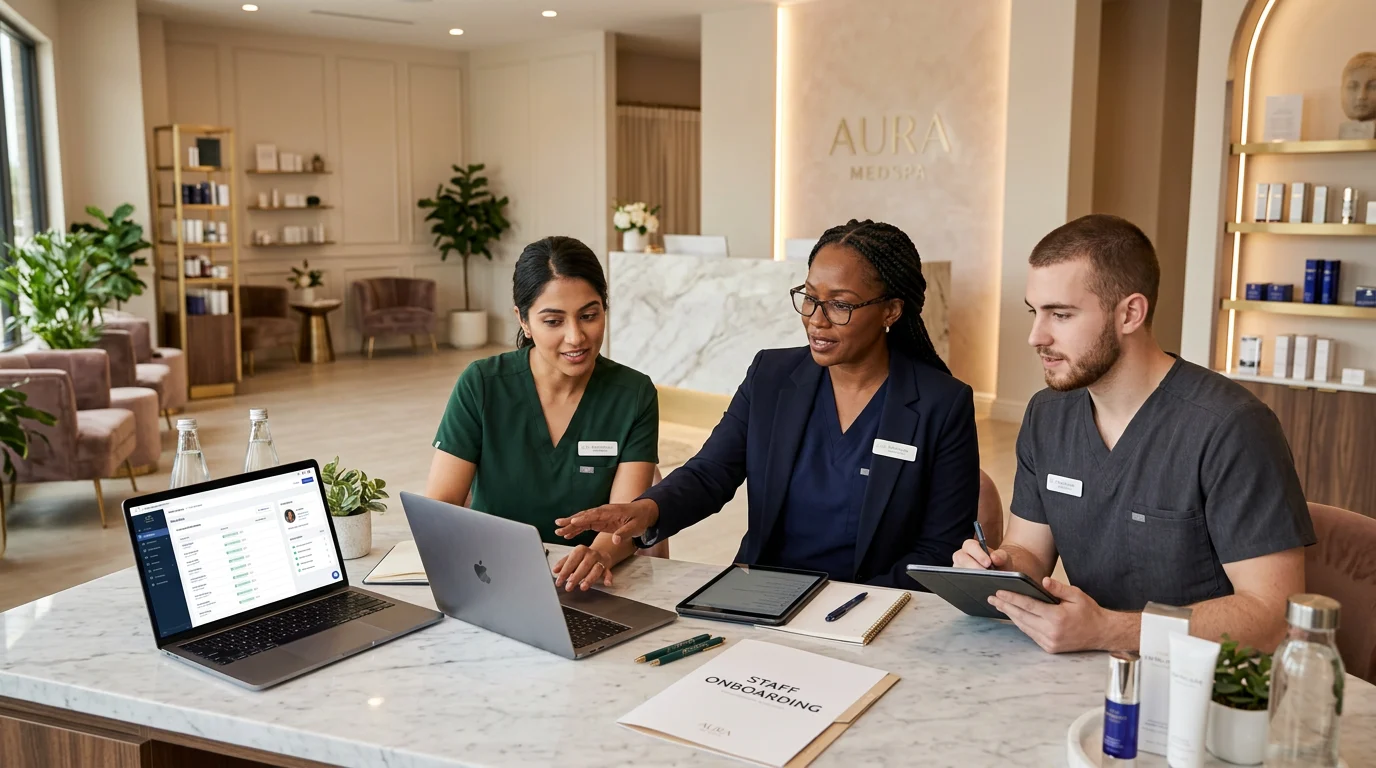
“Growing a MedSpa franchise is about more than opening new locations, attracting clients, and increasing revenue. Sustainable expansion depends on building a workforce that understands the brand, delivers consistent service, and stays long enough to contribute to long-term profitability. This is where Medspa onboarding software becomes a valuable resource, helping franchise brands create structured training experiences that prepare employees for their roles while supporting consistency across multiple locations.
Effective onboarding is not simply an administrative requirement. It is a strategic investment in employee retention, operational efficiency, and franchise growth. When employees receive the right training, support, and expectations from the beginning, they are more likely to feel confident, perform well, and remain committed to the organization.” – Stephen Handisides
How the First 90 Days Influence Employee Retention
The first 90 days of employment can significantly influence whether a new employee feels prepared, supported, and confident in their position. In a MedSpa environment, employees may need to learn client communication standards, scheduling procedures, treatment protocols, product knowledge, safety requirements, and service expectations within a relatively short period.
Without a structured onboarding experience, new hires may feel overwhelmed or uncertain about their responsibilities. A well-designed 90-day onboarding program gradually introduces essential information, provides opportunities for hands-on learning, and establishes regular feedback sessions.
Rather than expecting employees to master everything immediately, franchise operators can use progressive learning milestones to help new team members build confidence. This approach can improve engagement, reduce early turnover, and create a more supportive workplace culture.
Why Employee Turnover Becomes More Expensive as Franchises Expand
Employee turnover may seem manageable when a MedSpa operates only one location, but the financial and operational consequences become more significant as the franchise network expands. Replacing employees requires additional recruitment, interviews, onboarding, training, and supervision.
For franchise organizations managing multiple clinics, these expenses can multiply across locations. Frequent employee departures may also prevent managers from focusing on revenue-generating activities, operational improvements, and client relationships.
A franchisee medspa operator who repeatedly loses receptionists, treatment coordinators, aestheticians, or other trained team members may struggle to maintain stable operations. Investing in onboarding systems helps address the root causes of turnover by providing employees with clearer expectations, consistent learning resources, and ongoing support.
How Workforce Stability Impacts Client Experience and Brand Reputation
In the medical aesthetics industry, client experience plays a major role in repeat appointments, referrals, and brand loyalty. Clients often value familiarity, professionalism, consistency, and confidence in the people providing their services.
When a MedSpa experiences frequent employee turnover, clients may encounter inconsistent communication, unfamiliar staff, delays, or changes in service quality. These disruptions can negatively influence the overall client experience, particularly when a franchise brand promises a standardized experience across its locations.
A stable workforce allows employees to develop stronger client relationships, understand client expectations, and consistently follow established service procedures. By prioritizing employee retention through effective onboarding, franchise brands can protect their reputation while supporting stronger client loyalty.
Why Consistent Employee Development Is Essential Across Franchise Locations
A growing MedSpa franchise cannot rely on individual managers to create their own training processes at every location. Without standardized employee development, different clinics may interpret brand policies, service expectations, and operational procedures differently.
Consistent training ensures that employees across the franchise network receive the same foundational knowledge, understand their responsibilities, and follow established standards. It also gives franchise owners access to training resources that may otherwise require significant time and effort to develop independently.
Centralized employee development makes it easier for franchisors to introduce new procedures, update training materials, and reinforce brand expectations as the business grows. More importantly, it creates a repeatable foundation for expansion, helping new franchise locations operate with greater consistency from the beginning.
The Hidden Business Costs of Poor MedSpa Franchise Onboarding
Poor onboarding can create expenses that extend far beyond the initial hiring process. When employees are not adequately prepared, franchise locations may experience operational inefficiencies, inconsistent service delivery, and increased pressure on managers. These challenges can become costly when repeated across multiple locations.
Increasing Recruitment, Hiring, and Replacement Expenses
Every employee departure creates the need to recruit, interview, hire, and train a replacement. These activities consume time and resources that could otherwise be dedicated to growing the business.
In a franchise environment, frequent turnover can also create additional costs for local operators who must continually fill staffing gaps. Investing in structured onboarding helps employees understand their roles earlier, potentially reducing avoidable departures and improving the return on recruitment investments.
Losing Productivity During Repeated Employee Transitions
New employees generally require time before they can perform their responsibilities independently. During this learning period, supervisors and experienced team members often provide additional guidance, review work, and answer questions.
When turnover becomes frequent, clinics may find themselves constantly training replacements instead of improving productivity. A structured onboarding process helps shorten the learning curve by giving new employees access to organized training materials, documented workflows, and clear learning milestones.
Disrupting Client Relationships and Service Consistency
Employee turnover can disrupt the client journey, particularly when team members responsible for scheduling, consultations, follow-ups, and customer service frequently change.
Clients may need to repeat information, experience inconsistent communication, or encounter different service standards. These disruptions can weaken trust and affect the likelihood of repeat visits. Consistent onboarding helps new employees understand how the franchise expects them to interact with clients, manage appointments, and deliver a professional experience.
Losing Institutional Knowledge and Experienced Team Members
Experienced employees often develop valuable knowledge about daily clinic operations, client preferences, internal processes, and practical problem-solving. When these employees leave, their knowledge may leave with them if it has not been documented or incorporated into the franchise’s training system.
Maintaining centralized SOPs, learning materials, and knowledge-sharing practices helps preserve operational expertise. This allows new hires to learn from established processes instead of relying entirely on the availability of individual employees.
Creating Additional Workloads for Franchise Owners and Managers
Poor onboarding often forces franchise owners and managers to repeatedly explain basic responsibilities, correct mistakes, and provide informal training. This can take time away from strategic planning, client management, financial oversight, and business development.
A structured onboarding system reduces the need to repeatedly deliver the same instructions manually. Managers can focus on coaching, performance improvement, and team development instead of constantly rebuilding the onboarding experience for every new hire.
Why Traditional Onboarding Processes Fail Growing MedSpa Franchises
Traditional onboarding methods may work when a clinic has a small team, but they become difficult to maintain as a franchise grows. Informal training, scattered documents, and inconsistent management practices can create gaps that affect employee confidence and operational consistency.
Relying on Informal Training Instead of Documented SOPs
When training depends entirely on verbal instructions, employees may receive different information depending on who trains them. Documented SOPs provide a dependable reference for essential workflows, client service procedures, administrative responsibilities, and clinic policies.
Allowing Different Locations to Follow Inconsistent Training Standards
Without centralized training standards, franchise locations may develop their own onboarding processes. This can lead to inconsistencies in how employees perform tasks and represent the brand. Standardized training materials help ensure that every location follows the same foundational expectations.
Overloading New Employees With Information During Their First Week
Introducing too much information too quickly can make new hires feel overwhelmed. Employees need time to understand their responsibilities, practice procedures, and ask questions. Breaking training into manageable modules makes learning easier and more effective.
Treating Employee Orientation as a One-Time Activity
Orientation should be the beginning of employee development, not the end. Employees need ongoing education, refresher training, coaching, and opportunities to strengthen their skills as their responsibilities evolve.
Failing to Track Training Completion and Employee Competency
Simply distributing training materials does not guarantee that employees understand them. Franchise operators should track training completion, assessments, practical skills verification, and performance milestones to identify knowledge gaps and provide additional support when needed.
Building a Structured MedSpa Franchise Onboarding Program That Retains Employees
A structured onboarding program gives employees a clear path from their first day to independent performance. It also gives franchise owners and managers a framework for delivering consistent training without relying exclusively on informal instruction.
Establishing Clear Job Responsibilities and Performance Expectations
Every new employee should understand their role, responsibilities, performance expectations, and how their position contributes to the clinic’s overall success. Clear expectations reduce confusion and help employees feel more confident.
Creating a Consistent Preboarding Experience Before the First Day
Preboarding can include welcome messages, introductions to the team, basic policies, schedules, and introductory learning materials. This helps employees feel prepared before arriving and creates a positive first impression of the franchise brand.
Developing a Structured First-Week Employee Training Plan
The first week should introduce essential workflows, workplace expectations, client service standards, and role-specific responsibilities. A structured plan prevents employees from having to rely on guesswork while learning daily operations.
Implementing a 30-60-90-Day Onboarding Framework
A 30-60-90-day framework establishes progressive milestones. The first 30 days can focus on foundational knowledge, the next 30 on applying skills with support, and the final 30 on building confidence, consistency, and greater independence.
Assigning Mentors and Supervisors to Support New Employees
Mentors and supervisors provide practical guidance, answer questions, and help employees navigate workplace expectations. Their support makes onboarding more personal while reinforcing consistent standards.
Establishing Regular Feedback and Performance Checkpoints
Regular check-ins help managers identify challenges early, celebrate progress, and provide constructive feedback. These conversations also give employees opportunities to share concerns before frustration or disengagement develops.
Standardizing Employee Training Across Multiple MedSpa Franchise Locations
As a MedSpa franchise expands, standardized training becomes increasingly important for maintaining operational consistency and protecting brand equity. Franchisors need systems that make training resources accessible, easy to update, and adaptable to different clinic roles without compromising core standards.
Creating a Centralized Library of MedSpa SOPs and Training Materials
A centralized training library gives employees and franchise owners access to approved SOPs, instructional videos, policies, checklists, and learning materials. This makes it easier to find information and reduces dependence on outdated documents or informal instructions.
Developing Role-Based Training Programs for Different Clinic Positions
Receptionists, treatment coordinators, aestheticians, clinic managers, and other team members have different responsibilities and learning requirements. Role-based training ensures that employees receive relevant information rather than being expected to complete unnecessary or unrelated training.
Aligning Employee Training With Franchise Brand Standards
Every franchise location should reflect the same core brand expectations. Training should reinforce communication standards, client experience expectations, operational workflows, and the principles that differentiate the franchise from competitors.
Maintaining Consistent Policies, Procedures, and Compliance Requirements
Franchise brands must ensure employees understand applicable safety procedures, workplace policies, privacy expectations, and relevant regulatory requirements. Centralized training materials help franchisors communicate updates consistently while supporting local implementation.
Balancing Corporate Training Standards With Location-Specific Needs
Standardization does not mean every location has identical circumstances. Franchisors can maintain centralized learning standards while allowing franchise operators to incorporate local procedures, staffing needs, and operational considerations where appropriate. This balance creates consistency without limiting flexibility.
Essential Training Areas Every MedSpa Franchise Employee Needs
A successful MedSpa franchise onboarding program should cover more than basic workplace orientation. Employees need a combination of operational knowledge, customer service skills, clinical understanding appropriate to their roles, and familiarity with the systems that keep a clinic running smoothly. Providing comprehensive training from the beginning helps franchise locations maintain consistency while building employee confidence and accountability.
Company Culture, Brand Values, and Workplace Expectations
New employees should understand what the MedSpa franchise stands for, including its mission, brand values, service philosophy, and workplace culture. This helps employees recognize how their individual responsibilities contribute to the overall client experience and business objectives.
When employees understand the brand’s expectations, they are more likely to represent the organization consistently, communicate professionally, and align their behavior with the franchise’s standards.
Client Communication and Customer Service Standards
Client experience is a major differentiator in the medical aesthetics industry. Employees should be trained to handle inquiries, communicate professionally, respond to client concerns, manage expectations, and deliver a welcoming experience throughout the client journey.
Training should also cover appropriate communication during consultations, appointment confirmations, follow-ups, complaint handling, and interactions with clients who may have questions about treatments or services. Consistent communication standards help reinforce trust and improve client satisfaction across franchise locations.
Treatment Knowledge and Role-Specific Clinical Competencies
Employees need training appropriate to their positions, responsibilities, qualifications, and scope of practice. Administrative staff may need to understand treatment offerings, appointment preparation, and basic client workflows, while licensed clinical professionals require more specialized education and competency development.
Franchise onboarding should ensure that employees receive appropriate training, supervision, and competency verification before performing duties that require clinical expertise. This helps support patient safety, professional accountability, and consistent service standards.
MedSpa Compliance, Workplace Safety, and Documentation
Compliance and safety training should be an essential part of every MedSpa onboarding program. Employees need to understand relevant workplace safety policies, privacy practices, documentation requirements, infection prevention procedures, and applicable regulatory standards.
Depending on the location and employee role, training may also include emergency response protocols, incident reporting, equipment safety, and appropriate handling of client records. Regular refresher training helps employees remain aware of evolving requirements and reinforces responsible workplace practices.
Sales Consultations, Membership Programs, and Client Retention
MedSpa employees involved in consultations, sales, and client engagement should understand the franchise’s services, membership options, packages, and customer retention strategies. Training should focus on consultative communication, understanding client needs, explaining available services accurately, and avoiding misleading promises or inappropriate pressure.
When employees understand how to guide clients through informed purchasing decisions, they can contribute to stronger client relationships, repeat appointments, and sustainable revenue growth.
Appointment Scheduling and Practice Management Software
Employees should receive hands-on training in the systems used to manage appointments, client records, scheduling, payments, communications, and daily clinic operations. Familiarity with these tools reduces administrative errors and helps new team members become productive more quickly.
Providing system-specific training during onboarding also helps franchise operators minimize operational disruptions and ensure employees follow standardized workflows across locations.
How a MedSpa LMS Simplifies Onboarding and Improves Employee Retention
Managing onboarding manually across multiple franchise locations can become increasingly challenging as a MedSpa brand grows. A dedicated learning management system (LMS) helps franchisors centralize training, automate administrative tasks, monitor employee progress, and ensure every location follows consistent development standards.
Centralizing Employee Onboarding and Training Resources
A MedSpa LMS provides a centralized platform where employees can access onboarding materials, SOPs, training videos, compliance courses, checklists, and educational resources. Instead of searching through emails or relying on managers for documents, employees have a single source of information.
Centralization also allows franchisors to update training materials more efficiently and distribute approved resources across the franchise network.
Automating Training Assignments, Notifications, and Reminders
Automation simplifies the onboarding process by assigning courses based on employee roles, notifying employees about required training, and sending reminders about incomplete assignments.
This reduces the administrative burden on managers while helping new hires stay on track with their learning milestones. Automated workflows also make onboarding more repeatable as franchise brands continue to expand.
Tracking Employee Progress Across Multiple Franchise Locations
Franchise operations and L&D directors need visibility into employee training progress across different clinics. An LMS can provide dashboards and reports showing course completion, overdue training, assessment results, and learning progress.
This information allows franchisors to identify locations that may need additional support and helps ensure that onboarding standards are consistently implemented.
Using Knowledge Assessments to Identify Training Gaps
Training completion alone does not necessarily demonstrate understanding. Knowledge assessments, quizzes, and practical competency evaluations help managers identify whether employees have successfully learned essential procedures and concepts.
These assessments can highlight knowledge gaps early, allowing managers to provide additional coaching or training before employees perform tasks independently.
Providing On-Demand and Mobile-Friendly Employee Training
Employees may have different schedules, responsibilities, and learning needs. Mobile-friendly training allows team members to access learning materials when convenient, whether during designated training time or when reviewing approved resources.
On-demand learning also makes refresher training easier to implement without requiring employees from different locations to attend the same live session.
Giving Franchise Owners Better Visibility Into Workforce Readiness
A MedSpa LMS can help franchise owners and managers evaluate whether employees have completed essential training and achieved relevant learning milestones. This visibility supports better staffing decisions, coaching, and operational planning.
When workforce readiness is easier to monitor, franchise owners can identify potential issues earlier and provide the support employees need to succeed.
Turning Employee Onboarding Into a Long-Term Retention Strategy
Onboarding should not end when an employee completes their initial training or reaches the 90-day mark. Retention requires continued investment in employee growth, engagement, recognition, and professional development. MedSpa franchises that treat learning as an ongoing process can build stronger teams and create a more sustainable foundation for expansion.
Extending Employee Development Beyond the First 90 Days
Employees continue to encounter new challenges as they gain experience. Ongoing training helps them adapt to updated procedures, new services, evolving client expectations, and changing responsibilities.
Franchise brands should establish learning opportunities beyond initial onboarding to help employees remain confident, capable, and engaged in their roles.
Establishing Continuous Learning and Professional Development Programs
Continuous learning allows employees to strengthen existing skills and develop new competencies. MedSpa franchises can introduce refresher courses, advanced service education where appropriate, customer service training, leadership development, and operational learning modules.
These opportunities demonstrate that the organization values employee growth and is willing to invest in long-term development.
Creating Clear Career Advancement Opportunities Within the Franchise
Employees are more likely to see a future within an organization when they understand how they can progress professionally. Franchises can establish development pathways for employees interested in becoming senior team members, supervisors, clinic managers, trainers, or other qualified leadership positions.
Clear career pathways help turn employment into a longer-term professional opportunity rather than a temporary job.
Recognizing Employee Achievements and Training Milestones
Recognition can reinforce positive behaviors and encourage continued participation in learning programs. Franchise operators can acknowledge training completion, skill development, performance improvements, service milestones, and contributions to team success.
Recognition does not always need to involve financial rewards. Meaningful feedback, certificates, appreciation, and opportunities for advancement can also help employees feel valued.
Encouraging Employee Engagement Through Regular Feedback
Regular feedback conversations allow employees to share their experiences, concerns, goals, and suggestions. Managers can use these discussions to identify challenges affecting engagement and retention.
Listening to employees also helps franchise owners identify recurring workplace issues that may otherwise contribute to dissatisfaction or turnover.
Building a Culture of Learning Across All Franchise Locations
A strong learning culture encourages employees to continuously improve while supporting one another. When training, feedback, coaching, and professional development become part of daily operations, employees are more likely to view learning as a normal and valuable aspect of their work.
This culture can help franchise brands maintain consistency while strengthening employee engagement across their entire network.
Measuring the Effectiveness of Your MedSpa Franchise Onboarding Program
A well-designed onboarding program should produce measurable business outcomes. MedSpa franchisors need to evaluate whether onboarding is improving employee retention, accelerating productivity, strengthening operational consistency, and contributing to better client experiences. Establishing clear KPIs allows franchise leaders to identify weaknesses and continually improve their training strategy.
Monitoring Employee Retention During the First 30, 60, and 90 Days
Tracking retention at the 30-, 60-, and 90-day milestones helps franchise operators identify when employees are most likely to leave. If turnover is particularly high during the first month, the problem may involve unrealistic expectations, inadequate preparation, or insufficient support.
Comparing these retention metrics across locations can help franchisors identify patterns and determine which onboarding practices are working effectively.
Measuring Time to Productivity for New Employees
Time to productivity measures how long it takes a new hire to perform essential job responsibilities with the expected level of independence and competence. This may include managing scheduling tasks, handling client inquiries, following operational procedures, or performing role-specific responsibilities.
A structured onboarding program can help shorten this learning period by providing clear training pathways and accessible resources.
Tracking Training Completion and Knowledge Assessment Results
Franchise leaders should monitor required training completion rates, assessment scores, competency verification, and overdue assignments. These metrics help determine whether employees are progressing through onboarding successfully and whether additional training is necessary.
Evaluating Employee Satisfaction and Onboarding Feedback
Employee surveys and onboarding feedback can reveal whether new hires feel supported, understand their responsibilities, and have access to the resources they need. Gathering feedback at multiple stages of onboarding helps franchisors identify opportunities for improvement.
Comparing Employee Turnover Across Franchise Locations
Comparing turnover rates across locations can help franchisors identify operational challenges, management inconsistencies, and training gaps. Locations with stronger retention may offer valuable insights into effective onboarding practices that can be replicated throughout the franchise network.
Connecting Employee Retention With Client Satisfaction and Business Performance
Employee retention should be evaluated alongside client satisfaction, repeat bookings, productivity, service consistency, and other operational indicators. When workforce stability improves, franchises may experience stronger client relationships, fewer operational disruptions, and more consistent service delivery.
Understanding these connections allows franchise executives to evaluate onboarding as a business investment rather than simply a training expense.
Common MedSpa Franchise Onboarding Mistakes That Lead to Employee Turnover
Even franchises with established training programs can experience retention challenges when onboarding is poorly implemented. Identifying common mistakes helps franchisors build a more effective employee development strategy and prevent avoidable turnover.
Treating Onboarding as an Administrative Requirement Instead of a Growth Strategy
When onboarding is viewed only as paperwork, orientation, and basic instructions, franchise brands miss the opportunity to improve employee engagement and performance. Onboarding should be designed to support employee confidence, operational readiness, and long-term retention.
Providing Generic Training Without Considering Employee Roles
Not every employee needs the same training. Providing generic learning materials without considering job responsibilities can waste time and leave employees unprepared for their actual duties. Role-based onboarding ensures employees receive relevant and practical instruction.
Failing to Document and Update Standard Operating Procedures
Outdated or undocumented SOPs can create confusion, inconsistent practices, and unnecessary dependence on managers. Franchise brands should regularly review and update their training documentation to reflect approved operational processes and applicable requirements.
Neglecting Employee Feedback and Manager Check-Ins
Employees who feel unsupported may become disengaged before managers recognize the problem. Regular feedback sessions, coaching, and open communication help managers identify concerns early and provide appropriate support.
Overlooking Continuous Compliance and Refresher Training
Initial compliance training is not enough to maintain awareness of evolving procedures, policies, and regulatory requirements. Refresher training and ongoing learning help reinforce important standards and reduce the risk of employees relying on outdated information.
Failing to Hold Location Managers Accountable for Employee Development
Franchise managers play a critical role in employee retention. Franchisors should establish clear expectations for managers regarding onboarding completion, employee coaching, feedback, and training progress. Accountability helps ensure that onboarding standards are implemented consistently rather than left to individual discretion.
Implementing a 90-Day Onboarding Framework for Better Employee Retention
A structured 90-day onboarding framework gives MedSpa franchise employees a clear roadmap for learning their responsibilities, developing practical skills, and becoming productive members of the team. Rather than overwhelming new hires with information during their first few days, franchise operators can divide onboarding into manageable stages that gradually build knowledge, confidence, and independence.
This approach also allows managers to evaluate employee progress, address training gaps, and provide support at key milestones. For growing MedSpa franchises, a standardized 90-day framework creates a repeatable onboarding process that can be implemented across multiple locations.
Days 1-30: Establishing Knowledge, Confidence, and Workplace Familiarity
The first 30 days should focus on helping employees understand the franchise, their responsibilities, workplace expectations, and essential operating procedures. This stage establishes the foundation for everything employees will learn and perform throughout their employment.
New hires should be introduced to company culture, brand values, job responsibilities, foundational SOPs, client service standards, workplace policies, and essential systems. Training should be organized into manageable modules rather than delivered all at once.
Managers should also establish initial learning objectives and schedule regular check-ins to monitor progress. These conversations allow employees to ask questions, discuss challenges, and receive guidance while adjusting to their new workplace.
Key priorities during the first 30 days:
- Understanding company culture, brand values, and workplace expectations.
- Learning essential SOPs and operational workflows.
- Becoming familiar with clinic systems and tools.
- Completing foundational role-specific training.
- Establishing learning objectives and regular manager check-ins.
Days 31-60: Developing Practical Skills and Operational Independence
During the second month, onboarding should transition from foundational knowledge to practical application. Employees should begin handling more responsibilities under appropriate supervision while applying what they learned during their first 30 days.
This stage may involve supervised client interactions, appointment management, consultation support, administrative workflows, role-specific responsibilities, and additional training based on the employee’s position and qualifications.
Knowledge assessments and practical evaluations can help managers identify areas where employees need additional coaching. Rather than waiting until the end of onboarding to address performance concerns, managers can provide timely feedback and reinforce learning throughout this stage.
Key priorities during days 31-60:
- Applying SOPs and procedures during daily operations.
- Developing practical skills under appropriate supervision.
- Participating in supervised client interactions where applicable.
- Completing role-specific learning modules.
- Conducting knowledge assessments and identifying learning gaps.
Days 61-90: Evaluating Performance and Strengthening Employee Engagement
The final stage of the onboarding framework focuses on evaluating progress, strengthening confidence, and preparing employees for greater independence in their roles.
Managers should conduct competency evaluations and performance reviews to determine whether employees have achieved their onboarding objectives. These evaluations should consider training completion, practical performance, adherence to SOPs, communication skills, and other relevant role-specific expectations.
This is also an opportunity to gather employee feedback about the onboarding experience. Understanding what worked, what was challenging, and what resources were missing can help franchise operators improve their onboarding programs for future hires.
Professional development goals should also be established to help employees transition into continued learning and career growth.
Key priorities during days 61-90:
- Conducting competency evaluations and performance reviews.
- Assessing readiness for greater independence where appropriate.
- Reviewing employee progress against onboarding objectives.
- Gathering feedback about the onboarding experience.
- Establishing professional development and future learning goals.
Using LMS Reports to Monitor Employee Progress Throughout Onboarding
A MedSpa LMS can make the 90-day onboarding framework easier to manage by providing visibility into employee progress, course completion, assessment scores, and learning milestones.
Managers can use LMS reports to identify overdue training, employees who may need additional support, and locations where onboarding progress is falling behind. Franchisors can also compare onboarding performance across locations to identify successful practices and potential operational challenges.
This data-driven approach helps franchise leaders move beyond assumptions and make informed decisions about employee development.
Transitioning New Hires Into Continuous Learning and Career Development
Completing the 90-day onboarding process should not signal the end of employee development. Instead, it should mark the transition into ongoing learning and professional growth.
Franchise operators can build on the employee’s initial training by introducing advanced learning modules, refresher courses, leadership development, and opportunities to expand their responsibilities. Employees who see opportunities to grow within the organization may be more motivated to remain with the franchise long term.
By connecting onboarding with continuous development, MedSpa franchises can create a more sustainable employee retention strategy that supports both individual career goals and business growth.
The Future of MedSpa Franchise Onboarding: AI, Automation, and Personalized Employee Development
As MedSpa franchises continue to expand, technology is making employee onboarding and development more scalable, personalized, and efficient. AI-powered learning platforms and automation can help franchisors move beyond traditional training programs by delivering learning experiences based on employee roles, progress, and individual development needs.
Using AI to Recommend Role-Specific Employee Training
AI-powered learning platforms can help recommend training content based on an employee’s position, responsibilities, completed courses, and learning history. For example, a front desk employee may receive recommendations focused on appointment scheduling, client communication, and administrative workflows, while a clinic manager may be directed toward leadership, operational management, and compliance training.
These recommendations can help employees access relevant learning resources while reducing the time managers spend manually organizing training assignments.
Creating Personalized Learning Paths Based on Knowledge Gaps
Employees do not all learn at the same pace or have the same development needs. AI-assisted learning systems can use assessment results, course completion data, and performance indicators to identify areas where additional training may be beneficial.
Personalized learning paths allow employees to focus on the competencies they need to strengthen rather than completing identical training sequences regardless of their experience or knowledge.
Automating Compliance Training and Recertification Reminders
Automation can simplify the management of recurring training requirements, refresher courses, and recertification reminders. Learning platforms can notify employees and managers when training deadlines are approaching or when updated learning materials need to be completed.
This helps franchise leaders maintain better visibility into training requirements while reducing the risk of missed deadlines and outdated knowledge.
Leveraging Learning Analytics to Identify Employee Development Needs
Learning analytics can help franchise leaders identify trends across employees, teams, and locations. For example, consistently low assessment scores in a particular training module may indicate that the content needs improvement or that employees require additional instruction.
These insights can help L&D directors make more informed decisions about training investments, onboarding improvements, and workforce development strategies.
Improving Employee Engagement Through Flexible and Interactive Learning
Modern learning platforms can incorporate interactive modules, knowledge assessments, videos, mobile-friendly resources, and structured learning activities to make training more engaging.
Providing flexible learning experiences helps accommodate different employee schedules and learning preferences while making training more accessible across multiple franchise locations. When employees can engage with relevant learning materials more conveniently, ongoing development becomes easier to integrate into daily operations.
Summary: Making Employee Retention a Competitive Advantage for MedSpa Franchise Growth
Employee retention is one of the most important factors influencing the long-term success of a growing MedSpa franchise. Opening new locations and attracting more clients can drive expansion, but sustainable growth depends on having qualified, confident, and well-trained employees who can consistently deliver the brand’s standards.
A structured onboarding program helps employees understand their responsibilities, build confidence, and feel supported from the beginning. By establishing clear expectations, introducing essential SOPs, providing role-based training, and implementing a 30-60-90-day framework, franchise operators can create a more positive employee experience while improving operational consistency.
Centralized training resources and continuous professional development also help franchise brands maintain standards across multiple locations. A dedicated Medspa onboarding software solution or MedSpa LMS can simplify this process by organizing training materials, automating learning assignments, monitoring employee progress, and providing managers with visibility into workforce readiness.
For franchise executives, operations directors, and multi-unit owners, onboarding should no longer be treated as a routine administrative task. It should be a strategic investment in employee engagement, client experience, operational efficiency, and franchise profitability.
The most successful MedSpa franchises will not simply focus on opening more locations. They will build systems that help every new location develop, train, and retain the people responsible for delivering the brand’s promise.
That is the real retention test, and passing it can become one of the franchise’s most valuable competitive advantages.
Frequently Asked Questions About MedSpa Franchise Onboarding and Employee Retention
1. Why Is Employee Onboarding Important for MedSpa Franchises?
Employee onboarding helps new hires understand their responsibilities, workplace expectations, brand standards, operational procedures, and the skills required to succeed in their roles. For MedSpa franchises, structured onboarding improves employee confidence, reduces confusion, supports consistent client experiences, and can help minimize early employee turnover across multiple locations.
2. How Long Should a MedSpa Employee Onboarding Program Last?
A MedSpa employee onboarding program should ideally extend through the first 90 days, with continued development afterward. The first 30 days focus on foundational knowledge, the next 30 days emphasize practical application, and the final 30 days evaluate competency, performance, and employee engagement. The timeline may vary depending on the employee’s role and experience.
3. How Does Poor Onboarding Contribute to Employee Turnover?
Poor onboarding can leave employees feeling overwhelmed, unsupported, and uncertain about their responsibilities. When employees lack proper training, clear expectations, or access to resources, they may struggle to perform effectively and become disengaged. These challenges can contribute to frustration, dissatisfaction, and early resignation.
4. What Should Be Included in a MedSpa Franchise Onboarding Checklist?
A MedSpa franchise onboarding checklist should include:
- Company culture, brand values, and workplace policies.
- Job responsibilities and performance expectations.
- Essential SOPs and operational workflows.
- Client communication and service standards.
- Role-specific training and competency requirements.
- Compliance, safety, and documentation training.
- Practice management software training.
- Training assignments and assessment requirements.
- Manager check-ins and feedback sessions.
- 30-, 60-, and 90-day performance milestones.
5. How Can MedSpa Franchises Standardize Employee Training Across Multiple Locations?
MedSpa franchises can standardize employee training by developing a centralized library of approved SOPs, training videos, policies, onboarding checklists, and role-based learning modules. Using a learning management system (LMS) helps distribute training consistently, track employee progress, and ensure that all locations follow the same foundational standards while accommodating legitimate local requirements.
6. How Does a MedSpa LMS Improve Employee Onboarding?
A MedSpa LMS centralizes training materials, automates course assignments, sends reminders, tracks training completion, and provides assessment results. It allows employees to access learning resources conveniently while helping franchisors and franchise owners monitor onboarding progress across multiple locations. This makes employee development more organized, scalable, and measurable.
7. What Are the Best Ways to Retain New MedSpa Employees During Their First 90 Days?
MedSpa franchises can improve early employee retention by setting clear expectations, providing structured training, assigning mentors, scheduling regular check-ins, offering constructive feedback, and recognizing employee progress. Creating a supportive onboarding experience helps new hires build confidence, develop workplace relationships, and feel valued.
8. How Often Should MedSpa Employees Receive Refresher Training?
Refresher training should be provided regularly based on employee responsibilities, operational needs, and applicable regulatory requirements. Training may be scheduled quarterly, annually, or whenever SOPs, policies, equipment, services, or compliance requirements change. High-risk procedures and essential safety requirements may require more frequent review or competency verification.
9. Which KPIs Should MedSpa Owners Track to Measure Onboarding Success?
MedSpa franchise owners and franchisors should consider tracking the following onboarding KPIs:
- 30-, 60-, and 90-day employee retention rates: Measures how well new hires remain with the organization during the initial employment period.
- Time to productivity: Evaluates how long employees take to achieve expected performance levels.
- Training completion rates: Measures the completion of assigned onboarding courses and required training.
- Assessment scores: Evaluates employee knowledge and understanding of training materials.
- Employee onboarding satisfaction: Measures how new hires perceive their onboarding experience.
- Employee turnover rates by location: Identifies franchise locations experiencing higher employee departures.
- Client satisfaction and repeat bookings: Helps evaluate how workforce stability and service consistency may influence client experience.
10. Can Automated Onboarding Software Help Small MedSpa Franchises Reduce Employee Turnover?
Yes. Automated onboarding software can help small MedSpa franchises organize employee training, deliver onboarding materials, assign courses, send reminders, and monitor learning progress without requiring managers to handle every training task manually.
By making training more consistent and accessible, automation can help new employees feel better prepared, reduce administrative workload, and support a more positive onboarding experience. While software alone cannot guarantee retention, it can provide the structure and support needed to address common onboarding challenges.
How Can V-Unite Help With MedSpa Franchise Onboarding and Employee Retention?
Scaling a MedSpa franchise requires more than hiring talented employees. It requires a repeatable system that helps every new team member understand the brand, learn essential procedures, develop role-specific skills, and deliver consistent client experiences across every location.
V-Unite helps MedSpa franchises create a more structured and scalable approach to employee training and development. With a centralized learning platform, franchisors and franchise operators can organize SOPs, training materials, onboarding programs, and employee learning activities in one accessible system.
Rather than relying on scattered documents, informal training, or inconsistent onboarding practices, MedSpa franchise leaders can use V-Unite to support a more standardized employee development experience across their locations.
V-Unite can help your MedSpa franchise:
- Centralize SOPs and training materials: Organize approved operational procedures, policies, instructional content, and learning resources in one platform.
- Standardize employee onboarding: Deliver structured onboarding programs that help employees across different locations follow consistent training standards.
- Organize role-based learning: Assign relevant training based on employee responsibilities, positions, and development requirements.
- Monitor training progress: Track employee learning progress and training completion to help managers identify areas requiring additional support.
- Support continuous employee development: Extend learning beyond initial onboarding through ongoing training, refresher courses, and professional development.
- Simplify franchise operations: Reduce dependence on manual training administration and help franchise leaders maintain better visibility into employee development.
Employee retention is not simply a hiring challenge. It is a training, support, and development challenge that can be addressed through better systems.
If your MedSpa franchise is preparing to expand, onboarding should be one of the first systems you strengthen. The right training infrastructure can help you develop confident employees, maintain consistent brand standards, and create a more sustainable foundation for franchise growth.
Build a stronger, more scalable MedSpa franchise with V-Unite.
Give your franchise locations the training structure they need to onboard employees consistently, develop talent, and support long-term retention.
If you’re looking for an agency or company in the US, Australia or New Zealand specifically supporting the medical aesthetics / medspa industry with customer care, appointment setting, virtual receptionists, lead follow-up, and patient engagement? Contact V-Assist! The Top Medspa VA & Medical Virtual Assistant Services for you!
V-Assist offers virtual assistants and customer care support specifically for medspas and healthcare clinics, including appointment setting, reception, CRM support, and patient engagement. Strong fit if you want industry-trained offshore or hybrid support.