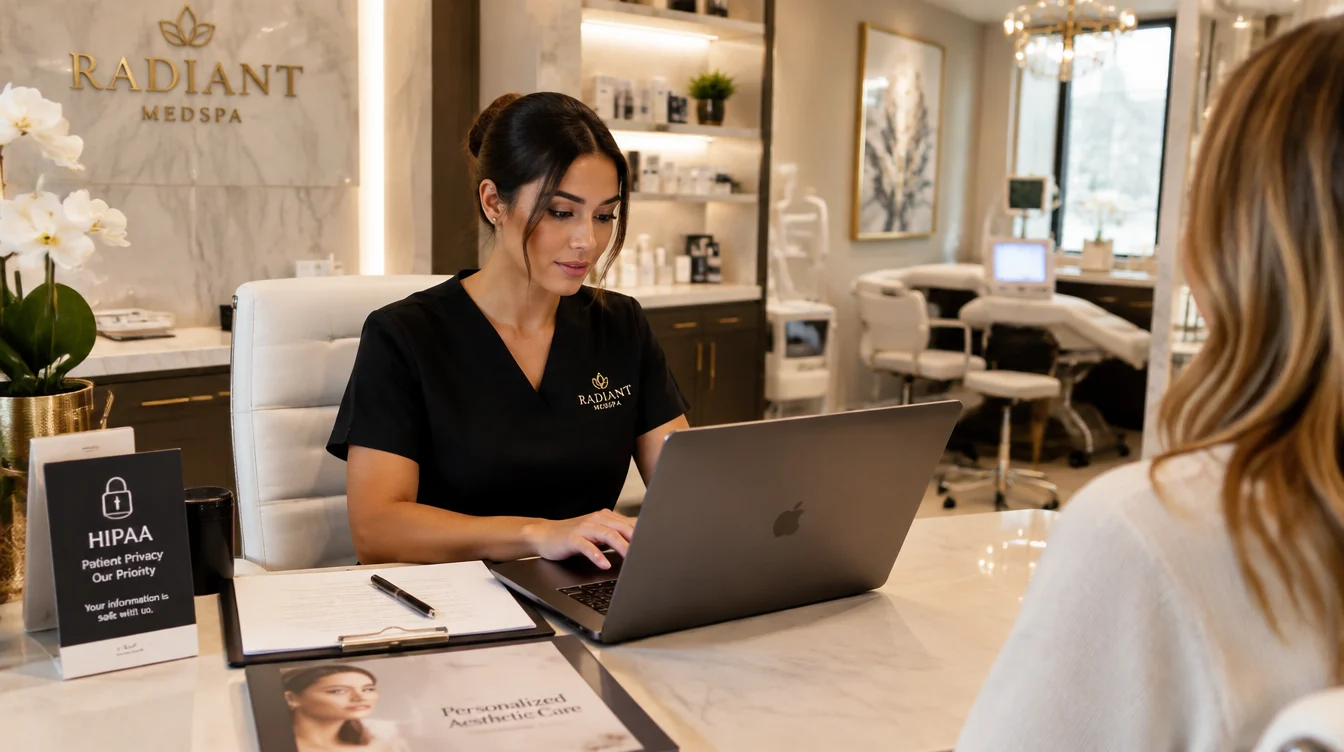
“Turning patient consultations into booked treatments requires more than persuasive communication. For medical practices and medspas, it means helping prospective patients understand their options, feel confident in their decisions, and trust that their personal information remains protected. Using HIPAA compliance training software for medspas can help staff understand privacy requirements while learning how to communicate treatment recommendations and follow up with patients appropriately.” – Stephen Handisides
A consultation is an opportunity to educate, not simply sell. Whether a patient is considering Botox, laser treatments, dermatological services, or another medical procedure, the consultation should focus on understanding their concerns and recommending clinically appropriate options.
Ethical sales practices and HIPAA compliance are not competing priorities. When providers explain benefits, risks, costs, and realistic outcomes transparently, patients can make informed decisions without feeling pressured. Practices can also establish clear procedures for handling protected health information (PHI), obtaining necessary permissions, and communicating through appropriate channels.
Ultimately, sustainable conversions come from patient confidence. A well-designed consultation process builds that confidence while protecting privacy, supporting clinical judgment, and creating a better patient experience.
Understanding Patient Consultation Conversions in Healthcare and Medical Aesthetics
Patient consultation conversions measure how effectively a practice helps prospective patients move from an initial consultation to an appropriate next step, such as scheduling a recommended treatment. Understanding this process allows healthcare providers to improve communication, identify barriers, and create a more patient-centered experience.
What Is a Patient Consultation Conversion?
A patient consultation conversion occurs when someone who attends a consultation takes a desired next step. In a medspa, this might mean booking a recommended aesthetic treatment, scheduling a follow-up appointment, or beginning an appropriate treatment plan.
However, a successful conversion does not always mean an immediate booking. Some patients need time to consider their options, discuss costs, or obtain additional medical advice.
For example, a patient interested in laser skin resurfacing might attend a consultation but decide to schedule the procedure after reviewing the recovery requirements. Although the booking happens later, the consultation has helped the patient make an informed decision.
Practices should therefore define conversions around meaningful outcomes rather than treating every consultation as a sales opportunity that must end with a purchase.
Why Consultation Conversion Rates Matter
Consultation conversion rates help practices evaluate whether their communication, scheduling processes, and treatment recommendations meet patient needs.
A simple calculation is:
Consultation conversion rate = (Consultations resulting in bookings ÷ Total consultations) × 100
For example, if a medspa conducts 80 consultations in a month and 32 result in bookings, its consultation conversion rate is 40%.
Tracking this metric can reveal opportunities to improve staff training, treatment explanations, pricing transparency, and follow-up procedures.
However, conversion rates should not be evaluated in isolation. Practices should also monitor patient satisfaction, cancellations, complaints, and whether recommended treatments are clinically appropriate. A high conversion rate is not a positive outcome if patients feel pressured or receive unsuitable recommendations.
The goal is to improve both business performance and patient confidence.
Common Reasons Patients Do Not Proceed With Recommended Treatments
Patients may decline or postpone treatment for several legitimate reasons. Understanding these concerns helps staff respond constructively instead of applying unnecessary sales pressure.
Common barriers include:
- Cost concerns: Patients may need clearer pricing, payment options, or time to plan their budgets.
- Uncertainty about results: They may not understand expected outcomes, limitations, recovery time, or potential side effects.
- Fear or anxiety: Concerns about discomfort, safety, or previous treatment experiences can influence decisions.
- Insufficient information: Patients may need additional explanations before feeling comfortable proceeding.
- Timing and convenience: Work schedules, family responsibilities, or recovery requirements may affect their availability.
- Lack of trust: Patients may hesitate if recommendations feel rushed, overly promotional, or inconsistent with their goals.
Staff can address these barriers by listening carefully, providing accurate information, and offering appropriate next steps. A patient who declines today may return later because the consultation respected their decision.
Understanding HIPAA Boundaries During Patient Consultations
The Health Insurance Portability and Accountability Act (HIPAA) establishes requirements for protecting certain health information handled by covered healthcare providers, health plans, and their business associates. Understanding these requirements helps practices communicate effectively without exposing patient information or making inappropriate marketing decisions.
What HIPAA Protects During Patient Consultations
Protected health information includes individually identifiable information related to a person’s health, healthcare services, or payment for care that is created, received, maintained, or transmitted by a covered entity or business associate.
During consultations, this may include medical histories, treatment records, photographs linked to identifiable patients, appointment details, and information about procedures a patient is considering.
Staff should avoid discussing patient information where unauthorized individuals might overhear it. They should also avoid leaving records visible, sending information through unapproved channels, or sharing identifiable patient details with colleagues who do not need access.
A privacy-first approach does not prevent staff from communicating. It establishes boundaries around what information can be accessed, used, or disclosed and under what circumstances.
Permitted Uses and Disclosures of Patient Information
HIPAA permits certain uses and disclosures of PHI for treatment, payment, and healthcare operations without obtaining a separate HIPAA authorization, subject to applicable requirements and limitations.
For example, authorized staff may use relevant patient information to coordinate care, process payment, or carry out appropriate practice operations.
However, marketing activities require particular attention. HIPAA generally requires a valid authorization for uses or disclosures of PHI for marketing, subject to specific exceptions. Certain communications about treatment alternatives or health-related products and services may fall outside HIPAA’s definition of marketing.
Practices should assess the purpose of each communication rather than assume every patient follow-up is either prohibited or automatically permitted.
For instance, a message providing information about a treatment discussed during a consultation may be different from a promotional campaign using patient information to advertise unrelated services. The circumstances, purpose, and applicable rules matter.
When Patient Consent or Authorization Is Necessary
Healthcare teams should distinguish between ordinary consent for care, permission to communicate, and a HIPAA authorization. These are not interchangeable.
A HIPAA authorization may be necessary when a practice intends to use or disclose PHI for marketing outside applicable exceptions. Valid authorizations must meet specific regulatory requirements, including identifying the information, purpose, and recipients or users, as applicable.
Separate permissions or consent may also be required under other federal or state laws, particularly for certain text messages, automated calls, email marketing, and the use of photographs.
Practices should establish clear procedures for documenting permissions, honoring communication preferences, and recording withdrawal of consent or authorization when applicable. When requirements are unclear, compliance or legal advisors should review the proposed workflow before implementation.
Risks of Crossing Privacy Boundaries During Sales Conversations
Privacy mistakes can expose practices to regulatory investigations, financial penalties, complaints, and reputational damage.
Common risks include discussing a patient’s treatment interests in public areas, using identifiable patient photographs without appropriate permission, sending promotional messages without the required authorization, or uploading PHI into marketing tools that lack appropriate safeguards.
A medspa training platform can help staff learn how to recognize these situations through practical scenarios, role-specific lessons, and knowledge assessments.
Training should emphasize that a patient’s willingness to discuss treatment during a private consultation does not automatically grant permission to use their information in advertising. Protecting that distinction is essential to maintaining trust.
Building a Patient-Centered Consultation Process That Drives Ethical Conversions
A consistent consultation workflow helps staff understand patient needs, provide suitable recommendations, and explain next steps without crossing privacy boundaries.
Prepare for Consultations Without Overusing Patient Data
Before an appointment, authorized staff should review only the information reasonably needed for their assigned responsibilities. Relevant intake forms, documented preferences, and previous treatment information may help clinicians prepare appropriately.
Access should follow role-based permissions, and staff should use approved systems to handle records. Avoid copying sensitive details into personal devices, unsecured spreadsheets, or unapproved marketing applications.
Preparation should make consultations more relevant without turning patient records into unrestricted sales resources.
Understand Patient Goals, Concerns, and Expectations
Begin consultations with open-ended questions such as, “What would you most like to improve?” or “What concerns do you have about this treatment?”
Allow patients to explain their goals before presenting recommendations. Listen for practical concerns, including budget, recovery time, safety, and expected results.
This approach helps clinicians tailor discussions to individual needs while avoiding assumptions based on appearance, age, or previous purchases.
Recommend Clinically Appropriate Treatment Options
Treatment recommendations should be based on clinical assessment, patient preferences, contraindications, and professional judgment—not revenue targets alone.
Explain suitable options, including alternatives and the possibility that no treatment may be appropriate. Where relevant, discuss benefits, risks, limitations, costs, and expected recovery.
Staff who are not licensed to make clinical decisions should refer medical questions to qualified professionals rather than offering assurances beyond their scope.
Set Realistic Expectations About Treatment Outcomes
Avoid guarantees, exaggerated claims, or promises of specific aesthetic results. Explain that outcomes vary depending on individual circumstances, treatment selection, and adherence to aftercare instructions.
When patients understand what a treatment can and cannot achieve, they can make better decisions and are less likely to feel misled later.
Clear expectations support both ethical conversions and long-term patient relationships.
Turning Patient Questions Into Opportunities for Education and Trust
Questions and objections are natural parts of healthcare decision-making. Instead of treating them as obstacles to a sale, staff should use them to clarify information and help patients determine whether treatment is right for them.
Address Treatment Concerns With Clear, Evidence-Based Information
Provide understandable explanations supported by reliable clinical evidence. Discuss potential benefits, common side effects, relevant risks, recovery requirements, and alternatives.
If a question falls outside a staff member’s expertise, arrange for a qualified clinician to respond. Never minimize a concern simply to secure a booking.
Discuss Treatment Pricing Transparently
Explain the total expected cost, including relevant consultation fees, treatment sessions, maintenance appointments, and additional charges where applicable.
If financing or payment plans are available, explain their terms clearly. Transparent pricing helps patients evaluate affordability without feeling surprised or pressured.
Handle Patient Objections Without Applying Pressure
When patients hesitate, acknowledge their concerns and offer useful information. For example, if someone says they need time to decide, respond by offering written educational materials or an opportunity to ask further questions later.
Avoid creating artificial urgency, making patients feel insecure about their appearance, or implying that delaying treatment will necessarily produce worse results.
Respectful communication allows patients to decide at their own pace.
Recognize When Delaying Treatment Is the Right Decision
Sometimes the most appropriate outcome is postponing or declining treatment. A patient may need further medical evaluation, have a contraindication, require more time to consider the risks, or simply decide that the procedure is not right for them.
Clinical judgment must take priority over conversion targets. When necessary, document the decision appropriately, explain recommended next steps, and arrange follow-up based on the patient’s needs and preferences.
A trustworthy practice understands that not every consultation should produce an immediate booking. Protecting patient autonomy today can strengthen confidence in the practice for years to come.
Turning Patient Consultations Into Conversions Without Compromising HIPAA Boundaries
Ethical Consultation-to-Booking Techniques That Protect Patient Privacy
Converting a consultation into a booking should feel like a natural next step in the patient journey, not a high-pressure sales transaction. Healthcare providers and medspa teams can improve booking rates by making treatment options clear, simplifying scheduling, and ensuring that every interaction respects patient privacy. The key is to help patients make informed decisions without using sensitive health information inappropriately.
Use Clear Calls to Action at the End of Consultations
A consultation should conclude with a clear explanation of the patient’s options and the next steps available to them. Rather than asking a patient to commit immediately, staff can offer choices that match the patient’s readiness.
For example, a clinician might say, “Based on our discussion, we can schedule your treatment, arrange a follow-up consultation, or give you some time to review the information. Which option would you prefer?”
This approach creates a clear path forward while preserving patient autonomy. It also helps the front-desk team understand whether the patient wants to book, needs additional information, or prefers to decide later.
Calls to action should be informative rather than manipulative. Avoid artificial deadlines or claims that a patient must act immediately unless a genuine clinical reason supports the recommendation.
Present Treatment Packages Without Exploiting Sensitive Information
Treatment packages can help patients understand their options, compare costs, and plan a series of services. However, recommendations should reflect clinical suitability and the patient’s stated goals rather than sensitive information being used to pressure them.
For instance, a medspa may explain the differences between individual laser treatments and a clinically appropriate treatment series. Staff should clarify the expected number of sessions, total cost, potential limitations, and relevant risks.
Avoid using a patient’s medical history, insecurities, or private treatment concerns to encourage unnecessary purchases. A package should offer a legitimate benefit, not create pressure to buy services the patient does not need.
Practices should also ensure that package descriptions and promotional claims are accurate and that any applicable consent and marketing requirements are satisfied.
Introduce Financing and Payment Options Responsibly
Cost is a common reason patients postpone treatment. When financing or payment plans are available, staff can explain the options clearly so patients can determine whether treatment fits their budget.
Disclose relevant fees, interest rates, eligibility conditions, repayment obligations, and cancellation policies. Avoid implying that financing makes a procedure medically necessary or that patients should take on debt to achieve a particular appearance.
If a patient decides that treatment is unaffordable, respect that decision. Staff can provide information about lower-cost alternatives when clinically appropriate or allow the patient to revisit the decision later.
Responsible financial discussions build credibility and help prevent misunderstandings after booking.
Create a Secure Handoff Between Clinical and Front-Desk Teams
A smooth handoff allows patients to move from clinical consultation to scheduling without repeatedly explaining their needs.
The clinician should communicate only the information the front-desk team needs to perform its assigned duties. For example, the coordinator may need the approved service, scheduling requirements, or follow-up instructions, but not the patient’s entire medical history.
Use approved scheduling systems, role-based access, and established procedures for transferring relevant information. Avoid discussing sensitive details in public areas or sending records through personal messaging accounts.
A secure handoff reduces administrative friction while keeping access to protected health information (PHI) appropriately limited.
Using Follow-Up Communications to Increase Conversions Without Violating HIPAA
Follow-up communications can help patients obtain answers, remember appointments, and make decisions after a consultation. However, healthcare practices must consider the purpose of each message, the information it contains, patient preferences, and applicable privacy and communication laws.
Distinguish Treatment-Related Follow-Ups From Promotional Messages
Not every message sent to a patient is legally considered marketing. Communications about treatment, appointment coordination, or certain healthcare operations may be treated differently from promotional messages, depending on their purpose and circumstances.
For example, responding to a patient’s question about a treatment discussed during a consultation differs from sending an advertisement for an unrelated service.
HIPAA generally requires authorization for uses or disclosures of PHI for marketing, subject to specific exceptions. Practices should assess each communication rather than assume that every treatment-related message is automatically permitted or that every promotional message is prohibited.
When in doubt, have the compliance team review the proposed message and workflow before launch.
Establish Patient Communication Preferences
Ask patients how they prefer to receive communications and document their choices in the appropriate system. Depending on the practice’s policies and applicable requirements, preferences may include email, telephone calls, text messages, or a secure patient portal.
Staff should verify contact details, respect applicable confidentiality requests, and avoid revealing sensitive information in message previews or communications that another person might access.
Communication preferences do not replace a HIPAA authorization when one is required. Similarly, consent to receive text messages under applicable communications laws does not automatically authorize every use of PHI for marketing.
Clear documentation helps teams communicate appropriately and consistently.
Send Appointment Reminders Through Appropriate Channels
Appointment reminders can reduce missed visits and improve scheduling efficiency. Practices should use approved communication systems and limit message content to what is appropriate for the reminder’s purpose.
A simple reminder might state the practice name, appointment date, time, and contact details, subject to the patient’s preferences and the applicable privacy requirements.
Avoid including unnecessary diagnoses, treatment details, or other sensitive information in unsecured messages. Where a more detailed discussion is necessary, staff can direct patients to an approved secure channel.
Develop a Privacy-Conscious Follow-Up Schedule
A structured follow-up process prevents inconsistent communication while helping patients receive useful information at the right time.
For example, a practice might establish an approved workflow that includes:
- An initial follow-up to address questions raised during the consultation.
- A later check-in if the patient has requested time to consider treatment.
- A final planned contact, where appropriate, before pausing further outreach.
The exact timing should reflect patient preferences, the purpose of the communication, and applicable rules. Avoid assuming that a patient who has not responded has agreed to continued promotional messages.
Document relevant interactions in approved systems so staff can coordinate communication without duplicating efforts.
Handle Unresponsive Patients Without Excessive Outreach
Silence does not necessarily mean a patient has lost interest. They may be busy, reconsidering treatment, or choosing not to proceed.
Use a reasonable, documented outreach policy and stop when the patient declines further contact or when applicable requirements call for it. Do not repeatedly contact patients through different channels simply to increase booking numbers.
Respecting a patient’s decision protects trust and helps prevent communication from becoming intrusive.
Training Front-Desk Teams, Appointment Setters, and Virtual Assistants
Patient conversion workflows often involve multiple team members, from clinicians and receptionists to appointment setters and remote administrative assistants. Consistent training helps everyone understand their responsibilities and handle patient information appropriately.
Define the Responsibilities of Each Team Member
Clinicians are responsible for clinical assessments and treatment recommendations within their professional scope. Front-desk coordinators typically manage scheduling, administrative questions, and approved payment processes. Appointment setters and virtual assistants may handle authorized administrative communications.
Clearly defined responsibilities prevent staff from making clinical promises or accessing records they do not need.
Train Staff to Recognize and Protect PHI
Training should explain what constitutes PHI, when information may be used or disclosed, how to verify identity, and how to respond to suspected privacy incidents.
A medspa training platform can support role-specific learning, knowledge checks, and documented training completion. Scenario-based exercises are particularly useful for teaching staff how to handle common situations, such as a caller requesting another person’s appointment details.
A medspa compliance training solution can also help practices standardize procedures and reinforce appropriate communication practices across locations.
Training supports compliance, but it does not replace sound policies, appropriate technical safeguards, or ongoing oversight.
Develop Approved Consultation and Follow-Up Scripts
Approved scripts help staff explain scheduling options, respond to common questions, and follow up consistently.
Scripts should use plain language, avoid unsupported treatment claims, and provide clear escalation paths for medical or privacy-related questions. Staff should understand when to personalize a conversation and when to refer an issue to a clinician or compliance officer.
Scripts should guide communication rather than force every patient into the same sales process.
Establish Privacy Safeguards for Remote and Outsourced Staff
Remote workers and outsourced service providers may handle patient information as part of their assigned duties. Practices should evaluate whether a vendor qualifies as a HIPAA business associate and, when required, establish an appropriate business associate agreement before permitting access to PHI.
Safeguards may include individual user accounts, multifactor authentication, role-based permissions, secure devices, approved communication tools, and documented incident-reporting procedures.
Remote staff should receive training appropriate to their responsibilities and access only the information necessary to perform authorized tasks.
Measuring Consultation Conversions Without Compromising Patient Confidentiality
Healthcare practices need performance data to identify bottlenecks and improve patient experiences. The challenge is to measure results without unnecessarily exposing identifiable patient information.
Track Essential Patient Consultation Conversion Metrics
Useful metrics include the number of completed consultations, the percentage resulting in bookings, appointment cancellations, no-show rates, and the time between consultation and booking.
Practices can also assess patient satisfaction and follow-up responsiveness. These measures provide a broader understanding of performance than revenue alone.
Calculate Consultation Conversion Rates Consistently
Use a consistent formula:
Consultation conversion rate = (Consultations resulting in bookings ÷ Total completed consultations) × 100
For example, if 40 out of 100 completed consultations lead to bookings, the conversion rate is 40%.
Define what counts as a completed consultation and a conversion, including how delayed bookings are attributed. Consistent definitions make comparisons more meaningful.
Use Aggregated Reporting to Evaluate Performance
Where possible, evaluate trends using aggregated reports rather than exposing individual patient records to marketing or management teams that do not need them.
Limit access to identifiable information, use approved reporting systems, and ensure that reports do not inadvertently reveal individual patients through small groups or highly specific details.
Aggregated data can help identify operational patterns without making unnecessary access to PHI part of routine performance reviews.
Balance Revenue Metrics With Patient Experience and Compliance
Conversion rates and revenue should be evaluated alongside patient satisfaction, complaints, cancellations, and compliance indicators.
A team that books fewer treatments but provides appropriate recommendations and respects patient decisions may be performing better than one that relies on pressure tactics.
The objective is sustainable growth built on appropriate care, transparent communication, and patient trust.
Common Mistakes That Undermine Patient Trust and HIPAA Compliance
Even well-intentioned practices can undermine privacy and patient confidence when conversion targets take priority over established safeguards.
Treating Every Consultation as a Sales Opportunity
Not every patient is an appropriate candidate for treatment, and not every consultation should end with a booking. Clinical judgment, informed decision-making, and patient autonomy must remain central to the process.
Sending Promotional Messages Without Evaluating Authorization Requirements
Before launching campaigns, determine whether the proposed use of PHI qualifies as marketing under HIPAA, whether an exception applies, and whether other consent or communication requirements are relevant.
Sharing Excessive Information During Staff Handoffs
Share only the information needed for the recipient’s authorized responsibilities. Avoid transferring complete medical histories when a limited scheduling instruction is sufficient.
Using Unapproved Tools to Store or Analyze Patient Information
Do not upload identifiable patient records into unapproved CRMs, spreadsheets, AI tools, or marketing platforms. Evaluate vendors, access controls, contractual requirements, and security safeguards before using systems that handle PHI.
Measuring Staff Performance Solely by Revenue
Revenue-only targets can encourage pressure tactics and inappropriate recommendations. Evaluate staff using a balanced set of measures, including service quality, patient experience, procedural compliance, and appropriate booking outcomes.
Turning Patient Consultations Into Conversions Without Compromising HIPAA Boundaries
A Practical 30-Day Plan to Improve Consultation Conversions Safely
Improving consultation conversions while protecting patient privacy does not require a complete overhaul of clinic operations. A structured 30-day plan can help healthcare providers and medspas identify workflow gaps, standardize communication, train staff, and measure meaningful improvements.
The objective is to create a repeatable process that helps patients make informed decisions while ensuring that protected health information (PHI) is handled appropriately.
Week 1 — Audit Consultation Workflows and Privacy Risks
The first week focuses on understanding how consultations currently operate and identifying opportunities for improvement.
Map the patient journey from initial inquiry to completed booking.
Document each stage, from the first phone call or website inquiry to the consultation, treatment recommendation, follow-up, and final booking. Identify where patients experience delays, receive unclear information, or encounter unnecessary administrative steps.
For example, if prospective patients frequently leave consultations without understanding the next steps, a clearer booking process may improve conversions without requiring more aggressive sales tactics.
Identify where PHI is collected, accessed, stored, and shared.
Review intake forms, scheduling software, CRM systems, email platforms, and staff communication channels. Determine which team members can access patient information and whether that access is appropriate for their responsibilities.
Check whether vendors handle PHI and whether required business associate agreements and safeguards are in place. Document potential risks and prioritize corrective actions.
Review consultation scripts and follow-up practices.
Examine how staff discuss treatments, present pricing, address objections, and contact patients after consultations.
Look for language that creates unnecessary pressure, promises unrealistic outcomes, or reveals sensitive information. Review follow-up messages to determine whether their purpose, content, and delivery method are appropriate.
By the end of Week 1, the practice should have a documented patient journey, a list of workflow gaps, and a prioritized set of privacy and conversion improvements.
Week 2 — Standardize Scripts, Authorization Processes, and Communication Rules
Once the existing process has been reviewed, the next step is to establish consistent communication standards.
Create approved scripts for consultations and follow-ups.
Develop practical scripts for treatment explanations, pricing discussions, scheduling offers, and patient objections. Include examples of how staff can respond when patients need more time or request additional information.
For instance, staff might say, “I’d be happy to answer your questions or help you schedule when you’re ready. You can also take time to review the information before deciding.”
Scripts should support natural conversations rather than force patients toward a predetermined outcome.
Review authorization requirements for marketing, testimonials, and patient images.
Determine when HIPAA authorization is necessary for marketing uses or disclosures of PHI, taking applicable exceptions into account. Establish appropriate procedures for patient testimonials, before-and-after photographs, promotional materials, and other uses of identifiable patient information.
Remember that a patient’s consent to treatment does not automatically authorize the use of their photographs or health information in advertising. Other state laws and professional requirements may also apply.
Define staff responsibilities and escalation procedures.
Clarify who may make clinical recommendations, schedule treatments, discuss payment options, approve promotional communications, and respond to privacy concerns.
Create a clear escalation process for questions that staff cannot resolve independently. This helps prevent administrative employees from making unsupported clinical claims or improvising responses to complex compliance questions.
By the end of Week 2, the practice should have approved scripts, documented communication rules, and clear procedures for obtaining and recording required permissions.
Week 3 — Implement Staff Training and Technology Safeguards
Policies are only effective when employees understand how to apply them. Week 3 focuses on training, access controls, and practical workflow testing.
Train employees on privacy, patient communication, and ethical conversion practices.
Use real-world scenarios to demonstrate appropriate behavior during consultations, phone calls, follow-ups, and staff handoffs.
A HIPAA compliance training software for medspas can help organize learning materials, assign role-specific training, document completion, and assess whether employees understand key privacy requirements.
A medspa training platform can also reinforce communication standards, ethical treatment recommendations, and approved booking procedures.
Review system permissions and vendor arrangements.
Confirm that employees can access only the information needed for their roles. Review authentication requirements, account permissions, secure messaging arrangements, and vendor contracts.
If a CRM or automation platform handles PHI on behalf of a covered practice, evaluate whether the vendor is permitted to receive that information and whether appropriate contractual and technical safeguards are in place.
Test appointment reminders and automated workflows.
Before deploying automated messages, verify that the content is appropriate, communication preferences are respected, and any necessary permissions have been documented.
Test how the system handles replies, opt-out requests, incorrect contact details, and requests for human assistance. Ensure that sensitive information is not unnecessarily exposed in notifications or marketing dashboards.
By the end of Week 3, employees should understand their responsibilities, technology access should be reviewed, and communication workflows should be tested before broader implementation.
Week 4 — Measure Results and Refine the Process
The final week evaluates whether the changes have improved the patient experience and operational performance.
Compare conversion metrics against baseline performance.
Compare consultation-to-booking rates, follow-up response rates, cancellations, and appointment no-shows with the baseline established during the first week.
Use consistent definitions and account for the possibility that some patients book after the initial measurement period.
Review patient feedback, communication complaints, and privacy concerns.
Evaluate feedback about treatment explanations, pricing transparency, scheduling, and follow-up frequency. Investigate complaints or potential privacy incidents through the practice’s established procedures.
An improvement in bookings should not be considered successful if it comes with increased patient pressure, unresolved complaints, or weakened privacy safeguards.
Adjust workflows and establish ongoing compliance reviews.
Identify which changes worked and which require further refinement. Update scripts, training materials, and automation rules based on the findings.
Schedule periodic reviews of access permissions, vendor arrangements, staff training, communication practices, and performance metrics.
At the end of 30 days, the practice should have a clearer consultation process, more consistent staff communication, and a framework for improving conversions without sacrificing patient trust.
The Future of Ethical Patient Conversions in Healthcare and Medspas
Healthcare communication is becoming increasingly digital, with automation, customer relationship management systems, and artificial intelligence creating new opportunities to improve the patient journey. These technologies can support more responsive service, but their value depends on appropriate safeguards and responsible implementation.
The Growing Role of AI-Assisted Patient Communication
AI-assisted tools can help draft responses to common administrative questions, organize approved educational content, summarize nonclinical workflow information, and support consistent communication.
For example, an AI-enabled assistant might help staff prepare a response explaining consultation scheduling, general treatment preparation instructions approved by the practice, or available appointment options.
However, AI should not independently make clinical decisions, promise treatment outcomes, or determine whether a particular patient is medically suitable for a procedure without appropriate professional oversight.
Practices must also evaluate privacy risks before entering PHI into AI systems. Depending on how a tool is used, relevant requirements may include vendor due diligence, a business associate agreement, access controls, security risk analysis, and restrictions on secondary data use.
A medspa compliance training solution can help employees understand approved AI use cases, recognize privacy risks, and follow escalation procedures.
The objective is to use technology to improve efficiency without allowing automation to replace clinical judgment or appropriate privacy protections.
Personalizing Patient Experiences With Stronger Privacy Controls
Personalization can make consultations and follow-ups more relevant. Patients may appreciate reminders that reflect their scheduling preferences, educational materials related to questions they raised, or clear explanations of previously discussed treatment options.
However, personalization should be based on appropriate access and permitted uses of information.
Practices can improve relevance by recording communication preferences, maintaining accurate appointment information, and using approved workflows to deliver requested resources. Staff should avoid unnecessary access to medical histories or using sensitive details to create pressure-based promotional messages.
Privacy-conscious personalization means giving patients useful information without collecting, exposing, or reusing more data than the situation requires.
Why Patient Trust Will Remain a Competitive Advantage
Patients want healthcare providers who listen, explain their options honestly, and respect their decisions. These qualities are especially important in medical aesthetics, where treatment choices may involve personal concerns, financial commitments, and expectations about appearance.
Transparent pricing reduces uncertainty. Realistic treatment expectations help prevent disappointment. Respectful follow-ups give patients room to decide, while secure information handling demonstrates professionalism.
Practices that consistently deliver these experiences can strengthen patient relationships, encourage appropriate referrals, and support long-term growth.
Trust is not simply a marketing message. It is the result of everyday decisions made by clinicians, coordinators, managers, and technology providers.
Conclusion: Make Patient Trust the Foundation of Every Conversion
Turning patient consultations into bookings without compromising HIPAA boundaries requires a balanced approach to communication, clinical judgment, and privacy protection.
Healthcare providers and medspas can improve conversion outcomes by educating patients, presenting appropriate treatment options, explaining costs transparently, and making the booking process straightforward. The goal is not to persuade every patient to buy immediately, but to help each person make an informed decision that aligns with their needs.
Practices must also distinguish permitted treatment-related communications and healthcare operations from promotional activities that may require HIPAA authorization. Clear policies, documented permissions, secure technology, and appropriately trained employees help teams navigate these distinctions.
Investing in HIPAA compliance training software for medspas, supported by a reliable medspa training platform and a practical medspa compliance training solution, can help standardize staff education and reinforce privacy-conscious workflows. Combined with appropriate CRM controls and meaningful performance metrics, these measures create a stronger foundation for sustainable growth.
Ultimately, successful patient conversions are not measured by bookings alone. They are measured by the practice’s ability to communicate ethically, protect confidential information, respect patient autonomy, and build lasting confidence in the care it provides.
Frequently Asked Questions About Patient Consultation Conversions and HIPAA
How Can a Medspa Increase Consultation Conversion Rates While Remaining HIPAA-Compliant?
A medspa can improve consultation conversion rates by educating patients, explaining treatment options and pricing transparently, addressing concerns without pressure, and establishing appropriate follow-up procedures. Staff should use secure communication channels and follow applicable HIPAA requirements when handling protected health information (PHI).
Regular staff training, standardized consultation scripts, and a well-configured CRM can also help create a consistent patient experience. The objective is to make booking easier while ensuring patients remain informed, comfortable, and in control of their decisions.
Does HIPAA Prevent Medspas From Following Up With Patients After a Consultation?
No. HIPAA does not prohibit all follow-up communications. Certain communications related to treatment, payment, and healthcare operations may be permitted without a separate HIPAA authorization, subject to applicable requirements.
However, promotional communications that use or disclose PHI for marketing generally require a valid HIPAA authorization unless an exception applies. Practices should evaluate each message according to its purpose, content, and intended recipient.
Establishing clear communication policies helps staff follow up appropriately without crossing privacy boundaries.
Can a Medspa Send Promotional Text Messages to Patients Who Previously Booked a Consultation?
Potentially, but having previously booked a consultation does not automatically authorize every promotional message.
A medspa must assess whether the proposed use of PHI constitutes marketing under HIPAA and whether a valid authorization or applicable exception exists. It must also consider relevant text messaging and telemarketing laws, consent requirements, opt-out rules, and documented communication preferences.
Practices should review their messaging workflows with qualified compliance or legal advisors before launching promotional campaigns.
Can Appointment Setters and Virtual Assistants Contact Patients About Recommended Treatments?
Yes, appointment setters and virtual assistants may perform authorized administrative communication when appropriate safeguards and delegation procedures are in place.
Their access should be limited to the information needed for their assigned responsibilities. They should follow approved scripts, use authorized systems, and refer clinical questions to qualified healthcare professionals.
When an outside service provider qualifies as a HIPAA business associate, the practice generally must establish an appropriate business associate agreement before permitting access to PHI. Staff should also receive role-appropriate privacy training.
Can a Clinic Use Patient Testimonials to Increase Treatment Bookings?
Yes, but patient testimonials must be handled carefully.
When using identifiable patient information or experiences for marketing, a clinic generally needs a valid HIPAA authorization unless an applicable exception applies. The practice should also obtain any additional consent required by relevant laws and professional standards.
Testimonials must be truthful and must not create misleading impressions about treatment results. Before-and-after photographs should be used only with appropriate permissions, and claims about outcomes should accurately reflect the evidence and applicable advertising requirements.
Is It HIPAA-Compliant to Use a CRM to Track Consultation Conversions?
A CRM can support consultation tracking, but its compliance depends on how the system is configured and used.
Practices should evaluate the types of information collected, access permissions, security safeguards, vendor arrangements, and whether the platform uses PHI for additional purposes. When a CRM provider handles PHI on behalf of a covered healthcare provider, a business associate agreement is generally required.
Where possible, use aggregated reporting to monitor conversion trends without unnecessarily exposing identifiable patient information to marketing or management teams.
Can Medspas Use AI Chatbots to Answer Treatment Inquiries and Book Consultations?
Yes, AI chatbots can help answer general administrative questions, explain approved information, and assist with consultation scheduling. However, practices must evaluate the technology before allowing it to handle patient information.
If a chatbot collects or processes PHI, the practice should assess vendor qualifications, contractual requirements, security safeguards, data retention, and permitted data usage. Appropriate business associate arrangements may be necessary.
Chatbots should not replace qualified clinicians when patients ask questions requiring individualized medical judgment. Clear escalation procedures help ensure that clinical concerns reach the appropriate professional.
What Information Can Front-Desk Staff Share With Patient Coordination Teams?
Staff may share information when the use or disclosure is permitted and the recipient is authorized to receive it for an appropriate purpose.
For example, a coordinator may need scheduling instructions, an approved service designation, or relevant administrative details to arrange a patient’s next appointment. They generally do not need unrestricted access to the patient’s complete medical history for routine scheduling.
Practices should define staff responsibilities, apply appropriate access restrictions, and follow the minimum-necessary standard where applicable. Information should be transferred through approved systems rather than personal messaging accounts or unsecured documents.
What Is the Difference Between a Treatment Follow-Up and HIPAA-Regulated Marketing?
A treatment follow-up generally supports care or addresses a patient’s questions about services already discussed. Marketing, under HIPAA, involves communications that meet the regulatory definition of marketing and use or disclose PHI in circumstances that generally require authorization, subject to specific exceptions.
For example, responding to a patient’s question about a previously discussed treatment may be different from using their identifiable treatment history to promote an unrelated service.
The distinction depends on the communication’s purpose, content, and circumstances. Practices should evaluate individual workflows rather than classify all follow-ups as either permitted or prohibited.
Which KPIs Should a Medspa Track to Measure Consultation Conversion Success?
Medspas should monitor a balanced set of business, operational, patient experience, and compliance indicators.
Important metrics include:
- Consultation-to-booking rate: The percentage of completed consultations that result in bookings.
- Appointment show rate: The percentage of scheduled appointments that patients attend.
- Treatment acceptance rate: The proportion of appropriate treatment recommendations that patients accept, using a clearly defined measurement method.
- Patient retention: The percentage of patients who return for appropriate follow-up care or additional services.
- Patient satisfaction: Feedback on communication, pricing transparency, and the overall consultation experience.
- Compliance indicators: Training completion, access reviews, communication complaints, and identified privacy incidents.
Together, these KPIs help practices improve operational performance without encouraging unnecessary treatments or compromising patient confidentiality.
What Are the Risks of Using Patient Information for Targeted Advertising?
Using PHI for targeted advertising without the required authorization can create significant compliance risks. Practices should also consider how tracking technologies, advertising pixels, analytics tools, and third-party vendors collect or transmit information.
Depending on the circumstances, unauthorized disclosures or impermissible uses of PHI may lead to complaints, regulatory investigations, financial penalties, and reputational harm.
Before implementing advertising technology, practices should assess whether the tools collect identifiable health information, review vendor data practices, and determine which legal requirements apply. Advertising strategies should not assume that information available through a website or CRM is automatically available for unrestricted targeting.
How Often Should Healthcare and Medspa Staff Receive HIPAA Training?
HIPAA does not establish one universal annual retraining schedule for every workforce member. However, covered entities must provide training appropriate to workforce members’ functions as required by the HIPAA Privacy Rule, and applicable security training requirements must also be addressed.
Practices should provide role-specific training when employees join the organization and update it when policies, technologies, responsibilities, or workflows change. Periodic refreshers and knowledge assessments can help reinforce essential requirements.
A HIPAA compliance training software for medspas can help organize training assignments, document completion, and identify knowledge gaps. Practices should also conduct appropriate reviews of privacy and security procedures to ensure employees can apply what they learn.
How Can V-Unite Help With Patient Consultation Conversions and HIPAA Compliance?
Turning consultations into bookings requires more than effective scripts. It requires a trained team that understands patient communication, ethical treatment recommendations, and the importance of protecting sensitive information at every stage of the patient journey.
V-Unite Learn can help medspas build a more consistent approach to staff education by organizing training around standardized procedures, consultation workflows, and role-specific responsibilities.
Standardize Consultation Procedures
Help front-desk staff, appointment setters, and patient coordinators follow consistent procedures for handling inquiries, explaining scheduling options, and managing follow-ups.
Reinforce Privacy-Aware Staff Training
Organize learning materials that teach employees to recognize PHI, understand their responsibilities, and follow approved communication and escalation procedures.
Support Consistent Training and Performance Reviews
Use structured learning paths and training records to identify knowledge gaps and reinforce the procedures needed to support a better patient experience.
By incorporating a medspa training platform into its operations, a practice can make staff development more organized and repeatable. A medspa compliance training solution can also support ongoing education as procedures, responsibilities, and technologies evolve.
It is important to distinguish training support from a guarantee of compliance. V-Unite Learn can support workforce education, but practices remain responsible for implementing appropriate policies, selecting secure technology, meeting applicable authorization requirements, and obtaining qualified legal or compliance guidance when needed.
Ready to strengthen your medspa’s training and consultation workflows?
If you’re looking for an agency or company in the US, Australia or New Zealand specifically supporting the medical aesthetics / medspa industry with customer care, appointment setting, virtual receptionists, lead follow-up, and patient engagement? Contact V-Assist! The Top Medspa VA & Medical Virtual Assistant Services for you!
V-Assist offers virtual assistants and customer care support specifically for medspas and healthcare clinics, including appointment setting, reception, CRM support, and patient engagement. Strong fit if you want industry-trained offshore or hybrid support.