Introduction: The Shift from Training Activities to Workforce Readiness
The modern enterprise is racing to keep pace with change, and leaders are asking a tougher question: are we producing training completions or actual readiness? For strategists and tech-enablers alike, the answer increasingly lies in deploying an ai powered lms, and other ai powered lms solutions that move beyond seat time and quiz scores to measurable capability. An ai powered lms is not a buzzword — it’s the infrastructure that converts learning activity into business outcomes.
The Modern Skills Crisis
Rapid technological change and digital transformation have accelerated demand for new competencies across functions. Traditional training models—calendar-based courses and one-off certifications—were designed for predictable career paths. Today, shifts in tooling, customer expectations, and business models mean organizations must continuously evolve the workforce. As a result, learning strategies that focus on completion rates rather than capability create hidden risks.
Defining “Readiness” vs. “Training Completion”
Training completion measures whether someone finished a module; readiness measures whether someone can perform a task at the required level, in context, under pressure. Output-based learning (completions, hours) assumes exposure equals competence. Outcome-based learning (readiness) ties learning to observable performance: task proficiency, error rates, time-to-productivity, and business KPIs. The central question: how can ai powered learning platforms close skill gaps at scale by shifting measurement and delivery toward outcomes?
Understanding Skill Gaps in Today’s Organizations
What Is a Skill Gap? A skill gap exists when an employee’s current capabilities fall short of the level needed to execute role responsibilities or strategic initiatives. These gaps can be micro (a missing technical API skill) or macro (lack of digital fluency across a function).
Root Causes of Skill Gaps
- Pace mismatch: hiring and upskilling lag behind technology adoption.
- Siloed learning: L&D programs disconnected from role-level requirements.
- Inefficient diagnostics: organizations lack precision to identify who needs what, when.
- One-size-fits-all content: generic courses that don’t tie to on-the-job tasks.
The Business Impact of Unaddressed Skill Gaps
Unchecked skill gaps increase time-to-market, raise operational errors, stifle innovation, and drive attrition as high performers seek growth elsewhere. For strategists, the bottom line is clear: capability risks translate directly into strategic risk.
The Limitations of Traditional Learning & Development Models
One-Size-Fits-All Training Programs
Traditional programs treat learners as cohorts rather than individuals, wasting time on irrelevant material and failing to prioritize critical skills. Completion metrics mask uneven mastery.
Reactive vs. Predictive Skill Development
Most L&D is reactive—launch a course after a skills shortage emerges. This lag undermines agility. What organizations need is predictive capability: anticipate gaps before they translate to missed objectives.
What Makes a Learning Platform “AI-Powered”?
Core Components of AI in Learning Platforms
AI-powered learning platforms combine multiple technologies to turn data into actionable learning:
- Machine learning algorithms that detect patterns in performance and engagement.
- Natural language processing (NLP) to parse job descriptions, feedback, and content for semantic alignment.
- Data analytics and predictive modeling to forecast future capability needs and recommend interventions.
Personalization Engines
Adaptive learning paths tailor content and pacing to individual learners. By analyzing skills profiles and performance, an ai powered learning platform recommends micro-learning, simulated practice, or mentoring at the right time.
- Adaptive learning paths: dynamically adjust complexity based on demonstrated mastery.
- Content recommendations: surface the exact resources tied to a learner’s competency gaps.
Intelligent Skills Mapping AI enables role-based competency frameworks that evolve. Instead of static taxonomies, dynamic skill maps reflect emerging technologies and cross-functional requirements.
- Role-based competency frameworks: link tasks to skills, measurable outcomes, and learning assets.
- Dynamic skill taxonomies: update as new capabilities become relevant, keeping roadmaps current.
Key Benefits of AI-Powered Learning Platforms
Accelerated Skill Acquisition
By focusing training on what each person actually needs, AI reduces wasted time and shortens the time required to reach proficiency. Simulated scenarios and targeted practice produce faster transfer of learning to work.
Improved Talent Retention and Engagement Employees value career-progressive learning. When an ai powered learning platform offers personalized growth pathways tied to real roles and promotions, engagement rises and turnover falls.
Enhanced Agility and Competitive Advantage
Organizations that develop targeted capabilities quickly can pivot strategy faster and better support innovation initiatives. AI-driven readiness models let leadership allocate talent strategically to high-priority projects.
How AI Closes Skill Gaps in Practice
- Diagnose precisely: AI analyzes performance data, assessments, and job outputs to identify both individual and cohort gaps.
- Prioritize based on impact: Predictive models rank which gaps threaten business KPIs, helping L&D and strategy teams focus investments.
- Deliver tailored experiences: Adaptive modules, micro-practice, simulations, and peer-sourced coaching address gaps where and when they appear.
- Validate readiness: Continuous assessments and on-the-job metrics measure whether learning translates into capability, not just completion.
- Close the loop: Talent mobility and workforce planning systems consume readiness signals to inform hiring, redeployment, and succession.
Future Outlook: The Evolution of AI in Learning & Development
Predictive Workforce Readiness Models
The next wave of ai powered learning management systems will shift from descriptive analytics to prescriptive, predicting not only who needs training but the sequence and intensity of interventions that produce readiness for specific business initiatives.
AI Coaches and Virtual Mentors Personalized
On-demand AI coaches will guide learners through practice, simulate conversations, and scaffold complex decision-making—scalable mentoring for organizations without unlimited human coaches.
From Learning Platforms to Talent Intelligence Ecosystems, AI will bridge L&D, HRIS, and business systems, creating talent intelligence ecosystems that surface capability risks and opportunities in real time. Strategists will use these ecosystems to align workforce investments with strategic roadmaps.
Addressing Common Concerns Data privacy and ethical AI matter.
Responsible ai powered learning platforms adopt transparent models, secure data practices, and human-in-the-loop governance to ensure fairness and compliance. Tech-enablers should partner with vendors who provide auditability and explainability for recommendations.
Measuring Success: KPIs That Matter
Shift measurement from completion rates to outcome-focused KPIs:
- Time-to-proficiency for role-critical tasks.
- On-the-job performance improvements correlated to learning events.
- Reduction in competency-related incidents or errors.
- Internal mobility rates for critical roles.
- ROI tied to business objectives (cycle time, customer satisfaction, revenue impact).
Conclusion: Transforming Training into Measurable Readiness
Organizations must move from content delivery to capability development. An ai powered learning platform and modern ai powered learning management systems provide the diagnostic precision, personalized delivery, and predictive foresight necessary to close skill gaps at scale. For strategists, this means aligning workforce capability to strategic imperatives; for tech-enablers, it means deploying platforms that are secure, explainable, and interoperable.
The end-to-end MECE (Mutually Exclusive, Collectively Exhaustive) approach—diagnose, prioritize, deliver, validate, and redeploy—turns learning initiatives into measurable readiness outcomes. AI is the engine that automates and optimizes each stage.
Why V-Unite Is the Best Choice
V-Unite specializes in integrated AI-learning solutions that combine dynamic skills mapping, adaptive learning engines, and talent intelligence. Their platform’s focus on measurable readiness—backed by enterprise-grade privacy, explainability, and seamless HRIS integration—makes them a natural partner for organizations seeking to close skill gaps fast and sustainably.
If your goal is to move from training completion to real workforce readiness, adopting comprehensive ai powered learning platforms and ai powered learning management systems is no longer optional. It’s strategic.
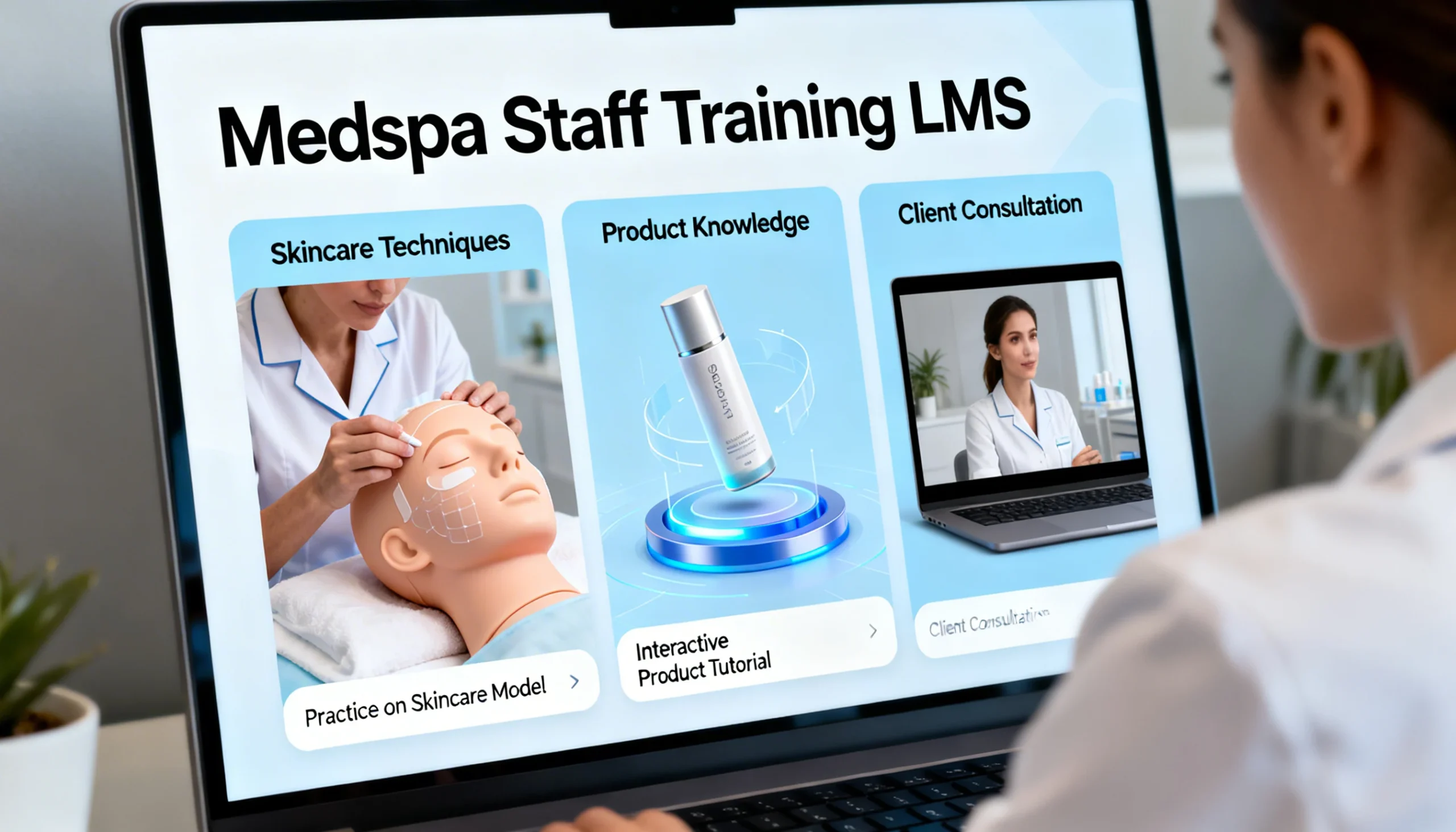
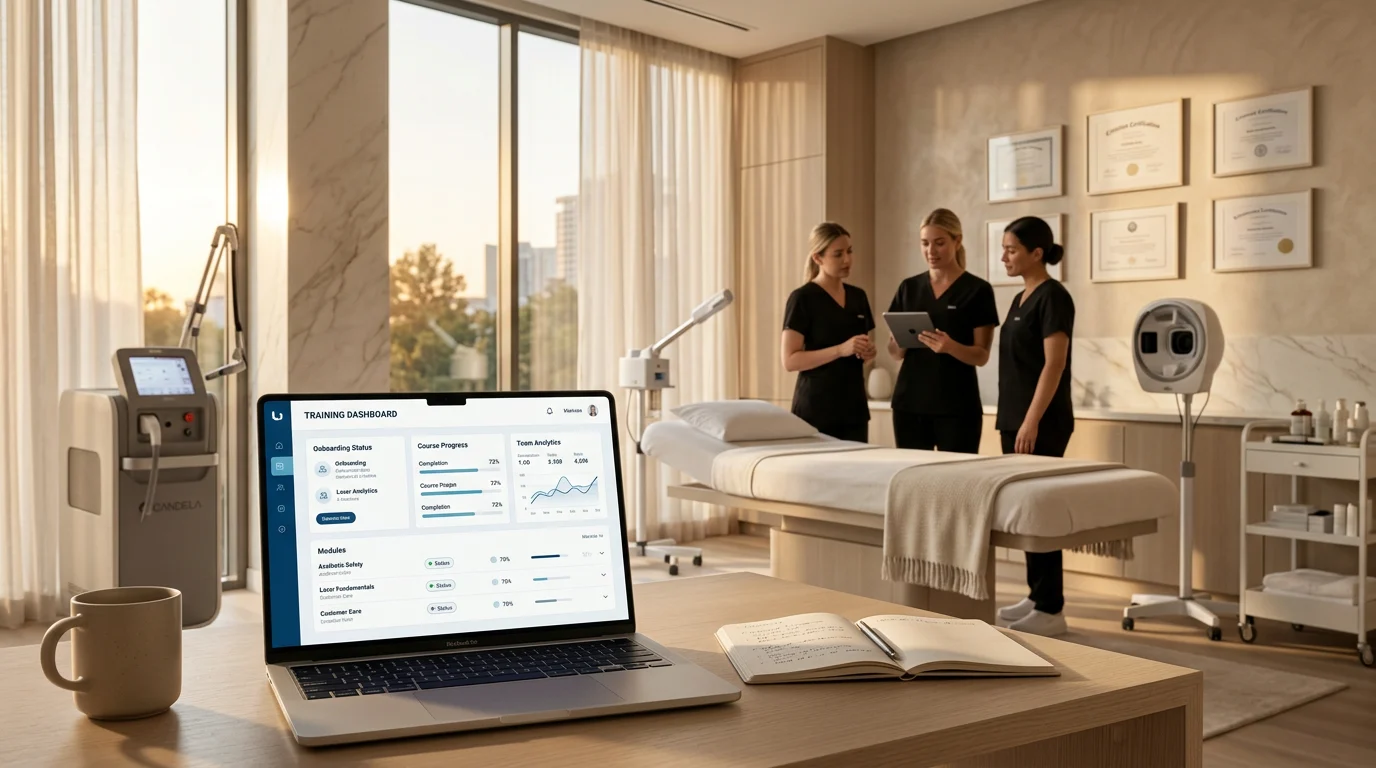
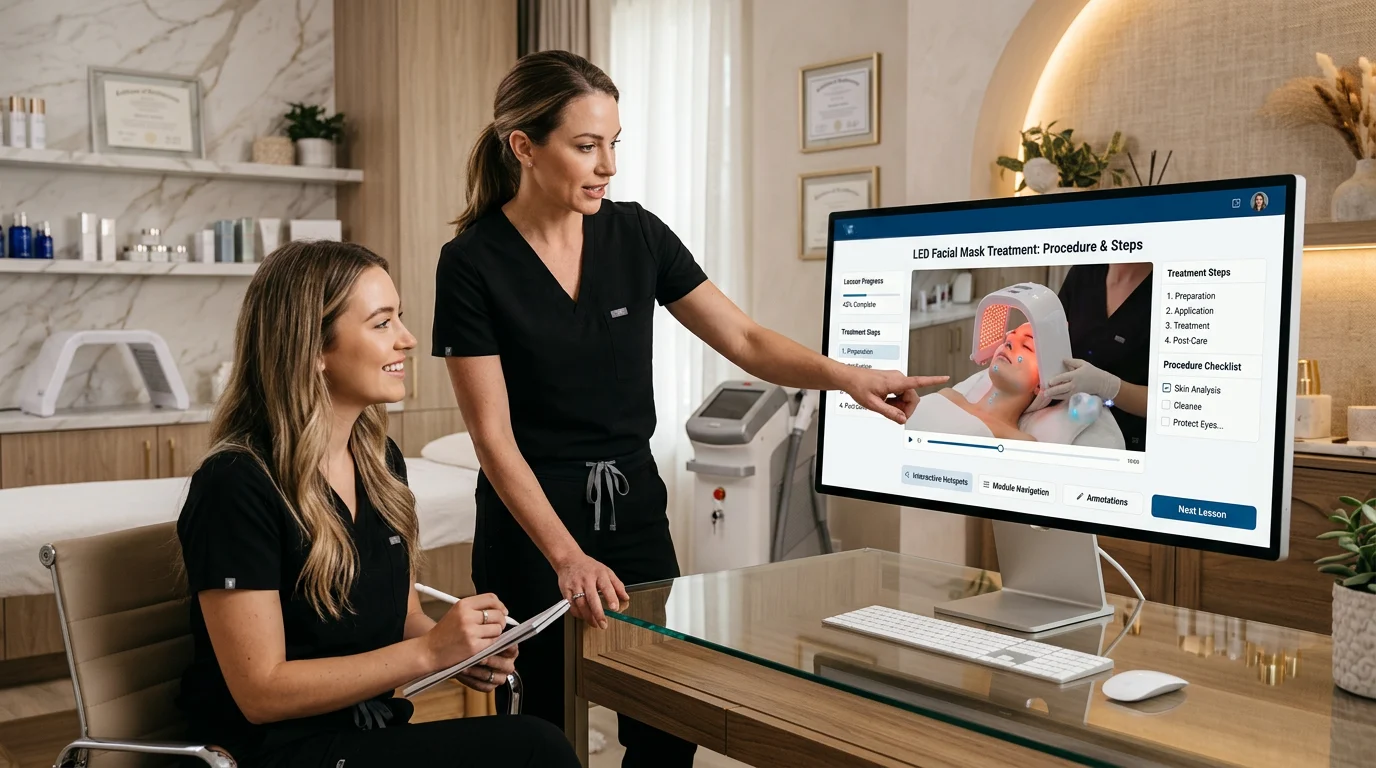
The #1 Training Solution for Medspas, Beauty and Wellness Groups
Enterprise medspa, beauty, and wellness groups face growing complexity as they scale including inconsistent training, uneven service quality, compliance risk, brand dilution, and slower employee ramp times across locations.
V-Unite provides a centralized, scalable platform designed to standardize training, upskill employees, and accelerate performance across every clinic, spa, and wellness location.
Host high-quality virtual events, conferences or trade shows.
Blogs & Updates
- dermatology lms
- Engagement
- hair salon lms
- Healthcare
- Interactive
- Knowledge Gap
- Life Sciences
- LMS
- medspa
- medspa lms
- medspa sales training
- Performance Engagement
- Pharma
- pharma lms
- SME
- veterinary lms