The Ultimate Roadmap to LMS Corporate Training: Driving ROI and Employee Retention

From Training to Readiness: How an AI Powered Learning Platform Closes Skill Gaps
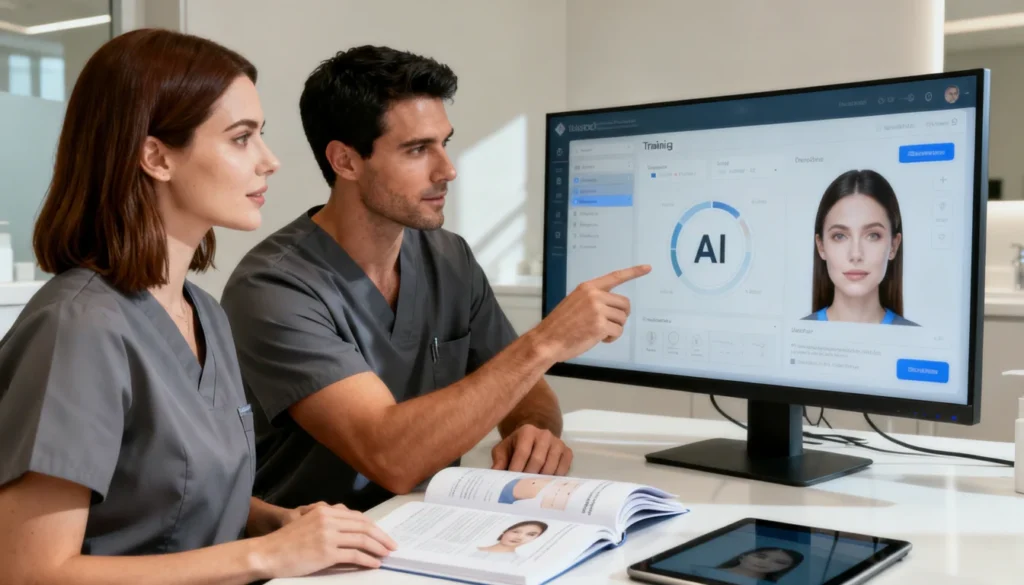
Introduction: The Shift from Training Activities to Workforce Readiness The modern enterprise is racing to keep pace with change, and leaders are asking a tougher question: are we producing training completions or actual readiness? For strategists and tech-enablers alike, the answer increasingly lies in deploying an ai powered lms, and other ai powered lms solutions that move beyond seat time and quiz scores to measurable capability. An ai powered lms is not a buzzword — it’s the infrastructure that converts learning activity into business outcomes. The Modern Skills Crisis Rapid technological change and digital transformation have accelerated demand for new competencies across functions. Traditional training models—calendar-based courses and one-off certifications—were designed for predictable career paths. Today, shifts in tooling, customer expectations, and business models mean organizations must continuously evolve the workforce. As a result, learning strategies that focus on completion rates rather than capability create hidden risks. Defining “Readiness” vs. “Training Completion” Training completion measures whether someone finished a module; readiness measures whether someone can perform a task at the required level, in context, under pressure. Output-based learning (completions, hours) assumes exposure equals competence. Outcome-based learning (readiness) ties learning to observable performance: task proficiency, error rates, time-to-productivity, and business KPIs. The central question: how can ai powered learning platforms close skill gaps at scale by shifting measurement and delivery toward outcomes? Understanding Skill Gaps in Today’s Organizations What Is a Skill Gap? A skill gap exists when an employee’s current capabilities fall short of the level needed to execute role responsibilities or strategic initiatives. These gaps can be micro (a missing technical API skill) or macro (lack of digital fluency across a function). Root Causes of Skill Gaps Pace mismatch: hiring and upskilling lag behind technology adoption. Siloed learning: L&D programs disconnected from role-level requirements. Inefficient diagnostics: organizations lack precision to identify who needs what, when. One-size-fits-all content: generic courses that don’t tie to on-the-job tasks. The Business Impact of Unaddressed Skill Gaps Unchecked skill gaps increase time-to-market, raise operational errors, stifle innovation, and drive attrition as high performers seek growth elsewhere. For strategists, the bottom line is clear: capability risks translate directly into strategic risk. The Limitations of Traditional Learning & Development Models One-Size-Fits-All Training Programs Traditional programs treat learners as cohorts rather than individuals, wasting time on irrelevant material and failing to prioritize critical skills. Completion metrics mask uneven mastery. Reactive vs. Predictive Skill Development Most L&D is reactive—launch a course after a skills shortage emerges. This lag undermines agility. What organizations need is predictive capability: anticipate gaps before they translate to missed objectives. What Makes a Learning Platform “AI-Powered”? Core Components of AI in Learning Platforms AI-powered learning platforms combine multiple technologies to turn data into actionable learning: Machine learning algorithms that detect patterns in performance and engagement. Natural language processing (NLP) to parse job descriptions, feedback, and content for semantic alignment. Data analytics and predictive modeling to forecast future capability needs and recommend interventions. Personalization Engines Adaptive learning paths tailor content and pacing to individual learners. By analyzing skills profiles and performance, an ai powered learning platform recommends micro-learning, simulated practice, or mentoring at the right time. Adaptive learning paths: dynamically adjust complexity based on demonstrated mastery. Content recommendations: surface the exact resources tied to a learner’s competency gaps. Intelligent Skills Mapping AI enables role-based competency frameworks that evolve. Instead of static taxonomies, dynamic skill maps reflect emerging technologies and cross-functional requirements. Role-based competency frameworks: link tasks to skills, measurable outcomes, and learning assets. Dynamic skill taxonomies: update as new capabilities become relevant, keeping roadmaps current. Key Benefits of AI-Powered Learning Platforms Accelerated Skill Acquisition By focusing training on what each person actually needs, AI reduces wasted time and shortens the time required to reach proficiency. Simulated scenarios and targeted practice produce faster transfer of learning to work. Improved Talent Retention and Engagement Employees value career-progressive learning. When an ai powered learning platform offers personalized growth pathways tied to real roles and promotions, engagement rises and turnover falls. Enhanced Agility and Competitive Advantage Organizations that develop targeted capabilities quickly can pivot strategy faster and better support innovation initiatives. AI-driven readiness models let leadership allocate talent strategically to high-priority projects. How AI Closes Skill Gaps in Practice Diagnose precisely: AI analyzes performance data, assessments, and job outputs to identify both individual and cohort gaps. Prioritize based on impact: Predictive models rank which gaps threaten business KPIs, helping L&D and strategy teams focus investments. Deliver tailored experiences: Adaptive modules, micro-practice, simulations, and peer-sourced coaching address gaps where and when they appear. Validate readiness: Continuous assessments and on-the-job metrics measure whether learning translates into capability, not just completion. Close the loop: Talent mobility and workforce planning systems consume readiness signals to inform hiring, redeployment, and succession. Future Outlook: The Evolution of AI in Learning & Development Predictive Workforce Readiness Models The next wave of ai powered learning management systems will shift from descriptive analytics to prescriptive, predicting not only who needs training but the sequence and intensity of interventions that produce readiness for specific business initiatives. AI Coaches and Virtual Mentors Personalized On-demand AI coaches will guide learners through practice, simulate conversations, and scaffold complex decision-making—scalable mentoring for organizations without unlimited human coaches. From Learning Platforms to Talent Intelligence Ecosystems, AI will bridge L&D, HRIS, and business systems, creating talent intelligence ecosystems that surface capability risks and opportunities in real time. Strategists will use these ecosystems to align workforce investments with strategic roadmaps. Addressing Common Concerns Data privacy and ethical AI matter. Responsible ai powered learning platforms adopt transparent models, secure data practices, and human-in-the-loop governance to ensure fairness and compliance. Tech-enablers should partner with vendors who provide auditability and explainability for recommendations. Measuring Success: KPIs That Matter Shift measurement from completion rates to outcome-focused KPIs: Time-to-proficiency for role-critical tasks. On-the-job performance improvements correlated to learning events. Reduction in competency-related incidents or errors. Internal mobility rates for critical roles. ROI tied to business objectives (cycle time, customer satisfaction, revenue impact). Conclusion: Transforming Training
From Silos to Synergy: Reducing Knowledge Gaps Across Medical Teams and Touchpoints
We dive into why information silos are so common in medical organizations and how to eliminate them with the right tools and culture.
V-Unite Wins the Summer 2025 Top Performer Award from SourceForge
V-Unite has been named a Summer 2025 Top Performer by SourceForge, placing in the top 10% of highly rated software products. This recognition highlights V-Unite’s commitment to delivering immersive, results-driven experiences that transform how organizations onboard, train, and engage.
Why Performance Engagement Matters in Today’s Healthcare Workforce
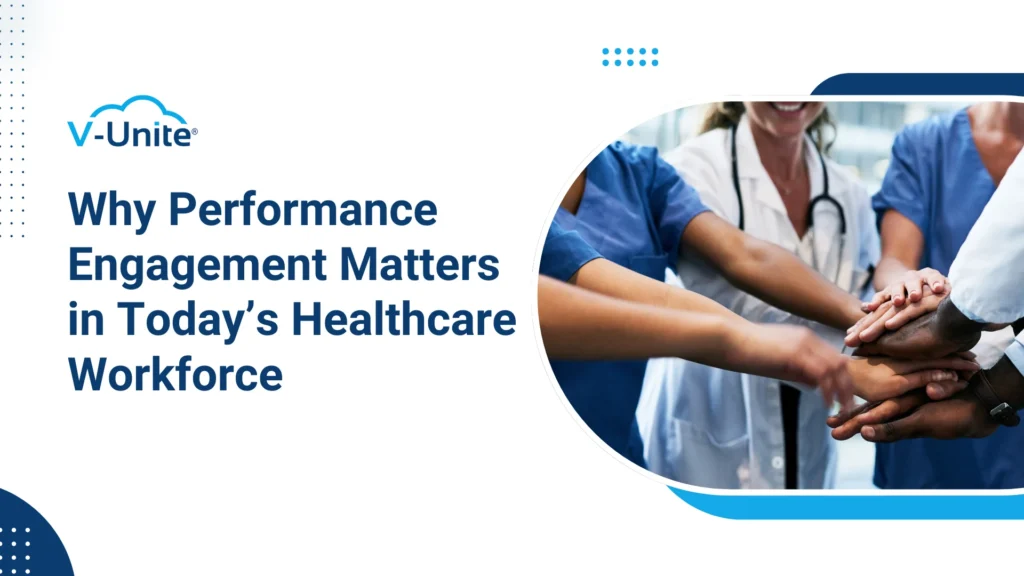
In the healthcare industry, performance isn’t just a goal—it’s a responsibility. Whether you’re onboarding new clinical staff, training pharmaceutical reps, or educating patients and providers, the way information is delivered directly impacts efficiency, safety, and outcomes. Yet traditional learning systems often fall short. Passive content, outdated platforms, and one-size-fits-all onboarding can leave employees disengaged and unprepared. That’s where performance engagement comes in and why V-Unite is leading the charge. What Is Performance Engagement? Traditional training methods often fall short when it comes to keeping attention, boosting retention, and driving real-world outcomes. That’s where performance engagement for digital training and learning retention comes in. It goes beyond checking boxes on a checklist. It’s about delivering immersive, interactive, and measurable learning experiences that empower users to absorb, retain, and apply information in real-world settings. At V-Unite, we don’t just help you distribute content—we help you drive performance. The Challenge with Traditional Training in Healthcare Healthcare professionals are constantly under pressure: new regulations, fast-changing treatments, and patient expectations that evolve by the day. But the tools used to train and onboard them haven’t kept up. This isn’t just a training issue—it’s a business risk. The V-Unite Solution: Where Engagement Meets Performance V-Unite transforms training and communication into interactive experiences that actually drive results. Here’s how we do it: Immersive OnboardingNew team members learn faster and retain more through personalized onboarding journeys that mirror real-life workflows. AI-Powered Learning AnalyticsTrack what works and what doesn’t with built-in dashboards that show engagement rates, session times, quiz results, and more. Interactive & Multimedia Training ModulesTurn clinical procedures, compliance policies, or product education into engaging video walk-throughs, 3D environments, and gamified lessons. Scalable & AccessibleOn-demand access means your staff, no matter their location, can learn at their pace—reducing downtime and increasing consistency.tation. Why It Matters: Results You Can Measure Performance engagement is not just a nice-to-have. With V-Unite, healthcare organizations report: When employees and providers are engaged, they don’t just learn—they perform. “Healthcare teams deserve more than passive learning tools. They need platforms that help them grow, connect, and succeed.With V-Unite, you can deliver training that empowers, educates, and elevates performance—across departments, devices, and disciplines.”–Stephen Handisides, V-Unite’s Founder & CEO Ready to move from content delivery to performance engagement? Book a free demo today and see how V-Unite can transform the way your healthcare team learns and performs.
V-Assist: The Strategic Partner Powering V-Unite’s Performance Engagement
Companies don’t just need content—they need performance-driven engagement. That’s where V-Assist steps in. As the strategic services arm of V-Unite, V-Assist ensures your virtual experiences are not only visually immersive but also instructional, interactive, and impactful from day one. Why V-Assist? While V-Unite provides the platform for delivering powerful digital experiences, V-Assist is the partner that helps you get there—from content strategy and creation to execution, support, and performance tracking. Instructional Design Services That Elevate Learning Your content is only as effective as how it’s structured and delivered. V-Assist brings a full team of experts who: Whether you’re in pharma, education, or enterprise training, our ID team can build course content from scratch or upgrade your existing assets for better performance and outcomes. Content Strategy and Interactive Delivery A good course starts with a strong strategy. V-Assist collaborates with your team to: Once the content is set, we bring it to life inside V-Unite’s immersive virtual hub—making your onboarding, product training, or marketing activation more than just a one-way presentation. Virtual Staff and Customer Support Services V-Assist isn’t just about content—it’s about complete support. We offer tailored remote staffing solutions to meet your needs: Plus, we provide: Measure What Matters: Intelligent Analytics You can’t improve what you don’t measure. That’s why V-Unite also helps you monitor success through: Our team helps translate this data into actionable insights—so you can continually optimize for better outcomes. Why Bundle V-Assist with V-Unite? When paired together, V-Unite and V-Assist offer an end-to-end solution: Think of V-Unite as the stage and V-Assist as the production crew. Together, they don’t just deliver content—they deliver performance engagement. Ready to Engage Smarter? If you’re looking for an all-in-one solution to create, launch, and optimize immersive learning or marketing experiences, V-Assist is your strategic partner. Book a free demo today and let’s build something that performs.
The Top 10 Engagement Metrics You Should Track in 2025 (and How V-Unite Helps)

In an era where static content is losing steam and audience attention spans are shrinking, you need more than delivery—you need measurable performance. Whether you’re running a training program, a product launch, or an HCP education hub, one truth remains:👉 You can’t improve what you don’t measure. That’s why the most successful teams—from life sciences to remote-first SMEs—are turning to platforms like V-Unite to not only create branded digital experiences but to track what actually moves the needle. In this post, we’ll walk you through 10 must-track engagement metrics and how V-Unite makes measuring them seamless. 1. Conversion Rate How many users completed your intended action?This could be: With V-Unite:Our dashboards show exact conversion points—from clicks to completions—so you can optimize your calls to action, page design, and user journeys. 2. Pages per Session How deep do users go once they enter your portal or experience hub? Higher pages per session means your content is sticky, intuitive, and engaging.Low engagement? It could be a signal that your experience needs better navigation or content strategy. With V-Unite:Our Experience Dashboard tracks content depth and click-throughs across the journey. 3. Average Session Duration Are people just dropping in—or sticking around? Time spent in your hub indicates content value and attention. Long sessions often correlate with stronger recall and better ROI. With V-Unite:Session duration is captured in real time and displayed by page, module, and user type. 4. Completion Rates Especially for onboarding and training, you need to know:Are users finishing what they started? With V-Unite:Use the Learning Dashboard to see where drop-offs happen and improve module structure or pacing accordingly. 5. Feedback Score or Satisfaction Rating Did users find the experience valuable? Embed polls, quizzes, or feedback prompts throughout your portal and track sentiment.With V-Unite:Our interactive tools capture user feedback at any stage—and make it measurable. 6. Quiz Scores & Knowledge Retention It’s not just about participation—it’s about learning. Track how well users are retaining information and which modules need refinement.With V-Unite:Built-in assessments and gamification features let you measure learning outcomes. 7. Return Visits One-and-done experiences rarely drive real change. Repeat visits show your content is worth revisiting—which is critical for HCP education, sales enablement, or ongoing training. With V-Unite:Our portal tracks unique vs. repeat visitors, helping you identify loyal users and content worth amplifying. 8. Content Interaction Which videos were played? Which downloads were completed? Which CTAs were clicked? With V-Unite:All assets inside your digital space are individually trackable. You’ll know what’s working—and what’s not. 9. Device and Channel Insights Are users coming from mobile or desktop? Are they arriving via email or LinkedIn? With V-Unite:Our analytics give you traffic source breakdowns, so you can double down on the channels that perform best. 10. Overall Engagement Score Sometimes it helps to zoom out. With all the micro-metrics, are people really engaging? With V-Unite:Use customizable engagement scoring to get a high-level performance snapshot for any experience—broken down by audience type or region. Why This Matters You spend time, resources, and budget creating digital content. If you’re not measuring how it performs—how people interact with it—you’re flying blind. With V-Unite, every virtual space, training program, and digital event becomes measurable.You’ll know: See It in Action Want to see how V-Unite tracks these engagement metrics in real-time? From HCP education to hybrid onboarding, we help organizations across sectors measure smarter, engage deeper, and perform better. Book a free demo today to explore the dashboards that make performance measurable.
Why Traditional LMS Platforms Fail Small to Mid-Sized Medical Companies
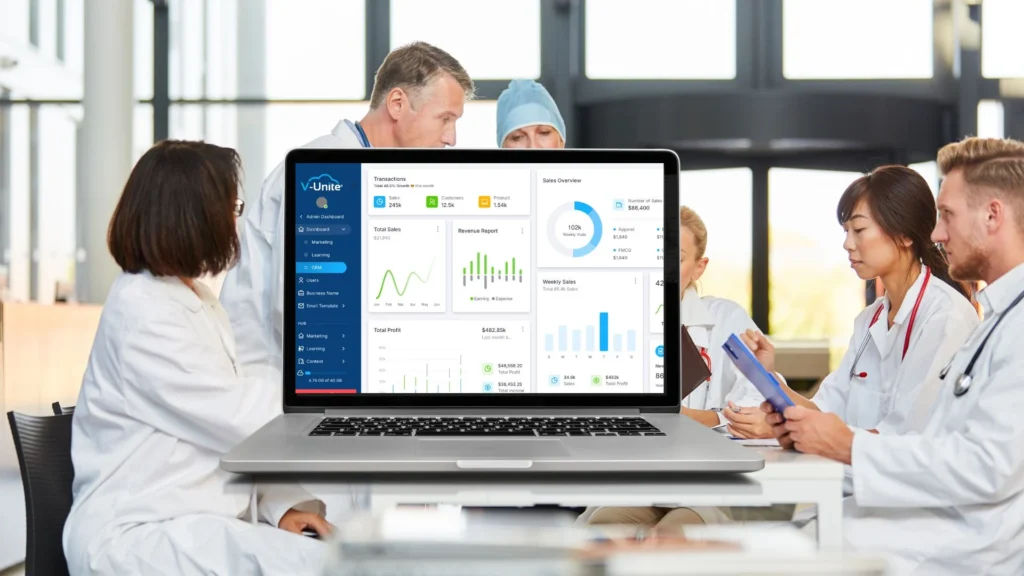
In healthcare and medical training, staying compliant and up-to-date is non-negotiable. But for many small to mid-sized medical companies, traditional Learning Management Systems (LMS) just don’t cut it. What is an LMS? A Learning Management System (LMS) is a digital platform designed to manage, deliver, and track training or educational content. It’s used by organizations to onboard employees, deliver compliance training, offer continuing education, or run certification programs. For example: While these platforms work well for larger enterprises or academic institutions, they often lack the agility, customization, and affordability that small to mid-sized medical companies need. While LMS platforms are meant to support training and compliance, the reality is that most were built for large enterprises—with big budgets, generic workflows, and one-size-fits-all approaches. That leaves growing medical teams stuck with expensive, rigid systems that simply don’t fit their needs. Let’s break down why traditional LMS platforms often fall short—and what kind of solution medical companies should look for instead. 1. High Cost, Low Return One of the biggest barriers is price. Traditional LMS platforms often come with: For small to mid-sized companies, that’s a heavy lift—especially when the ROI isn’t immediate or measurable. You shouldn’t need an enterprise budget to deliver effective training. 2. Poor Customization and Fit Medical companies often need specialized training workflows, industry-specific content (like interactive anatomy diagrams or drug information), and integration with tools like: Most traditional LMS platforms offer limited flexibility when it comes to branding, structure, and user journeys—making it difficult to adapt to the nuances of medical education. 3. Integration Challenges A disconnected tech stack leads to inefficiencies. Smaller medical organizations rely on multiple platforms—practice management software, scheduling tools, compliance trackers, etc. When a traditional LMS can’t integrate with these, it creates: What’s needed is seamless integration that actually supports your workflow. 4. Not Optimized for Medical Content Surgical procedures, clinical simulations, or animated drug mechanisms require more than a slideshow. Unfortunately, many LMS platforms were never built to handle rich media, step-by-step clinical visuals, or patient-facing educational tools. The result? Dry, disengaging content that doesn’t stick. 5. Lack of Hands-On Support Small teams don’t have the luxury of an in-house LMS administrator. But traditional platforms often provide minimal onboarding, limited content development help, and long wait times for support. You’re left juggling multiple hats—and wasting time managing a system that was supposed to make your life easier. 6. Limited Scalability Even if a traditional LMS works for you now, it might not later. Many smaller medical companies experience growing pains with outdated platforms that can’t scale easily—or force expensive reconfigurations to accommodate a growing team or new training needs. 7. Poor User Experience Let’s be honest—many LMS platforms are clunky and confusing. Medical professionals are busy, and they don’t have time to struggle with navigation, broken links, or confusing modules. If training isn’t intuitive, it won’t be effective. The Bottom Line: Traditional LMS platforms may work for large institutions, but they’re often a mismatch for small to mid-sized medical companies. Between cost, complexity, and lack of medical-specific features, these systems can actually slow down progress instead of driving it. What Should You Look for Instead? Look for a solution that is: Why V-Unite Works for Medical Teams Unlike traditional LMS platforms, V-Unite is designed for immersive engagement—turning static training into interactive, on-brand, and trackable learning experiences. With drag-and-drop tools, analytics dashboards, compliance-ready features, and 24/7 support, we help medical teams create results-driven onboarding, education, and ongoing training without the LMS headache. Book a free demo today and see how V-Unite transforms learning into lasting performance.
Static vs. Interactive: How Format Impacts Retention

Why How You Deliver Information Matters More Than Ever Attention spans are shrinking and distractions are endless, delivering information isn’t enough—it has to stick. That’s where the format of your content becomes just as important as the content itself. If you’ve ever sat through a slide-heavy webinar or skimmed a 10-page PDF and immediately forgotten everything, you’re not alone. That’s the challenge with static content: it’s passive, one-way, and easy to ignore. On the flip side, interactive content—experiences that invite users to click, explore, or respond—has been proven to significantly boost engagement, comprehension, and most importantly, retention. Let’s break down why that is—and how one brand used this approach to transform education in women’s health. Static vs. Interactive Content: A Quick Comparison Static Content Interactive Content PDFs, articles, static webinars Quizzes, modules, polls, video walkthroughs One-way communication Two-way engagement Hard to measure effectiveness Real-time analytics Passive learning Active participation Lower retention Higher engagement + recall Benefits of Interactive Content Interactive content isn’t just “nice to have”—it’s a proven strategy that helps teams: Support Compliance: Controlled environments make approvals easier in regulated industries How Interactive Content Improves User Experience Interactivity taps into how people naturally learn—through doing, choosing, and reacting. Here’s how it elevates the experience: In short: people remember what they do, not just what they read. Case Study: Mayne Pharma’s Estrogen IQ Initiative Client: Mayne Pharma Goal: Educate women (18–35) on Estetrol (E4)—a newly FDA-approved estrogen—and the broader role of hormones in birth control. The Challenge Estrogen is a complex topic, especially when explaining the science behind it to a general audience. Mayne Pharma needed a digital experience that simplified without oversimplifying—and actually kept users engaged. The V-Unite Solution Using the V-Unite engagement platform, Mayne Pharma launched Estrogen IQ—an interactive learning hub that transformed hormone education into a visual, user-friendly journey: The Results Key Takeaways Ready to Turn Your Content Into Results? Whether you’re in pharma, healthcare, or an SME, V-Unite helps you convert dense training or education into trackable, engaging, and effective digital experiences. Let’s move beyond static PDFs and webinars—and start building experiences your audience will actually remember. Book a free demo today and see how V-Unite delivers content that performs.
V-Unite Awarded the Spring 2025 High Achiever Award by TopBusinessSoftware.com
V-Unite is excited to announce its receipt of the prestigious High Achiever Award from TopBusinessSoftware.com, the leading platform for software reviews and comparisons. June 6, 2025 – V-Unite, The best-in-class performance engagement platform, proudly announces that it has been awarded the Spring 2025 High Achiever Award from TopBusinessSoftware.com. Top Business Software is the authority resource for verified B2B software reviews. This prestigious award recognizes companies and products that have received outstanding user feedback, placing them above 90% of other products in terms of customer satisfaction. To achieve the Spring 2025 High Achiever Award, each winning product had to garner enough positive user reviews to place it above 95% of all products out of over 106,000 software products listed on TopBusinessSoftware.com. This accolade is a testament to the high-quality solutions V-Unite offers to its customers. Stephen Handisides: ““At V-Unite, we are honored to receive the TopBusinessSoftware.com Spring 2025 High Achiever Award. Our team is dedicated to providing a top-tier product, and it is gratifying to see our users recognizing our efforts with such positive reviews. We are proud to be valued by our customers and to have earned this recognition from TopBusinessSoftware.com.” About V-Unite V-Unite is a performance engagement platform that helps organizations turn static content into branded, interactive experiences designed to drive real results. Serving industries like pharma, healthcare, and fast-growing businesses, V-Unite supports HCP engagement, onboarding, and training with tools like gamification, analytics, and centralized content hubs. V-Unite’s mission is to simplify content delivery while improving engagement, retention, and performance—without the complexity of traditional LMS platforms. About Top Business Software TopBusinessSoftware.com is the authority resource for B2B software reviews. The site offers user reviews, product comparisons, software guides, and much more. With over 106,000 B2B software products listed across nearly 5000 B2B software categories, TopBusinessSoftware.com’s mission is to help business professionals discover the best software solutions to meet their unique needs. The platform provides a dedicated B2B software review and comparison platform with robust but intuitive tools that enables users to find the right software, no matter what they need.